

"Untitled"
"Untitled"
Zef: Congratulations, Paola, you’re about to graduate! Guide us through the Humanities & Sciences electives you have taken at the School of Visual Arts.
Paola: In my first year, I took two physics classes: material science and a general introduction to physics, and then light science and optics. I’ve always had an interest in physics; it feels like a gateway to get a closer, more intimate understanding of materials. That’s central to my art practice: working with materials, getting to know materials, understanding in a very empirical and scientific way how we interact with materials and the phenomenon that they undergo.
In that physics course I did a presentation on the forces and stresses that concrete and steel beams experience. Something I think a lot about is how invisible and under-recognized these forces and stresses are, things that we encounter every day, that support the ceilings above us and all of the buildings that we walk into. It was fun to dig into that research, to understand exactly how those interactions take place in those materials.
I took a class on the history of sublime and aesthetic theory in Western philosophy. I was discontent with Western philosophers, especially people like Kant, who were really pushing these extremely humanist notions that there’s something particular about what humans experience, as opposed to other species. I wanted to take a philosophy class that presented an alternative.
In my freshman year, I went to an info session, a student panel, that was held, and I got the chance to speak to Kyoko Miyabe about my interest in taking a course on something like environmental theory or philosophy, specifically in regard to ideas of posthumanist thinking or alternative ontological frameworks that stand in opposition to notions of humans being separate from and distinct from nature. So, the next year, there was a new course in the registration book: environmental philosophy! It was cool to have some influence there and get that course in the registration book. That course was amazing. There was a lot of stuff I was introduced to, thinkers like Donna Haraway and Bruno Latour, people that have been really influential historically in ideas of posthumanist, environmental thinking, so on and so forth, which has been really influential to everything that I’ve been doing.
Last semester, I took a class on representations of labor, historically throughout art and literature. Themes of labor are quite relevant to what I’m doing now. There’s this artist that I’m doing a lot of research on for my thesis, Mierle Laderman Ukeles, who in the ’70s coined the term “maintenance art,” where she would go into gallery spaces and sweep, polish, and wax the floors, and clean all of the windows and walls meticulously. She would bring in trash from the streets and sort out recyclables from the trash in the gallery space. So this idea of doing these really menial forms of domestic and civic labor in this aestheticized context, to draw heightened attention to these forms of labor that are usually quite invisible. And that relates back to what I was talking about: my interest in studying the physics of what beams experience, or structural members experience, when I was taking that physics class, of trying to illuminate the stresses that objects experience in the performance of their utilitarian functions.
In your class, Urban Ecology, Gary Snyder’s writing about watersheds was memorable, specifically because of the gray area that exists between being a piece of theory and a piece of poetry. That’s something that, in general, I’m quite interested in: how a piece of writing can function as academic or function as a piece of formal theory, but it can have a certain poetic or romantic voice to it.
Zef: Tell us about your art practice and your thesis projects.
Paola: My entire practice is really informed by me just looking at the environment around me. What I do is a direct response to my time living in New York City, since I’ve come to school here, and having a recognition for what common urban infrastructure, subway systems, pedestrian infrastructure, sidewalks, or architectural systems and buildings, what they have done in facilitating my being here and commuting from home to school and back home every day. These systems have facilitated me finding a sense of home and sense of community, and being in school here and working with everyone in my cohort here. The work that I’m doing right now is a response to how much our infrastructure struggles in facilitating all of that.
Everything that I do really circles back around the idea that these synthetic and artificial materials that we use to construct the environment around us, materials like concrete and steel and synthetics like plastic, are capable of expressing what they experience in the performance of their functions. I think a lot about cracks, for instance, the cracks and erosion that can be seen in the sidewalk beneath our feet, or in the tile work and subway stations. I think a lot about walking through subway stations and seeing streaks of rust on steel columns, and I see all of these marks, in a lot of ways, as pieces of evidence, but also almost aesthetic gestures that are expressing the deterioration and the stress and the finitude in these pieces of infrastructure. So a lot of what I’m interested in doing is trying to work with these materials, industrial and process materials and synthetic materials, in an attempt to reveal or expose the fact that they are capable of experiencing finitude.
Something that I think a lot about is how many preconceived notions we have about the built environment around us being extremely static and extremely permanent, which is just such a fallacy. Lisa Robertson talks a lot about this idea that the object of architecture is permanence. Specifically, she says something along the lines of the object of architecture being the dissolution of the ephemeral and the return of entropy, which are, in reality, just impossibilities. So it is all an effort to elicit a deeper recognition that the infrastructural and architectural systems around us do not stand outside of time. They don’t stand outside of the physical processes of nature that we tend to think that they do, and they’re constantly eroding and deteriorating, and they will, in time, completely erode or collapse.
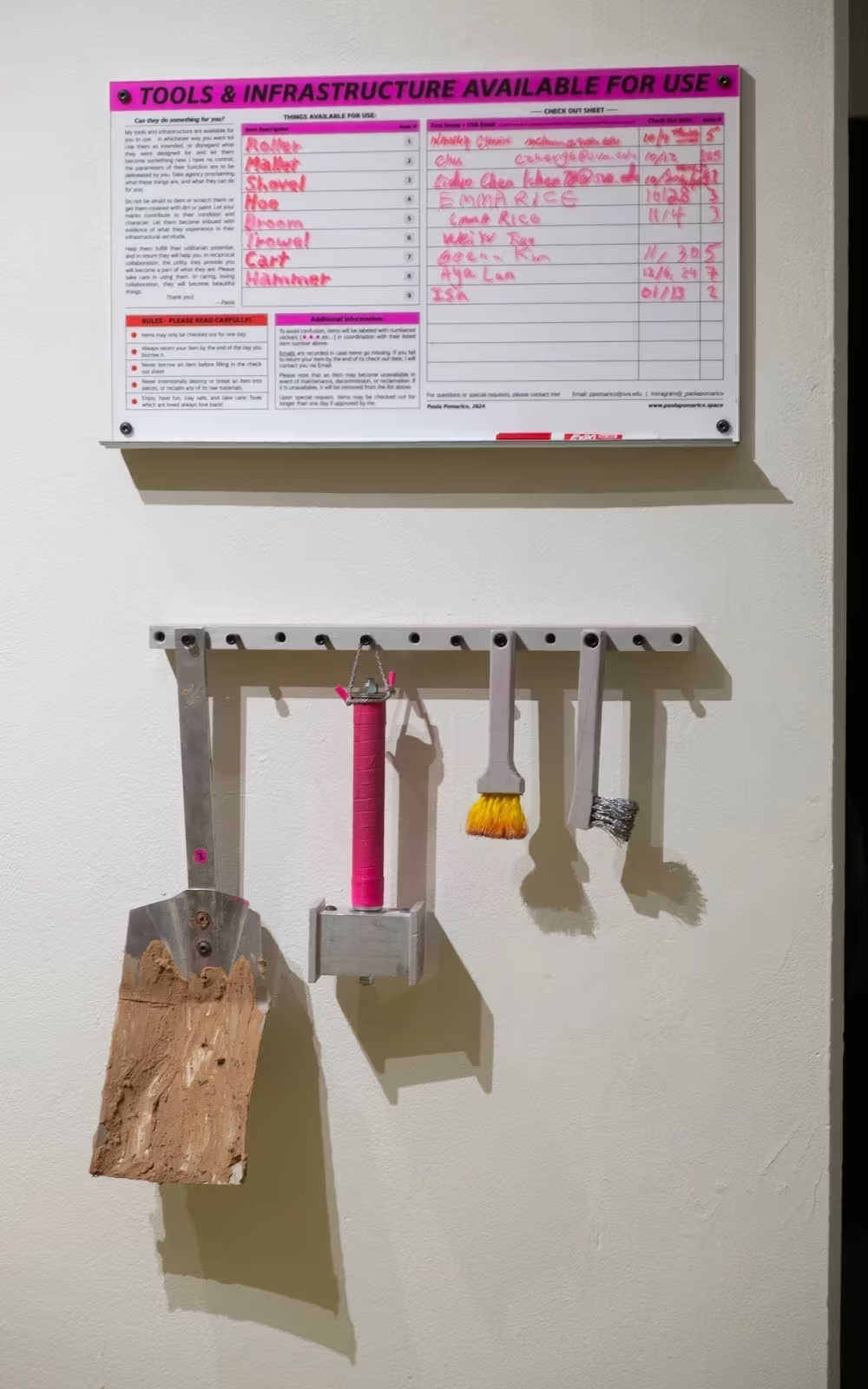
Materials are capable of expressing a sort of history of what they experience. As part of my art practice, I have fabricated tools which I make available for my fellow students to come to my studio and borrow. The idea there is that maybe you could think of them as recording devices; they go out in the world, they work with people, and in that process, they accumulate all of these paint stains and dents and scratches and marks that are evidence of the work that they do in collaboration with these people.
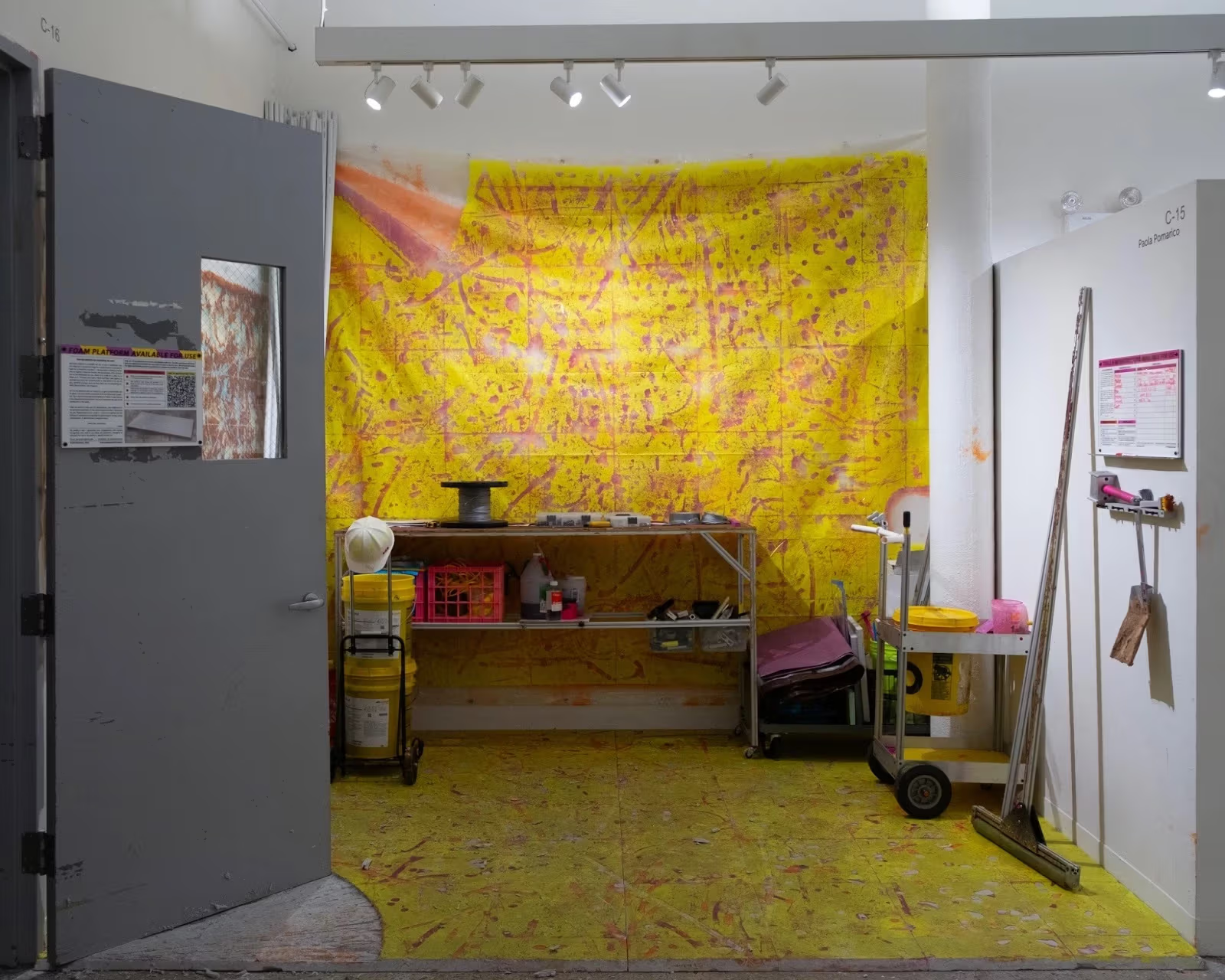
There’s also a huge interest I have in printmaking. There is a big slab of foam that I keep in my studio that, similar to the tools, acts as a stage or a platform that people are welcome to borrow and do things on top of. My studio floor is also tiled with the same sort of foam. There’s something really fascinating about the foam as a material, because it’s soft and inviting, but it’s also extremely fragile; it’s very impressionable and very susceptible to taking a mark. So I think that my studio floor is watching my every move in the same way that the big film stage that I make available to everyone is constantly recording what it facilitates for people. People will do performances on top of my stage. They’ll use my stage as a work surface to pin paper to, to draw on top of. And it’s constantly accumulating all of these one-to-one, indexical marks of that specific history of working with these specific people in this specific context. My floor has lines inscribed in it from the caster wheels of my workbench, and it has craters that are made from the feet on the stool that I sit on. There are marks inscribed by five-gallon buckets that I’m moving around in my studio. The door in the front of my studio has eroded this arc into the foam.
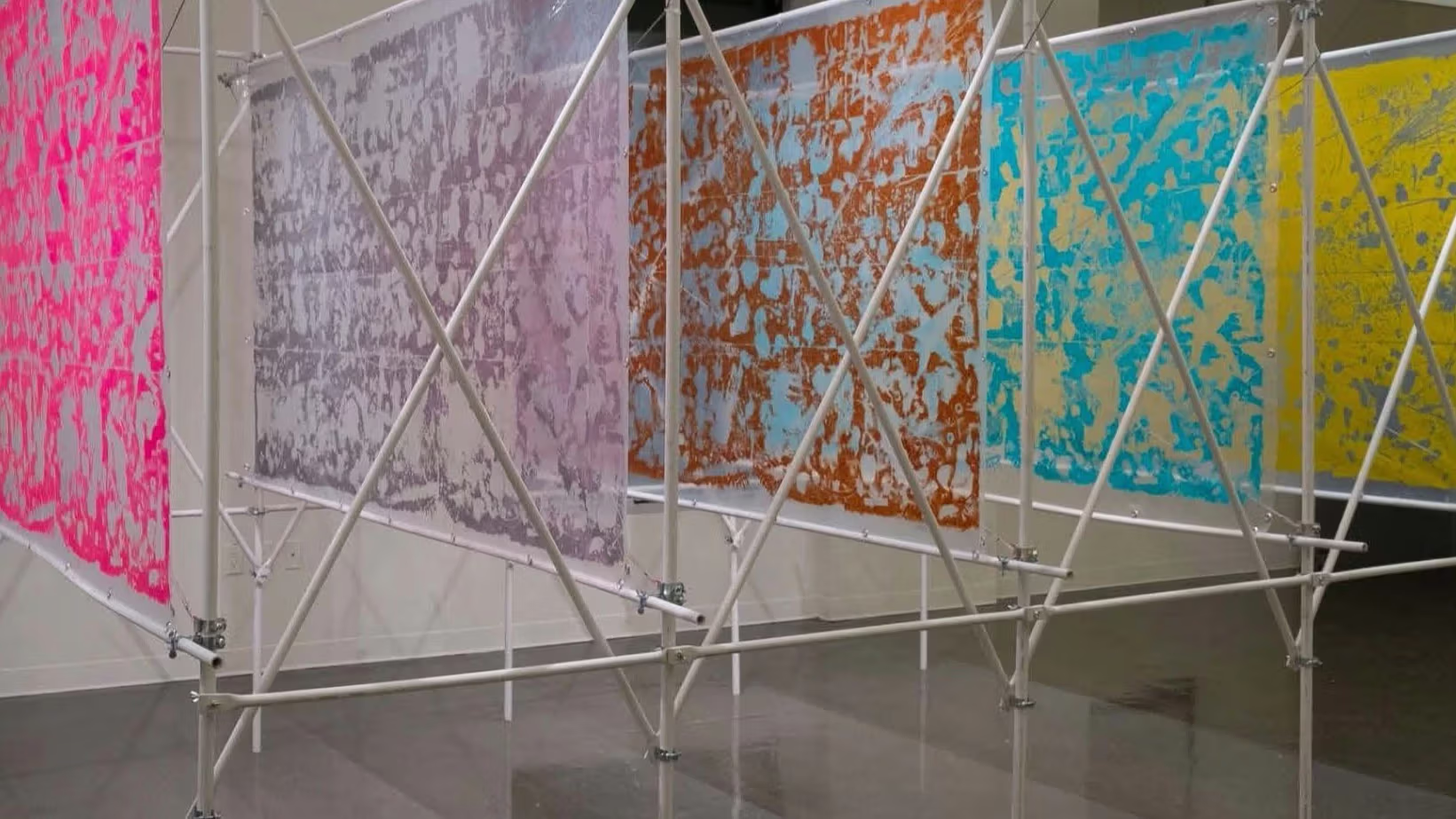
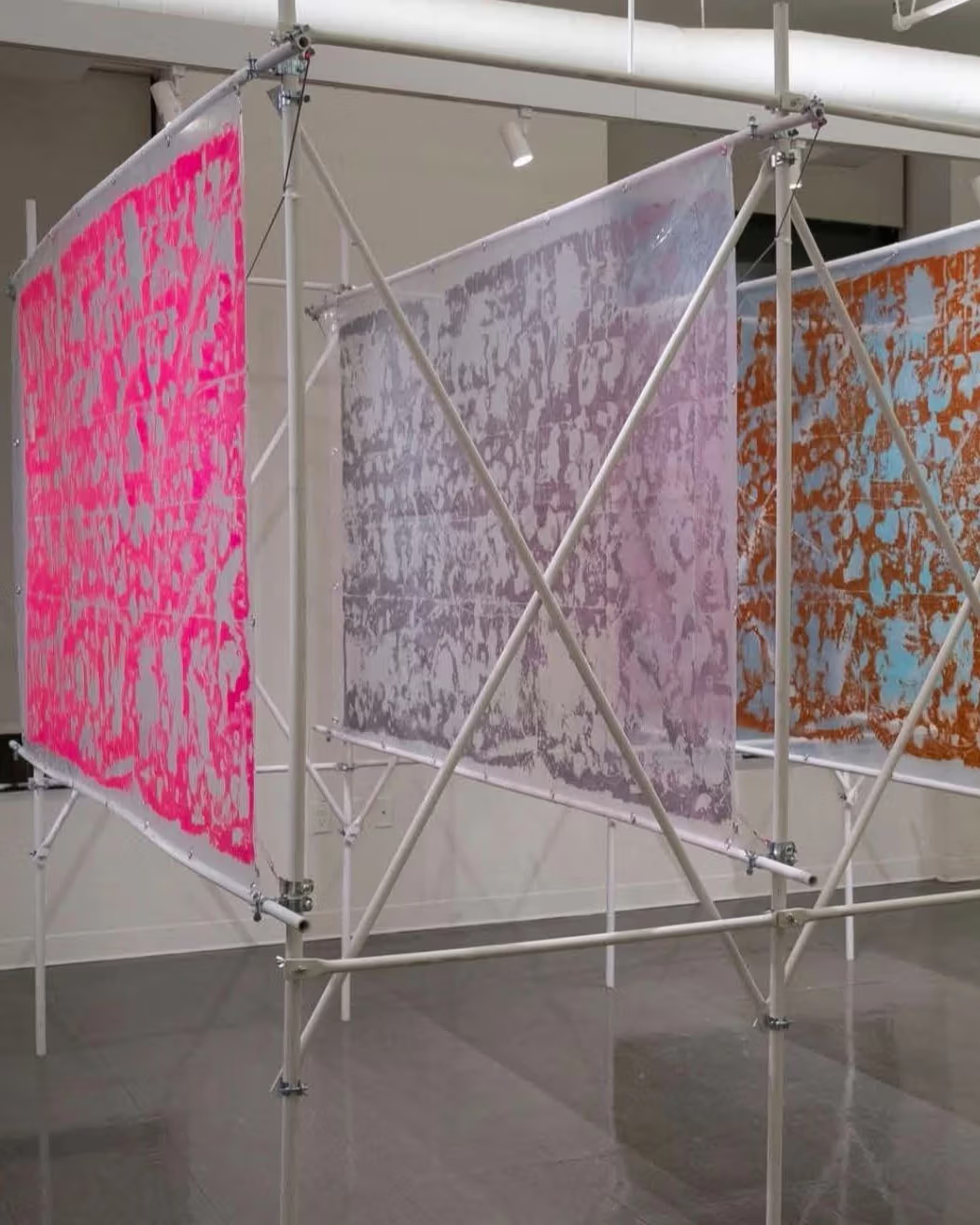
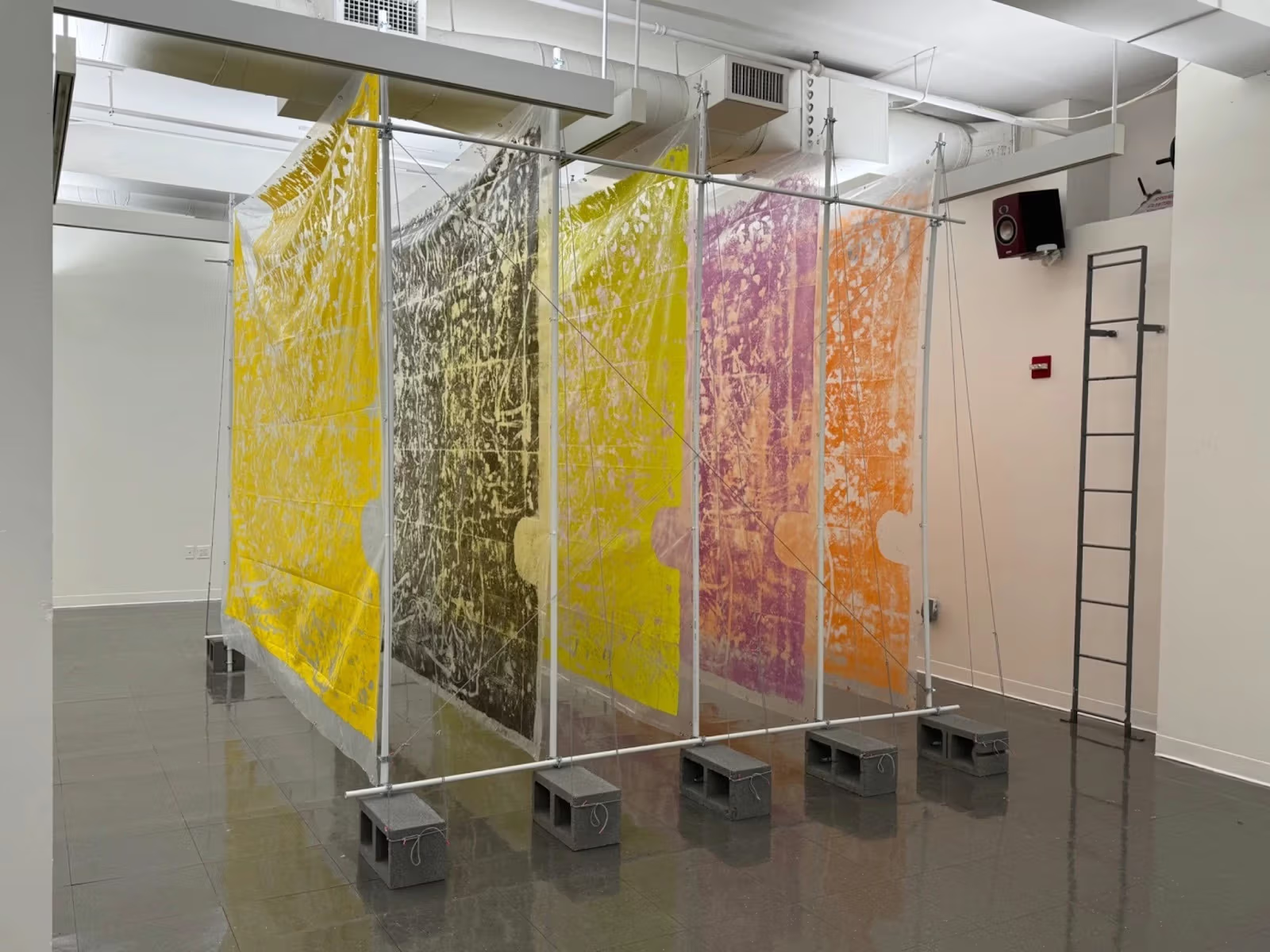
A lot of what I’m thinking about with these pieces of foam is the idea of site specificity and the idea that all of these marks are extremely specific and indexical to my studio as a site, or to this school as a site. All of this work, I think, is in conversation with the artist Robert Smithson’s notion of the site versus the nonsite. Robert Smithson would extract a bunch of rubble from a demolition site in a city in New Jersey, and then display it in a gallery, alongside photographs and all sorts of written documentation about the location that he took it from. With my foam floor and my foam stage acting as printing blocks, part of the practice is reproducing all of these relief prints of its surface. The way Robert Smithson denotes the relationship between the site and the nonsite can be analogous to the relationship between my studio floor and the painting that it prints.
Something that really interests me is how when the relief print of my studio floor is hung on a wall outside of the context of my studio, there is something fascinating about how this painting is capable of expressing or communicating the site that it came from, even if it’s in this extremely removed, abstracted way. In a lot of ways, I think the paintings also struggle to communicate where they came from, in the sense that they’re very much abstract color fields. And there’s a lot of tension in this relationship.
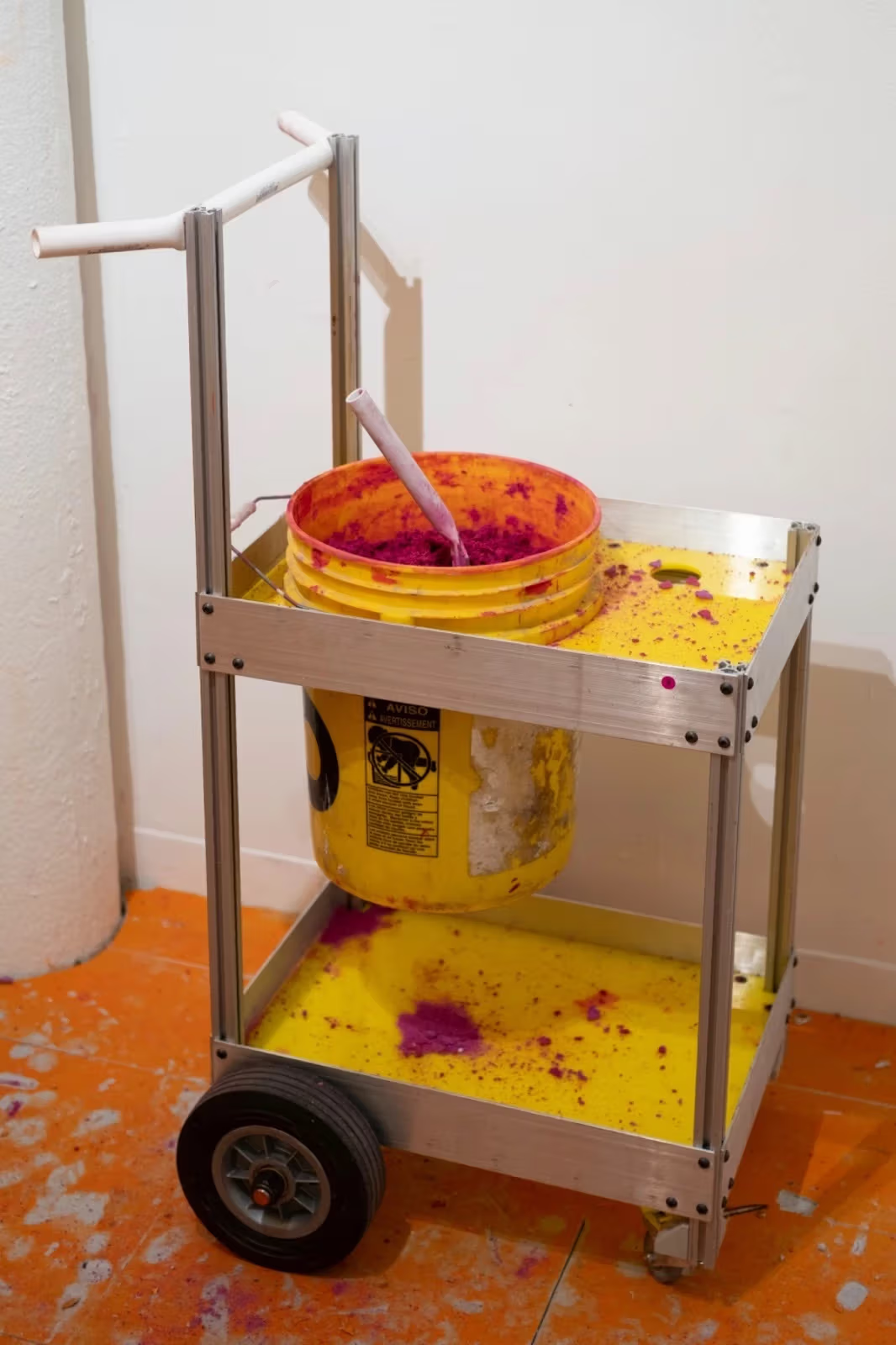
The last studio project that I have going on, which is my current focus right now, is my efforts of sidewalk restoration, which is very exciting. In the corner of my studio, you can see this little tool cart that I built that is holding a five-gallon bucket full of very special material. It's a mixture of white limestone sand with powdered bentonite clay mixed in. The clay acts as a binder, which allows it to be packed very densely and very solid, and it will hold form when it's packed. I'm using a bunch of ecologically safe water tracing dye to color it this luminous pink or fuchsia color. It's the kind of dye that would be used to visualize the flow of water in, for instance, sewage testing, or it would be placed in rivers to visualize the flow of water in rivers for ecological studies. My first thought when I was depositing all of this material into the sidewalks outside was that I wanted to be certain that it was something that was non-toxic, in case it leached into the sewer system, and I didn't want it to come out on the other end and cause some sort of ecological disaster. So I'm very proud of my special mixture being very safe and non-toxic, while still having this effect of being strikingly artificial in its bright color.
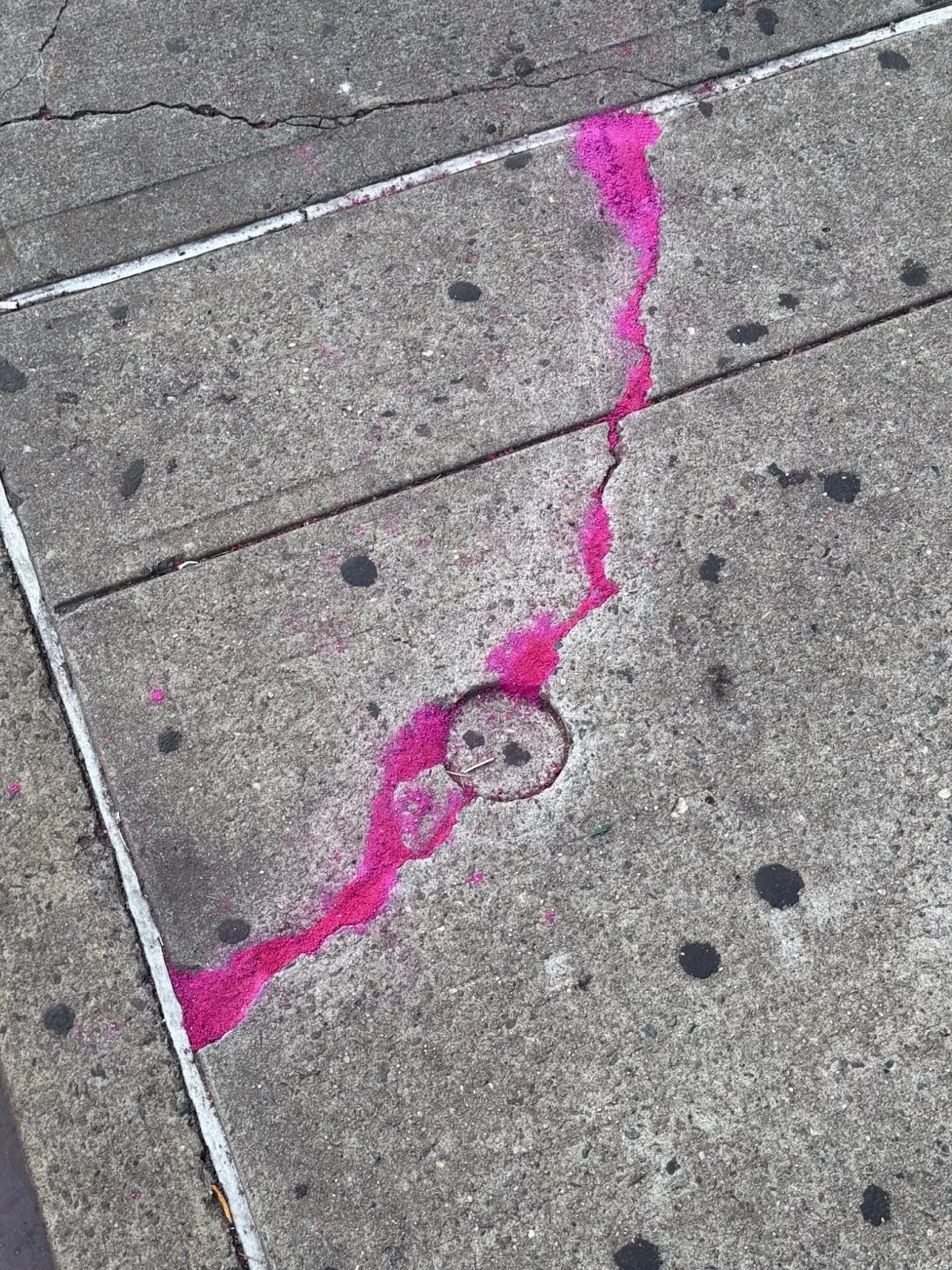
What I do is I walk my little tool cart around outside, and I use a little handmade trowel that I built, and I pack my high visibility dirt into all of the cracks and voids that I encounter in the sidewalk. And I collect survey data with a clipboard that I made, and I have these survey forms and logs that I print out so I can record all of the information, not only about the sites that I'm restoring, but also how they change over time. So I'll record characteristics about each site as I'm filling it, but then I'll also go out over the course of weeks, or however long it takes for these things to completely disappear, and I'll record how they erode over time, how the rain washes the color away, how bike tires or people's feet might make impressions in the material.
This draws attention to the fact that my repairs are very impermanent. I work with an accelerated sort of time scale. A lot of what makes the transient nature of infrastructure invisible to us is just the fact that the deterioration and experience happens on the time scale that's so much larger than us, and it's really difficult to grasp and understand. If I were to do my repairs with concrete instead of dirt, they would be no less ephemeral. They would just take a lot longer to deteriorate. So there's something about using the dirt as this way to accelerate its process of deterioration and draw heightened attention to the fact that these sites of decay are constantly experiencing change, constantly accumulating a history.
If I was packing this gray material into the ground, it would be extremely invisible. You would never notice the repairs that I'm doing. But there's this quality of the fuchsia in being able to reveal these sites of stress and these sites of erosion, and I think about the color almost giving these sites of decay a voice. It relates, again, to what Mierle Laderman Ukeles talks about in terms of invisible labor and the value of translating civic and domestic maintenance into aestheticized contexts of display to create a heightened awareness for them, or to elicit a deeper recognition for these practices.
There's a very specific language of the way color is used in infrastructural signage: notice blue and caution yellow and warning orange and danger red. The blues and the fuchsia and the yellow that I choose. I relate to them, in a sense, to this queer sensibility, almost. Susan Sontag talks about camp aesthetics and camp sensibility, obnoxious, synthetic colors and objects that are pieces of extremely synthetic cultural artifice are very much embodied by certain camp or queer sensibilities.
Zef: Tell us about your influences, artists that inspire you, philosophers, scientists, fellow students.
Paola: Mierle Laderman Ukeles, specifically, her work of what she terms "maintenance art," which sits in a gray area between being actual, genuine civic or domestic labor and being an aestheticized performance of that. I think a lot about not only the tools that I make, but say you find a really old tool that's been neglected for years, in someone's garage, and the history that that's capable of communicating, it has this extraordinary aesthetic character to it. What Ukeles does is tied to relational aesthetics or ideas of social practice within art. She's the official artist in residence for the New York City Department of Sanitation. It's a dream job. She's done things like polished the sides of garbage trucks to have mirror finishes. These are functional garbage trucks that go out into the city and do their work, but they're these extremely bright, shiny, sparkly things, or she's shaken the hands of hundreds of sanitation workers, thanking each person individually for keeping the city alive, and then she'll collect their filthy garbage gloves and make these amazing sculptures out of all of these hundreds of filthy garbage gloves.
There is something really fulfilling about the idea of these tools I create being larger than myself. In a lot of ways, I think of my tools almost as being my children, I always build them from scratch, they always come from me, but then they go out and do things in the world with other people, which gives them their own history, and it gives them their own experience, and they become things that are a part of me, but also a part of so many other people's experience, which is such an amazing thing.
That leads me into considering the fact that everyone that I work with here in the school, especially my fellow students who engage with what I'm doing, has been extremely influential to the outcome of the work in so many ways. There's something really special about the artwork and the objects that I make being an archive or a record of my time here in this school, and how special it's been for me to work with so many other lovely people around me.
Going back to the sidewalk restoration project that I have underway currently, I have been doing a lot of outreach to find friends that are interested in providing volunteer labor to help take photographs of me and to help videotape me and to help me take notes when I’m doing my survey work, and part of the surveys that I’m conducting, I’ll always take note of the people that are with me there. As much as I’m accumulating this archive or this record of my labor involved in reciprocating the care I feel infrastructure is showing me, it’s also this effort of recording and archiving other people’s engagement in that process. There’s something that is extremely intimate about going out on the streets with two of my friends and doing all of this work that is showing and giving care to the infrastructure around us. There’s something that’s extremely intimate and experiential about that. That is difficult to translate into a context of display. Maybe that echoes the way that I was talking about how my paintings, abstract color fields, fail to literally translate how they came into being. I feel like the actual experiential experience of being there and doing the work will always fail to be translated into a context of display at the end.
Zef: At the same time you’re leaving behind these traces, and somebody walking down the sidewalk might see this fuchsia filling, and have their own mysterious, profound reaction. It’s a question of context.
Paola: I’d like to think that each spot that I’m tending to on the ground, someone might encounter each one and be able to have a recognition for how each spot is different, and each one is because of the voice that the color is giving them. Each one is able to express an individual character, like one might have this particular character of being this long, skinny crack, and then the one that’s next to it might be this strange circular impression from where an old light post was removed. Even though they’re capable of aesthetically expressing themselves to a certain degree, what’s not translated very perfectly is the experience that is shared between that material, me, and all of the other people that are engaging with it in its act of repair and in its being tended to.
Zef: Thank you for taking the time to talk with us today and for sharing your artwork with us.