

The influential lifestyle brand is reunited with founder and SVA alumnus Peter Buchanan-Smith and sharper than ever.
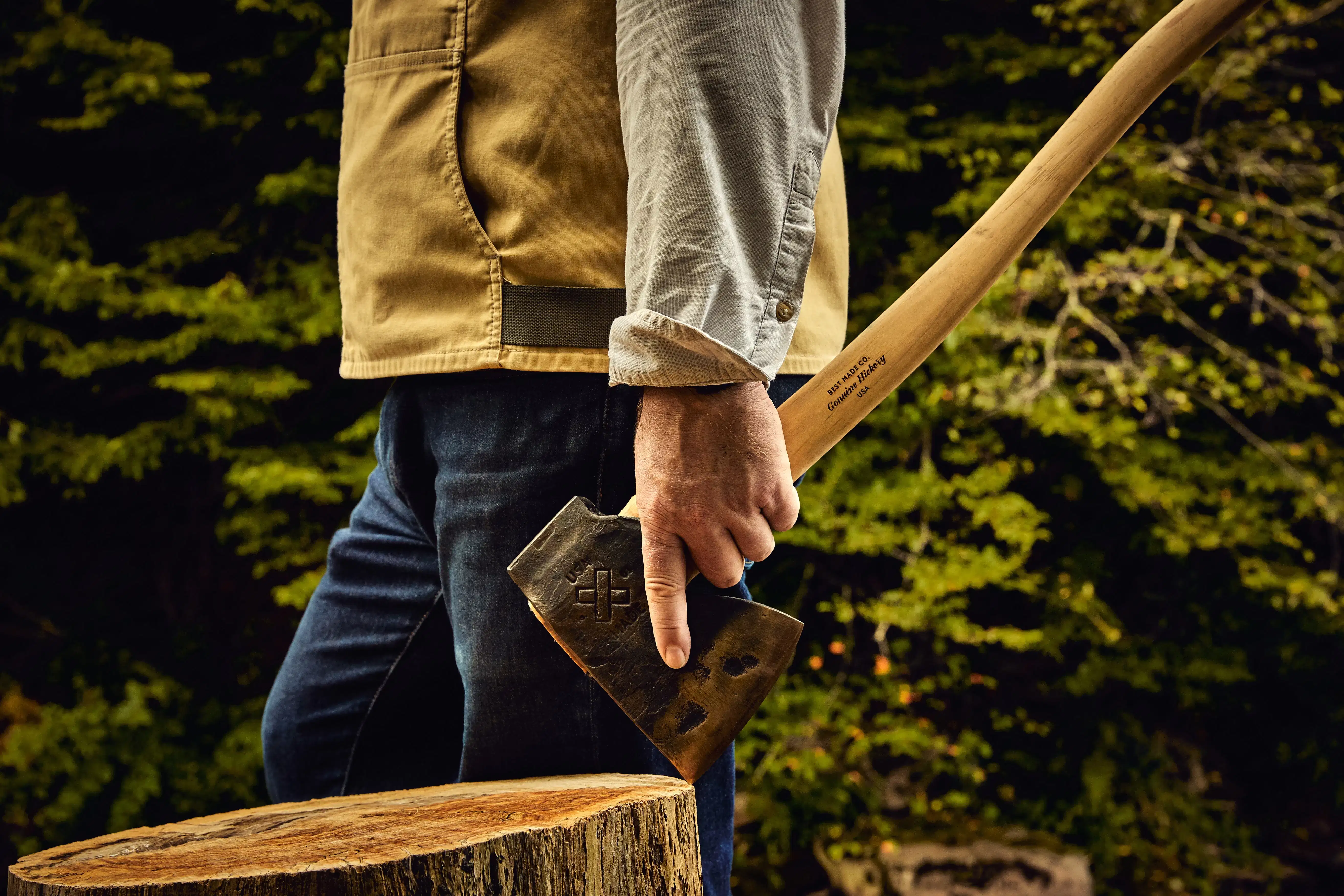
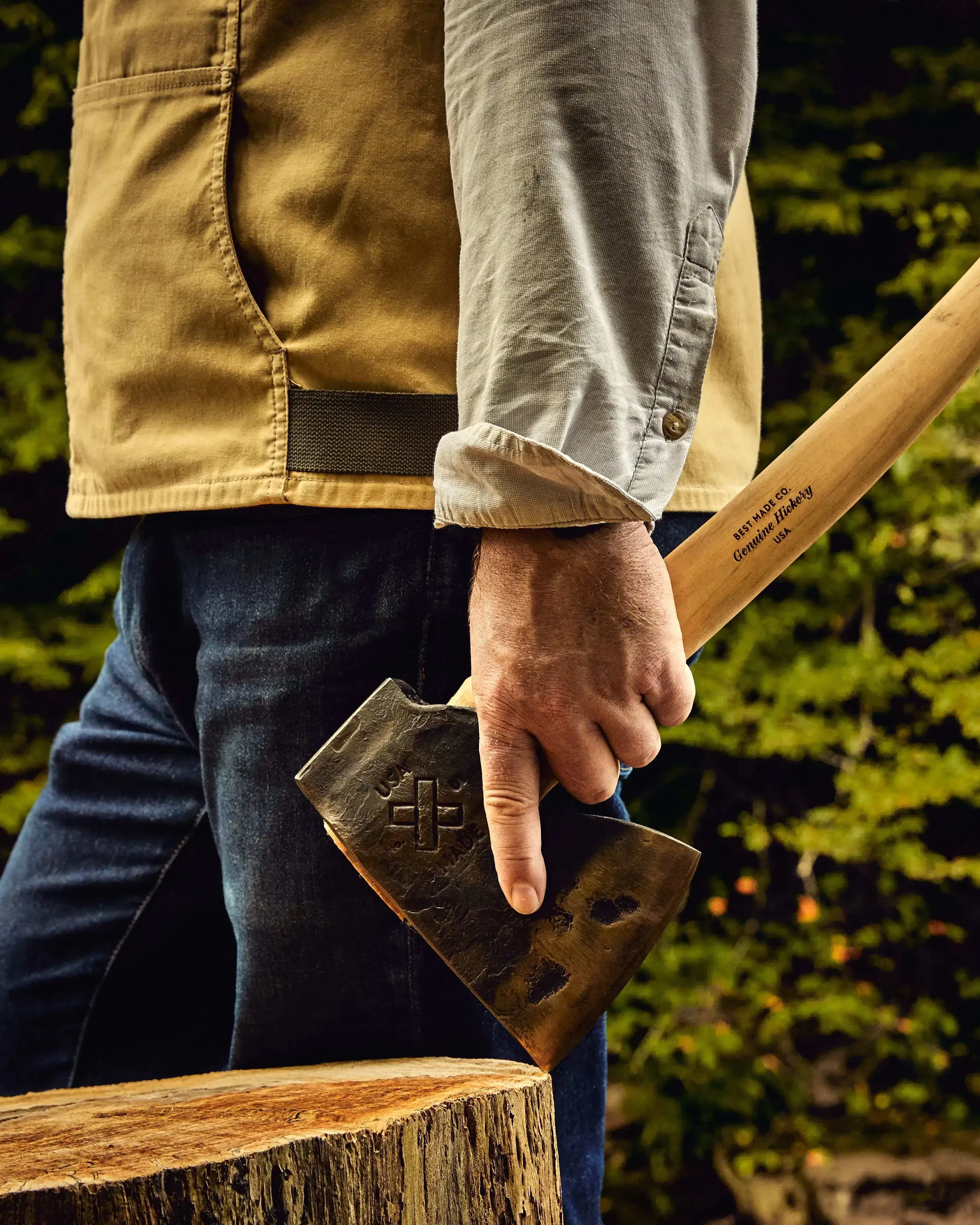
Best Made’s limited-edition Old Gold No. 1 axe.
Best Made’s limited-edition Old Gold No. 1 axe.
Peter Buchanan-Smith (MFA 2001 Design) knows about the power of a well-timed cold call; two in recent years altered the trajectory of his life and work. The first came in July 2023, when workwear supplier Duluth Trading Company unexpectedly reached out to the designer with an offer: Did he want to buy back Best Made Company, the outdoor goods and apparel brand he had founded 14 years earlier?
“It completely stopped me in my tracks,” he recalls. The idea of restarting the company was daunting, given how far Best Made had grown before he stepped away in 2019. But the opportunity to rebuild it at his own pace, from the ground up, was irresistible.
Origin Story
Best Made began in 2009 with a simple and distinctive product: axes with hickory handles painted in bold colors and patterns. The whimsical yet functional tools captivated outdoor enthusiasts and design aficionados alike. The brand embraced an understated design with an iconic “X” logo, pops of scarlet, and a philosophy rooted in optimism and integrity. Its product line expanded swiftly to include blanket-lined coats, wool base layers, canvas totes, and enamelware dishes. Before long, Best Made was a full-fledged modern-day outfitter with stores in New York and Los Angeles, a growing team of investors, and a devoted following.
From the jump, Best Made exuded the vision and lived experience of the founder himself. A lifelong outdoorsman, Buchanan-Smith grew up on a farm in Ontario and spent summers camping in Algonquin Provincial Park, developing a deep appreciation for nature and the well-crafted tools needed to thrive in it.
Buchanan-Smith credits his SVA years for igniting and fostering his entrepreneurial acumen. He was a member of the inaugural class of the MFA Design program, then called Designer as Author, co-founded and chaired by Steven Heller and Lita Talarico (MFA 2007 Art Criticism and Writing). Following graduation, he was recognized for his graphic design work in editorial, art, and fashion, through graphic and product design firm M&Co., as art director for the Op-Ed page at The New York Times and design director of Paper magazine, and, through his own studio, Buchanan-Smith, LLC, as design director for Isaac Mizrahi and designer for musicians including David Byrne, Philip Glass, and Brian Eno. His packaging for the Wilco album A Ghost is Born (2004) won him a Grammy.
“I think about what I learned at SVA all the time,” he says. “As a designer, I feel like I have such an advantage. . . . I build worlds and experiences, and I think that’s something other entrepreneurs have to rely on designers for. I’m lucky I can kind of do that on my own.”
As Best Made matured, Buchanan-Smith, hoping to bring his company into an innovative, sustainable space, found a compelling partner in Bolt Threads, a tech company producing manmade silk fibers. He sold his brand to them in 2016 and stayed on under a three-year contract. However, their accelerated growth model for the company wasn’t a good fit, and he departed in 2019. A year later, Best Made changed hands again, this time to Duluth Trading Company as a sub-brand, but during the ensuing pandemic years, things faltered. In 2020, the retail stores abruptly shuttered, staff were laid off, the @bestmadeco Instagram feed froze, and inventory dwindled. Longtime fans expressed their dismay in the review section on product pages and on social media.
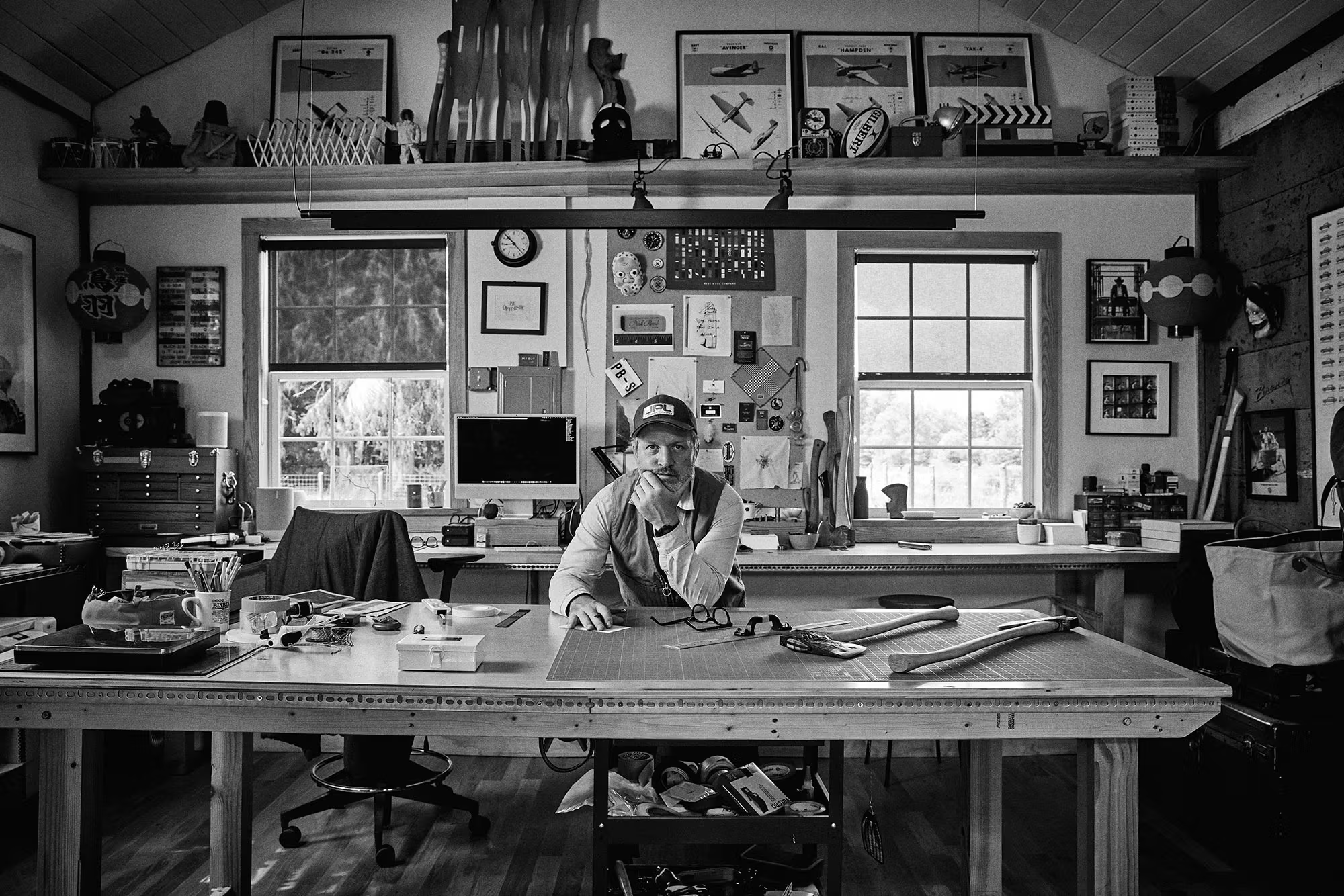
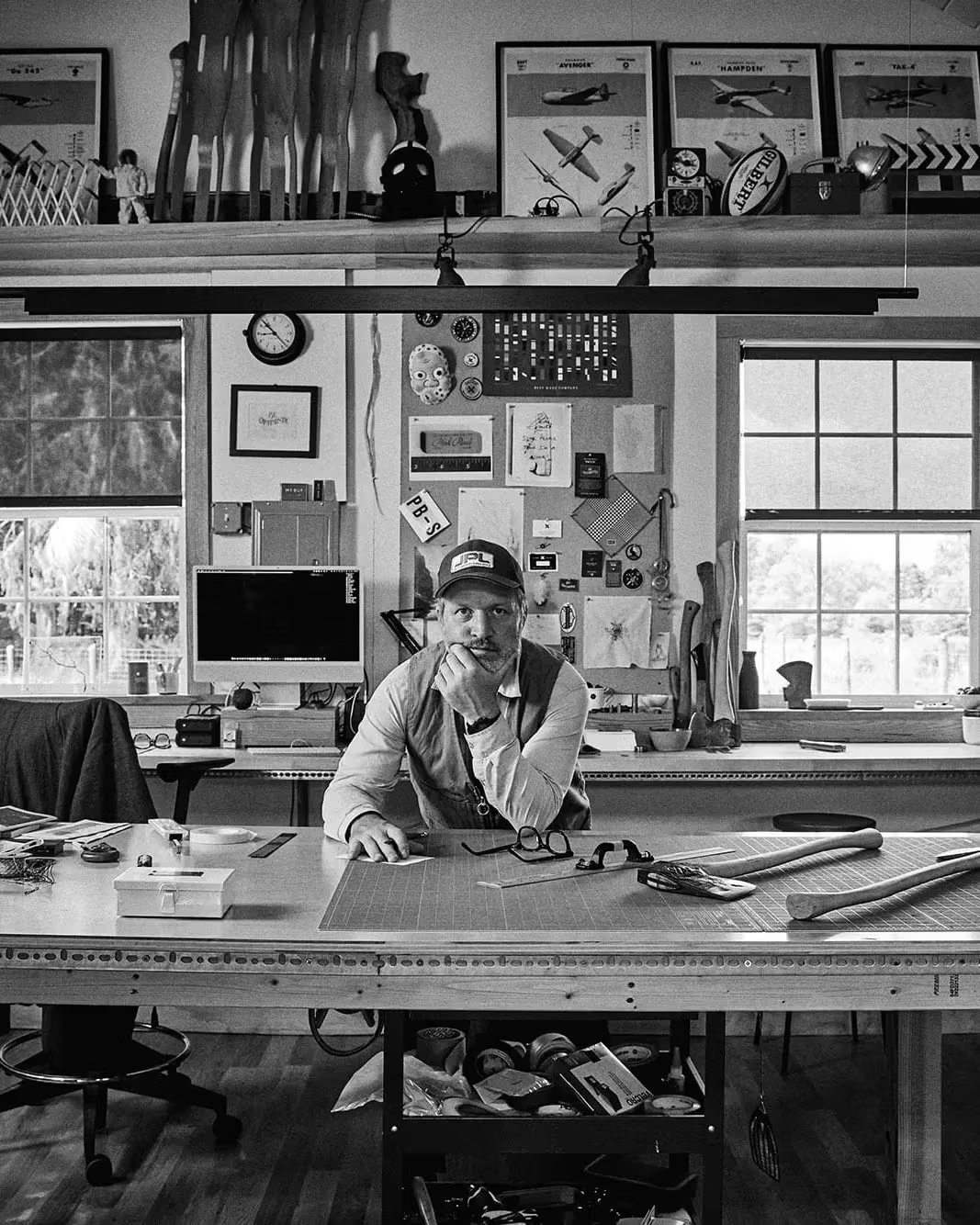
Best Made founder Peter Buchanan-Smith (MFA 2001 Design).
Best Made founder Peter Buchanan-Smith (MFA 2001 Design).
A Return to Craft
By then, Buchanan-Smith had moved on. In 2019, he and his girlfriend decamped permanently to a property in the Catskill Mountains, where he was “keeping Best Made in the rearview mirror and moving forward,” he says. He focused on writing and designing Buchanan-Smith’s Axe Handbook (2021), a guide to buying, using, and maintaining the tools; the history of axes; and the Best Made backstory. He taught himself to sew and designed a canvas work vest to be released under a new label, PBS.
Then came the phone call from Duluth that gave him pause. Eventually, he realized that starting from scratch could be a liberating opportunity. He envisioned a company built at his own pace and with a small staff. “I came to terms with the notion that the mission of Best Made—this dedication to quality—was the mantle that needed to be carried forward and that I didn’t need everything from the past to accomplish that. So much of that was—is—in me, you know?”
The Second Call
In November 2023, Buchanan-Smith announced the news about the relaunch of Best Made in an Instagram video. The response was overwhelming, with 11,000 likes and a flurry of positive comments. He assembled a small team of former collaborators. Soon after, another cold call came in, this one from a blacksmith named Nathan Brandt, owner of a forge in Anderson, Indiana, offering to make an exclusive axe for Best Made. While Buchanan-Smith hadn’t yet considered releasing a new axe, the two clicked immediately. The collaboration yielded the “new” Best Made’s initial release a year later, an axe based on a mid-19th-century design known as the Rockaway and named Old Gold No. 1 for its radiant golden tip. Created in a limited edition of 100 for $450 apiece, Old Gold quickly sold out, and a follow-up, the silver Phantom, launched for pre-order soon after.
“I realized I had been speaking this weird language and now I’ve found someone [on the same wavelength],” he says. “It’s quite powerful when you find an incredible maker.”
The new relationship forged from kismet spoke to what Buchanan-Smith wished for Best Made going forward—a path allowing for more discoveries, exploration, and a greater focus on the stories behind the products. “It’s about how the product is made, and educating and romancing [that] to some extent . . . giving people an appreciation for the things they surround themselves with.” Moreover, in an age of planned obsolescence, as Best Made asserts on its website, buying, using, and properly maintaining quality products is the right and responsible choice—one that brings a deep sense of satisfaction.
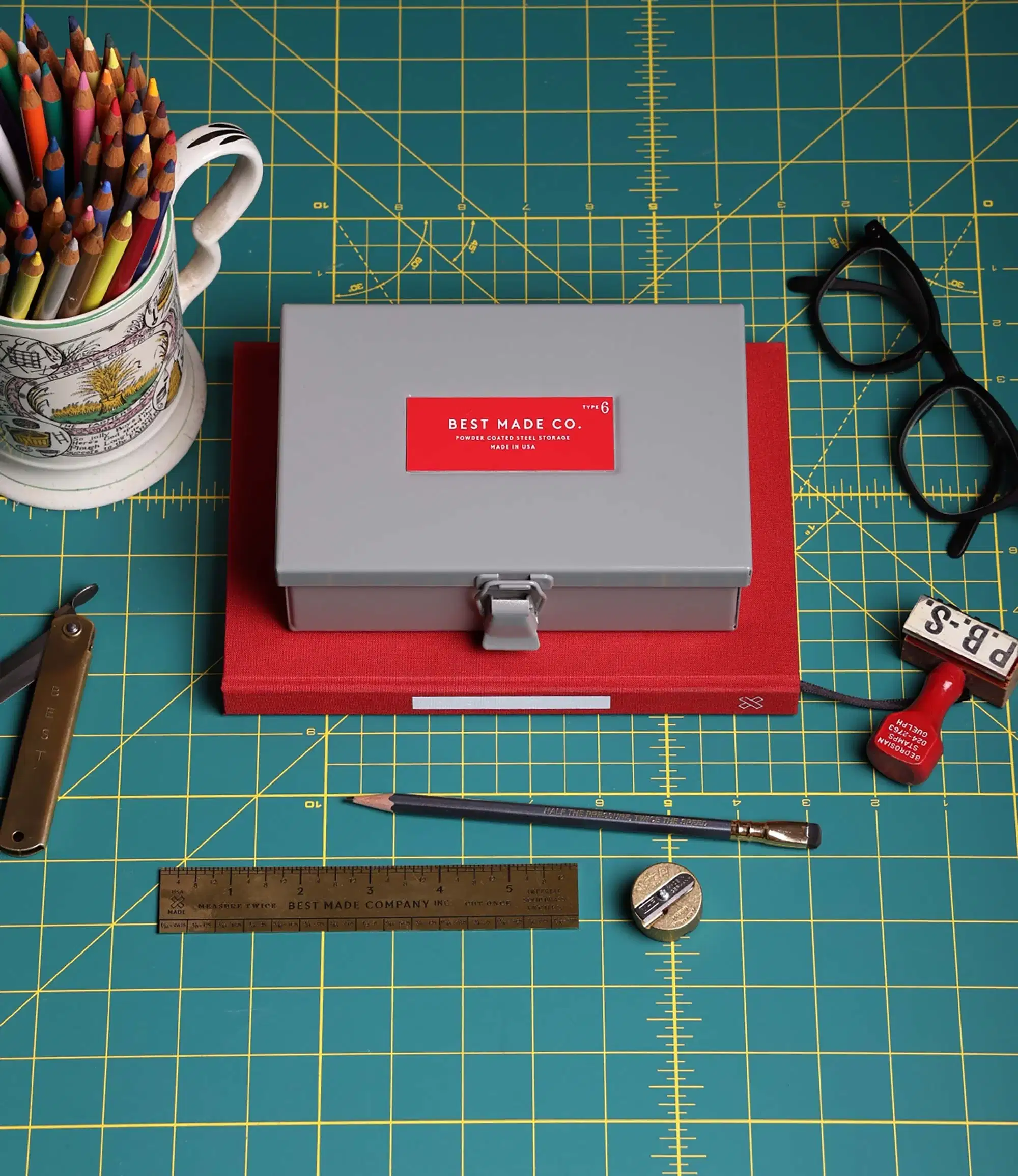
Best Made’s Type 6 strongbox.
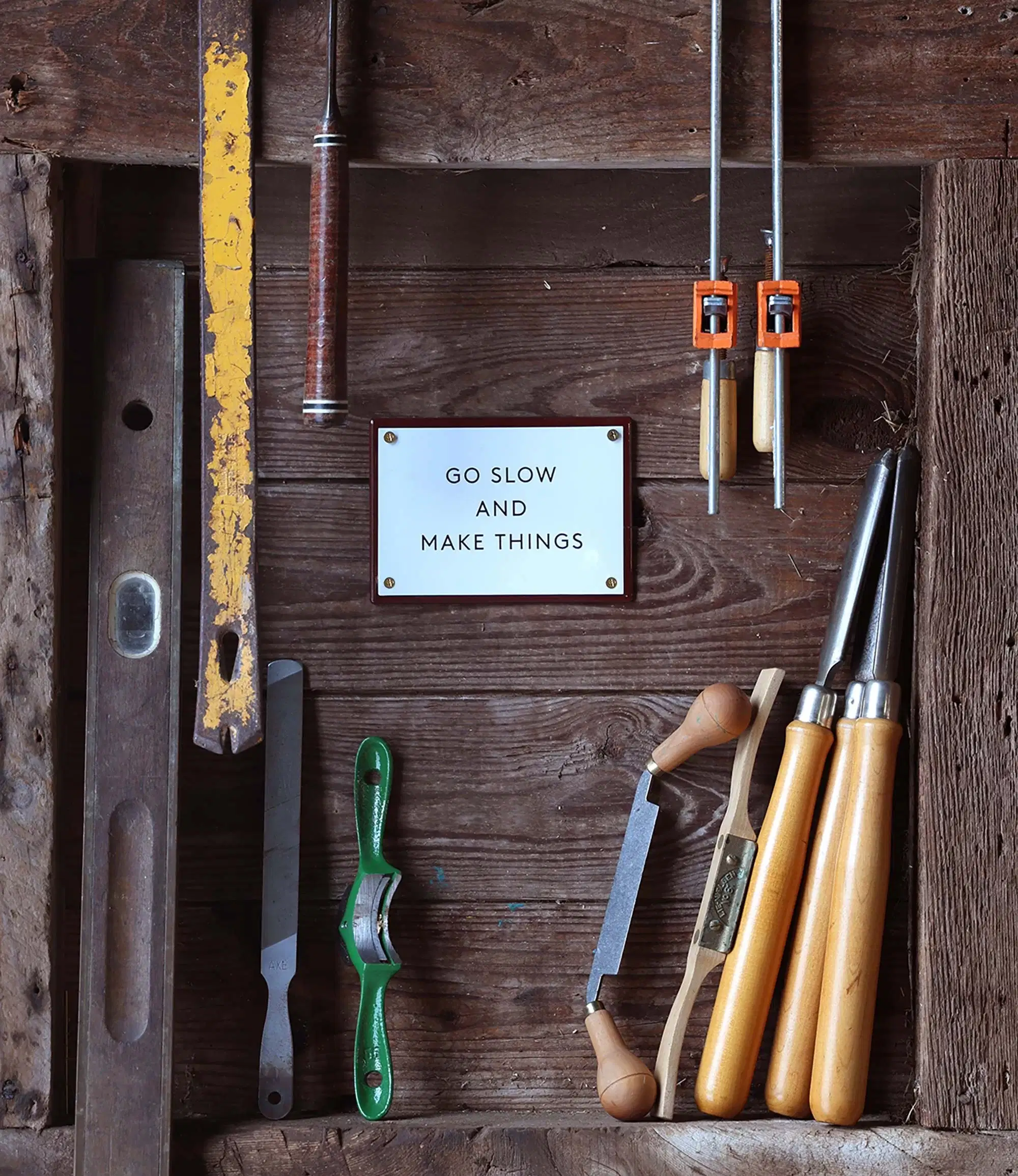
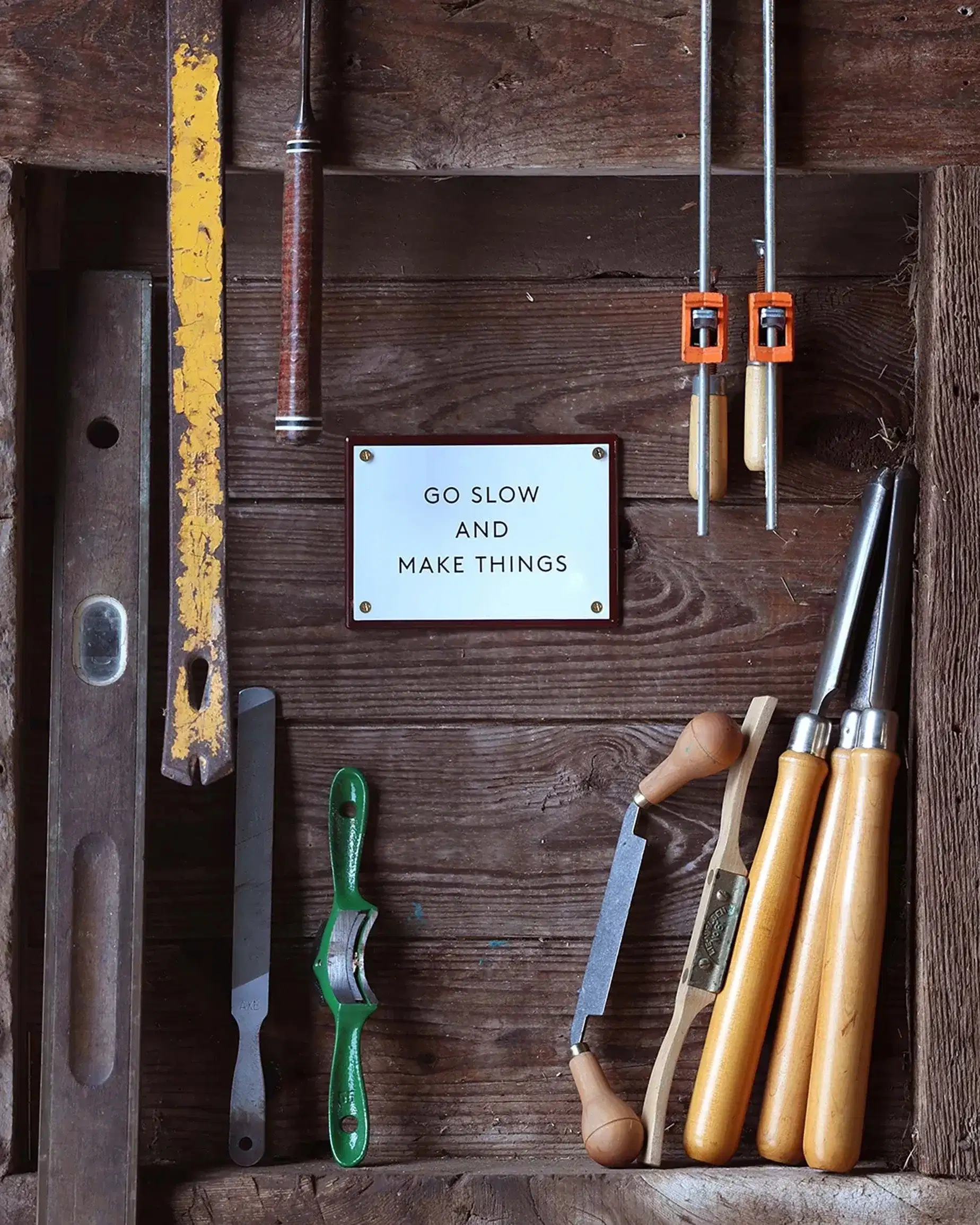
Best Made’s “Go Slow” enamel steel sign.
Best Made’s “Go Slow” enamel steel sign.
New Business, New Stories
Buchanan-Smith’s passion for storytelling was influenced by artist and illustrator Maira Kalman, his MFA Design thesis advisor. His thesis, Speck: A Curious Collection of Uncommon Things—published in 2001 by Princeton Architectural Press—explores the deep connections between people and objects. “She really helped instill this love of objects, and unleashed in me this understanding of the power of objects and the stories that are embedded in them,” he says.
Best Made’s current approach to storytelling includes work-in-progress videos on social media and provenance stories for each product on its website. On Instagram, a slo-mo video of a molten Old Gold axe quenched in an oil bath makes for a literal sizzle reel, while another shows yarns from France and Texas being woven into a twill denim on a vintage Draper loom at a Pennsylvania mill.
“We released two jackets this year, and for the first time, we could really trace the fiber back to its source,” he says. “That’s exciting because it allows us to tell stories about farming, geography, and craftsmanship.” He feels that high-production messaging has long gone by the wayside. “People love these videos because they’re real and personal—that’s incredibly valuable.” A weekly newsletter, Small Big Things, also promises to provide “latest releases, updates, schemes, and dreams.”
Best Made keeps things lean on the product side by focusing on the efficiency of controlled inventory. Products are organized into “new,” “short supply,” and “long supply” categories while The Archive section pays homage to past successes. Customer demand could lead to a re-release of an archived piece, such as in the case of the blue selvage studio jacket, a former bestseller that’s made to order.
Looking Forward
In February 2025, Best Made released another product: a handmade enamel sign from Poland bearing a simple yet powerful adage perfectly encapsulating Buchanan-Smith’s new approach to Best Made and welcome advice to anyone seeking a saner pace during chaotic times. Photographed against a background of seasoned wood beams and well-worn woodworking tools, it reads: “Go Slow and Make Things.”
After a nonstop year of rebuilding, Buchanan-Smith feels reinvigorated. “I’m excited to be more strategic and creative. That’s my background from SVA—creating and communicating in compelling ways. Until now, it’s just been about getting the company back on its feet. But going into next year, I’m excited to focus on my craft.”
A version of this article appears in the spring/summer 2025 Visual Arts Journal.
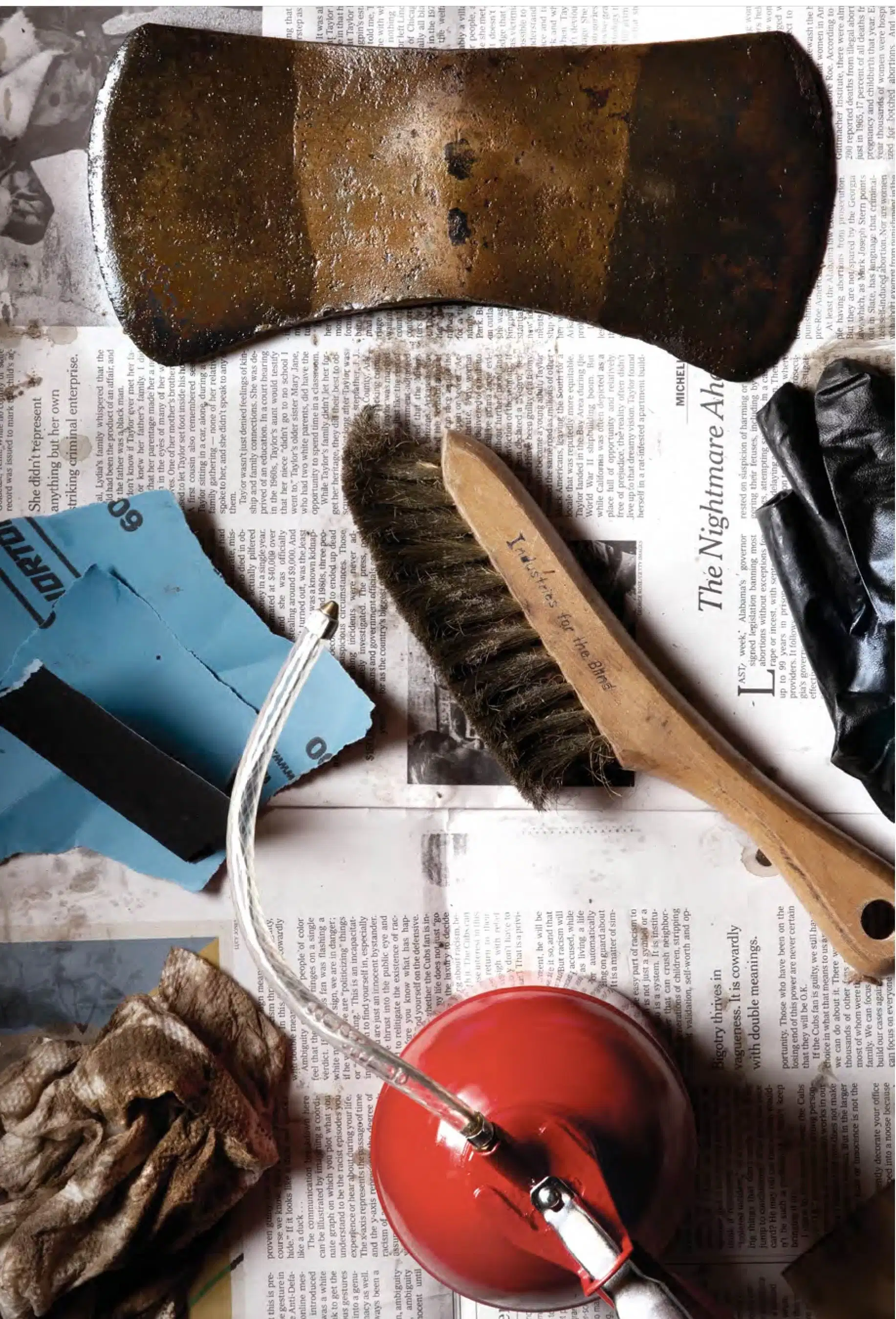
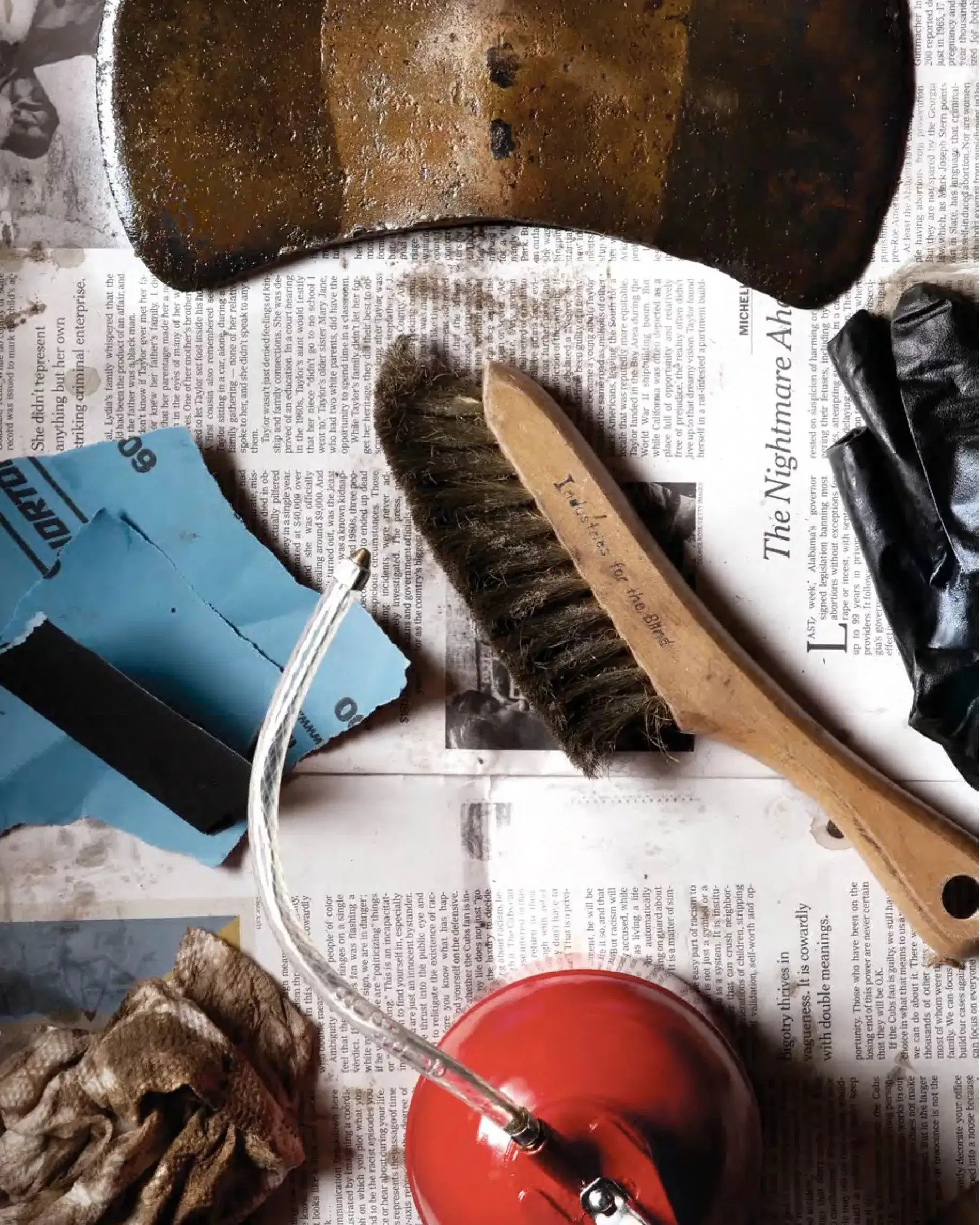
Photo from Buchanan-Smith’s Axe Handbook (Abrams, 2021).
Photo from Buchanan-Smith’s Axe Handbook (Abrams, 2021).