

The Brooklyn-based organization produces publications, interactive kits, and other media to cultivate civic education and engagement.
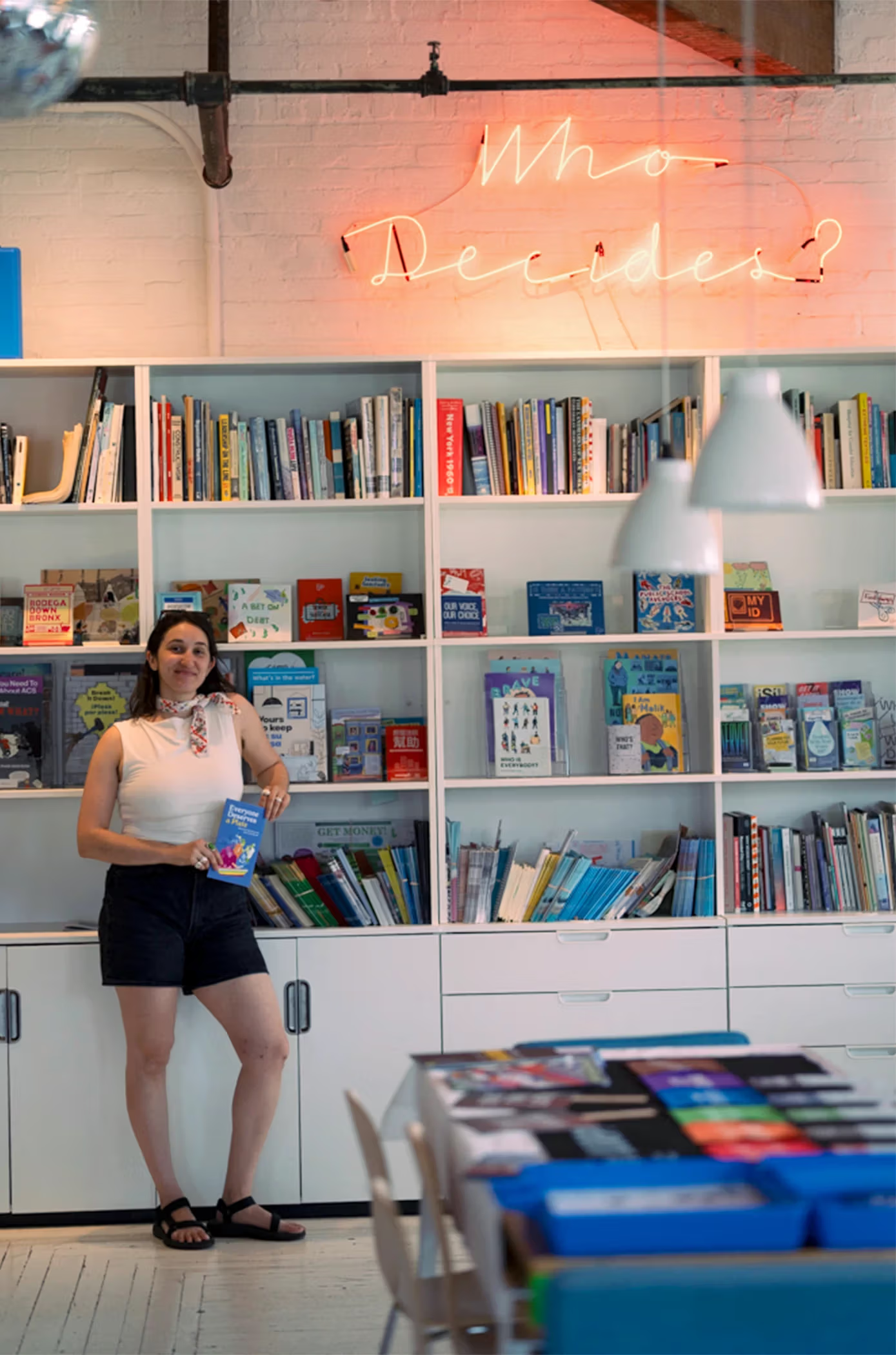
Pilar Finuccio (faculty, MFA Products of Design; MFA 2018 Design for Social Innovation) at CUP, the Center for Urban Pedagogy, located in Brooklyn’s Gowanus neighborhood.
Founded in 1997, the Center for Urban Pedagogy (CUP) is a Brooklyn-based nonprofit that provides accessible and appealing tools such as guidebooks and posters that educate people about government policies and systems, and how they can harness that knowledge to effect positive change for themselves and their communities.
Pilar Finuccio (faculty, MFA Products of Design; MFA 2018 Design for Social Innovation) has served as CUP’s executive director since 2023. In that role, she leads a team of seven staffers, who collaborate with freelance artists, attorneys, social workers, organizers, and, through its youth-education program, high-school students to research and produce a range of printed materials, short-form videos, and interactive kits. Through plain language and inventive visuals, these projects explain the intricacies of the street-vendor licensing process, land-zoning laws, how best to advocate for better public transit, and the like. CUP’s work is distributed by government offices, community boards, and local nonprofits throughout the city and beyond; has reached upwards of 500,000 people; and has won multiple honors, including a 2016 National Design Award for Corporate and Institutional Achievement from Cooper Hewitt, Smithsonian Design Museum.
For the last 15 years, CUP has made its home in the Gowanus area, occupying an airy, high-ceilinged studio in a former can factory, where its neighbors include architects, artists, filmmakers, musicians, and small book publishers. This past summer, Finuccio welcomed the Visual Arts Journal, the magazine of the School of Visual Arts, to the space, for a conversation about CUP’s history, mission, and culture.
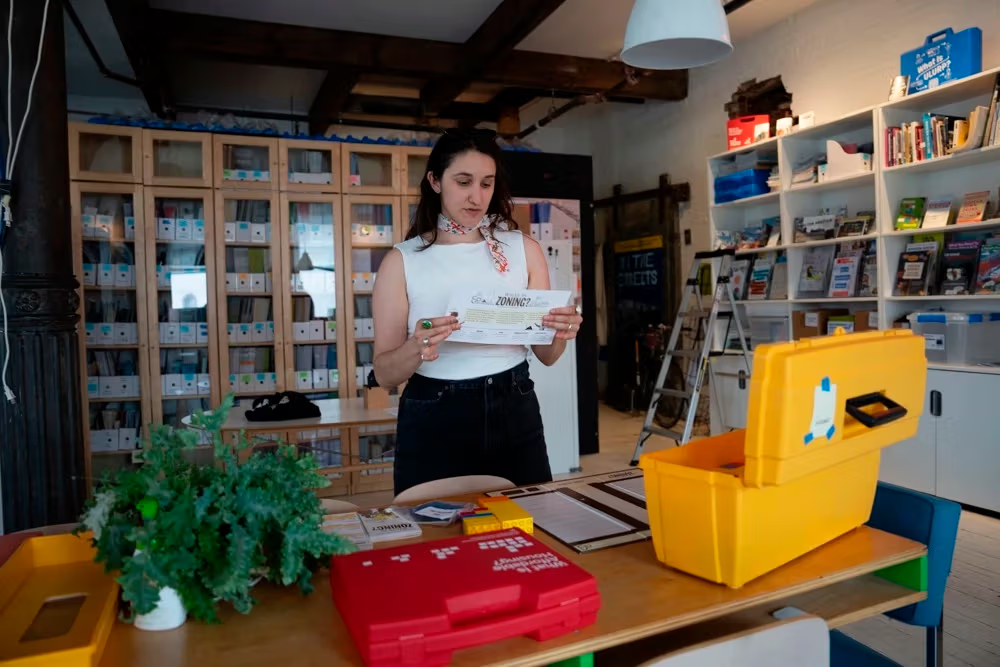
CUP Executive Director Pilar Finuccio (faculty, MFA Products of Design; MFA 2018 Design for Social Innovation) sets up two of the organization’s interactive kits for demonstration at CUP’s studio in Brooklyn.
Finuccio grew up in Florida and studied graphic design at North Carolina State University. After graduating, she moved back to her home state to work for the O, Miami Poetry Festival, a civic-minded annual event that aims to expose all residents of Miami-Dade County to poetry through site-specific installations and performances.
That experience led her to the MFA Design for Social Innovation program at SVA, with its focus on using design for altruistic ends. While she was a student, CUP’s then–executive director visited the department to talk about the organization’s work; not long after graduating, Finuccio had joined its staff.
“In graphic-design school, I didn’t know that work like CUP’s could be what I did,” she says. “When I saw what CUP was creating, I knew it reflected my interests. I wanted to use graphic design to support education.”
Two years ago, Finuccio joined the faculty of another SVA program, MFA Products of Design, for which she co-teaches the course Design for Public Policy. “It’s very much in the same vein as what we do at CUP,” she says. “It’s about understanding the policy, laws, and systems that shape our society, and seeing where and how the design and decisions that underpin those laws and systems come together.”
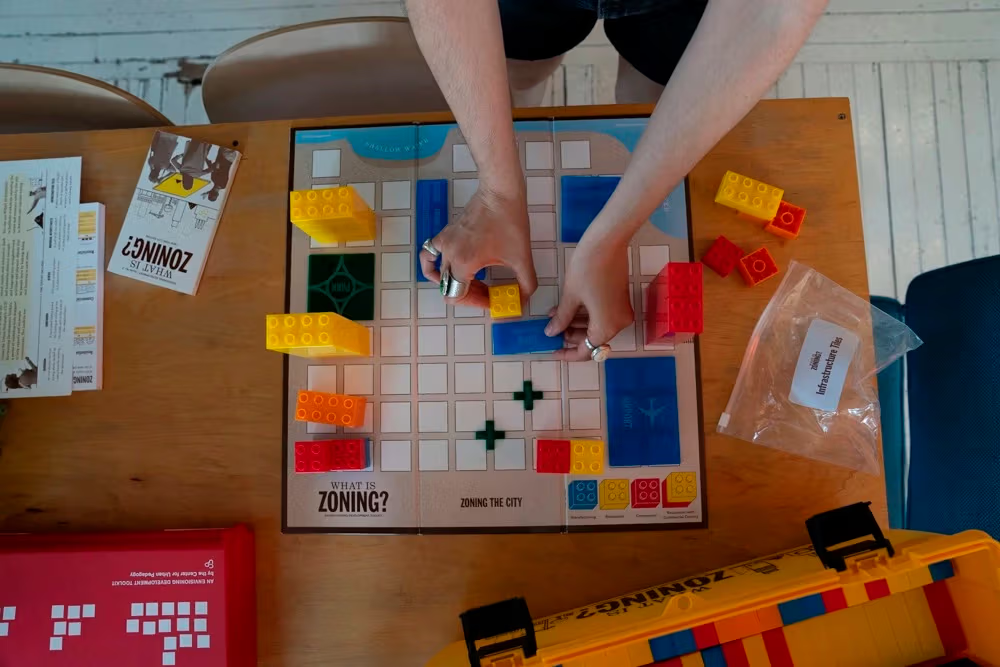
CUP’s “What Is Zoning?” interactive kit, which illustrates complex land-use regulations through game play.
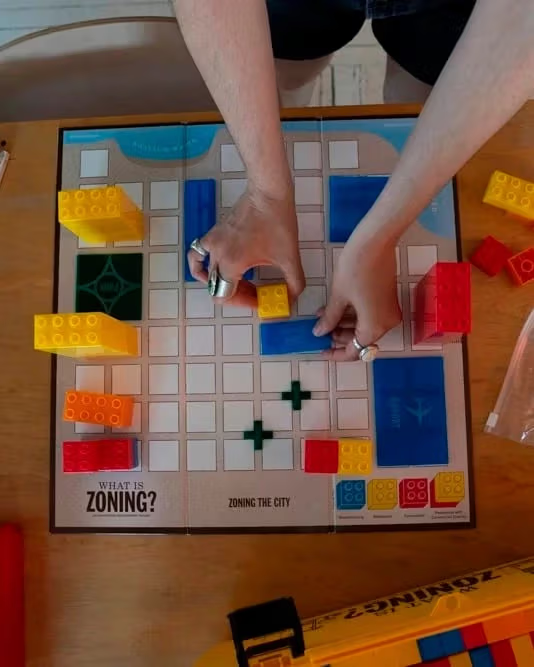
CUP’s “What Is Zoning?” interactive kit, which illustrates complex land-use regulations through game play.
Although the bulk of CUP’s work is in print projects, the organization also creates interactive tool kits, designed to guide a group of participants through especially complicated or multilayered topics.
The three kits in use right now—“What Is Affordable Housing?,” “What Is ULURP?,” and “What Is Zoning?”—tackle complex and sometimes contentious housing and land-use issues. “What Is Affordable Housing?” employs a felt wall chart and squares to help participants determine their eligibility for various affordable housing programs. “What Is ULURP?” includes role-playing cards and scripts to dissect the Uniform Land Use Review Procedure, the process through which New York City decides how land within the five boroughs can be utilized. The “What Is Zoning?” toolbox includes plastic tiles, building blocks, and a two-sided game board to illustrate zoning topics like allowable building types, heights, and footprints, as well as neighborhood density. These kits are used throughout the city at community board meetings, usually with a CUP staffer facilitating the workshop.
Additionally, CUP’s Youth Education program—through which they partner with local teens and educators to help them identify and research issues that impact their lives—often results in short-form video documentaries or zine-type publications, produced by the students themselves and viewable on CUP’s website, welcometocup.org. These have covered such subjects as gentrification, assessing Bronx residents’ happiness and quality of life, and migrant students in New York City’s public schools.
“The goal is to build civic leadership—to have students see themselves as agents of change, and as capable of participating in the city and the systems that make it up,” Finuccio says.
In the summer of 2025, CUP Teaching Artist Violet Overn and Fannie Lou Hamer Freedom High School students teamed up to investigate how systemic inequalities shape the educational and employment opportunities available to Bronx youth, and what opportunities and resources are available for young people in the Bronx.
Each year, CUP produces between eight and 10 new or revised projects. Most often, these take the form of a printed work, whether a pocket-sized pamphlet, poster, or full-sized comic or picture book. The subject can be straightforward—for example, informing workers of their safety rights—or intimidatingly knotty, such as how to apply for asylum in the U.S. Depending on the intended audience, a publication can be produced in multiple languages: Vendor Power!, CUP’s 2009 street-vending guide, is in Arabic, Bengali, Chinese, English, and Spanish.
Many of these projects originate in CUP’s Making Policy Public program. In late summer, the organization holds an open call, soliciting ideas from advocates and organizers about policies, systems, or processes that are affecting their communities. The winning entries are chosen by a guest jury and produced at no cost to the submitters through a collaboration among them, CUP, and freelance artists. Past Making Policy Public collaborators include The Door, a longstanding youth-development organization in New York City, and the New York City Community Land Initiative, dedicated to advancing community land trusts.
CUP for Hire, an initiative through which CUP serves as a paid collaborator for socially minded education and outreach tools, generates the rest of the organization’s workload. Past CUP for Hire clients include the Center for Justice Innovation, for which CUP produced a series of picture books and graphic novels for children and teens about understanding and navigating family and dependency courts.
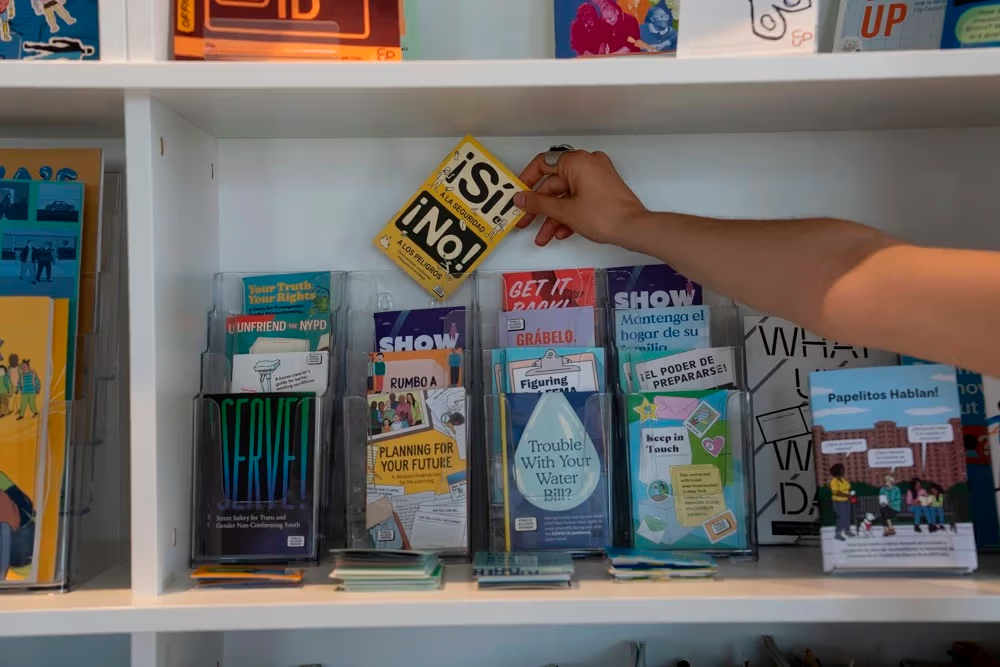
Many of CUP’s projects take the form of a printed work, whether a pocket-sized pamphlet, poster, or full-sized comic or picture book. The topic can be straightforward—for example, informing workers of their safety rights—or intimidatingly knotty.
The CUP staff—comprising artists, educators, and social workers—cultivate a workplace where imagination and big ideas are encouraged. To blow off steam and fight burnout, they’ll gather for a round of “exquisite corpse” drawing, posting finished works on the office’s door. On a recent work retreat, everyone was given $25 to spend at a nearby art-supply store to make something that symbolized the role they play in creating social change. (Finuccio built a fanciful pair of binoculars, a symbol for envisioning better futures.) And objects of interest and inspiration are all around, like a handmade flip book about how to make an apple pie—a gift to Finuccio from one of her SVA students.
Throughout its history, CUP’s mission and culture have attracted notable designers and illustrators. Its cofounders include Stella Bugbee, now the editor of The New York Times’s style section, who also designed the CUP logo. Collaborators, fellowship recipients, and guest jurors have included such SVA community members as MFA Visual Narrative staff member Sarula Bao, Boyeon Choi (MFA 2013 Illustration as Visual Essay), BFA Illustration faculty Ishita Jain (MFA 2020 Design for Social Innovation) and Eugenia Mello (MFA 2017 Illustration as Visual Essay), Tala Safie (MFA 2018 Design), and Aishwarya Srivastava (MFA 2025 Design for Social Innovation).
“Our work is a testament to how art and design can show us what we have, need, and want for ourselves and each other,” Finuccio says. “It’s a testament to all the care, hard work, and imagination it takes to make this city equitable, just, and beautiful.”
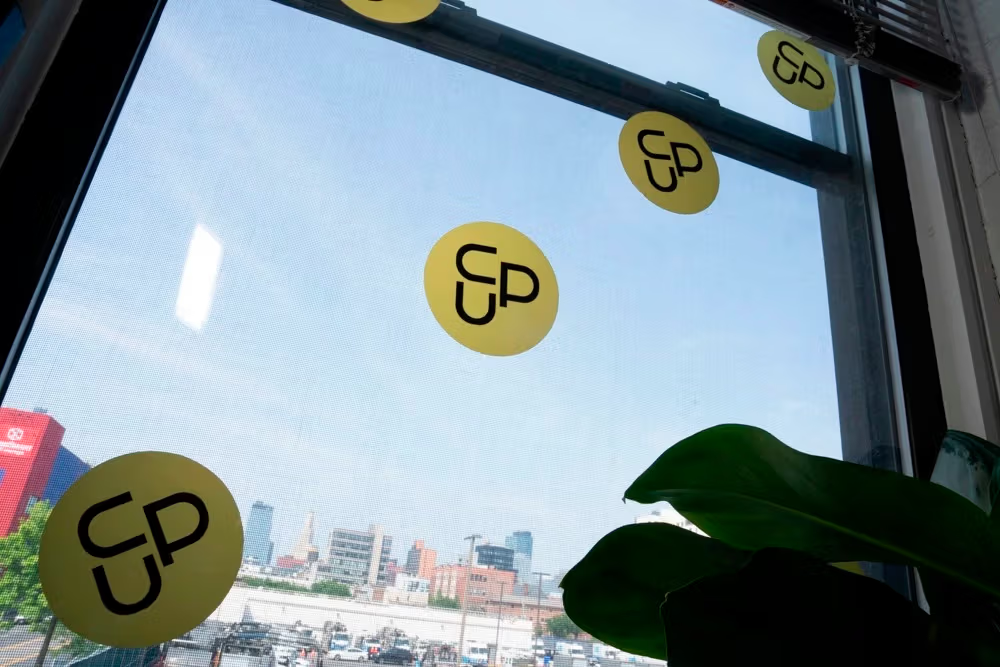
CUP’s mission and culture have attracted notable designers and illustrators, including many SVA alumni and faculty. CUP’s cofounders include Stella Bugbee, now the editor of The New York Times’s style section, who also designed the organization’s logo.
Photographs by Jeremy Cohen (BFA 2014 Photography).
A version of this article appears in the fall/winter 2025–26 issue of the Visual Arts Journal.