

The SVA alumnus on 45 years of hosting Filmmakers Dialogue, his screening and Q&A series at the College.
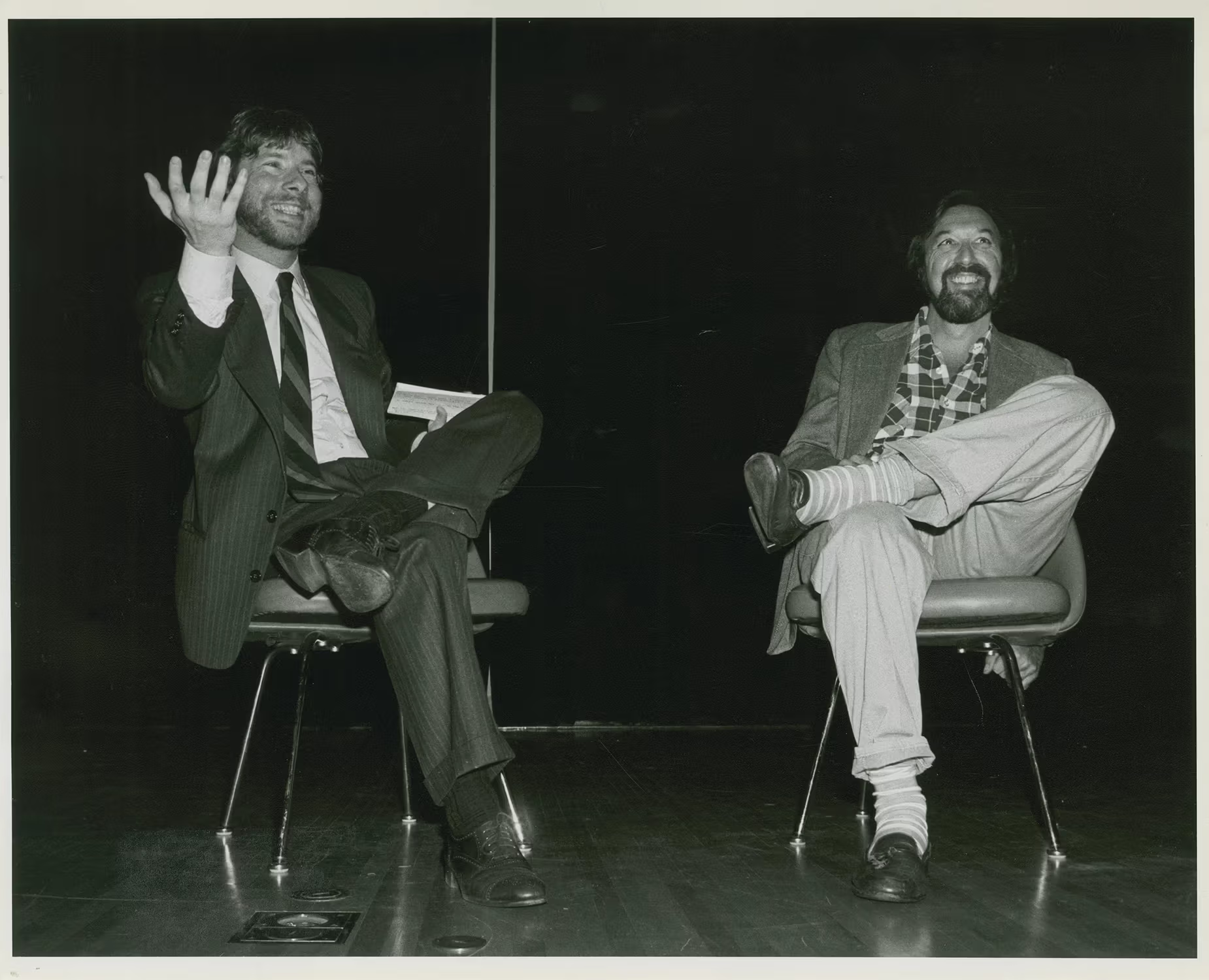
Ralph Appelbaum (BFA 1978 Film and Video), left, with director James L. Brooks at an SVA Filmmakers Dialogue event for Terms of Endearment (1983).
Forty-five years ago this year, actor John Hurt, director David Lynch, and producer Jonathan Sanger took the stage at Lincoln Center’s Bruno Walter Auditorium following a showing of their new film, The Elephant Man (1980), for the first SVA Filmmakers Dialogue, a film-screening-and-Q&A event series created and hosted by Ralph Appelbaum (BFA 1978 Film and Video).
Despite the fact that Appelbaum and his guests had to sit cross-legged on the floor—not knowing that Lynch would be accompanied by Hurt and Sanger, the venue had failed to provide enough chairs—it was an auspicious debut for the series. In the years since, Filmmakers Dialogue has hosted some 1,000 directors, actors, and other professionals, a tally heavy with boldfaced names including the likes of John Carpenter, Gene Hackman, Samuel L. Jackson, Arthur Penn, and Michelle Pfeiffer. The list goes on with SVA graduates-turned-filmmakers Chie Hayawaka (BFA 2001 Photography), Dan Minahan (BFA 1987 Film and Video), Bennett Elliott and Robert Kolodny (both BFA 2010 Film and Video), and more.
Appelbaum has built a devoted audience for his fall and spring semester programs, held at venues throughout the city until the SVA Theatre opened in 2009. (For more information, visit sva.edu/filmmakers-dialogue.) This past summer, ahead of Filmmakers Dialogue’s 45th year, he spoke with the Visual Arts Journal about the project’s origins in his student days, his approach to interviewing, and the only guest who made him nervous.

Where did you grow up, and when and why did you fall in love with film?
I grew up in an apartment complex in Brooklyn called Beach Haven, which sounds like a really nice place, and in some respects it was. There was a lot of grass and you could play touch football, stickball, things like that. And once a month, this guy in a suit, Fred C. Trump, and his son Donald would come to pick up the rent money. That was growing up in Beach Haven.
There were a lot of theaters around there, so as a kid I would go to see movies a lot. They had matrons then, and they would chase young kids from the main section where the adults would sit, which is where I always wanted to sit. But movies were a great escape. I remember seeing West Side Story [1961] and The Haunting [1963], both by Robert Wise.
When I decided to study film, the School of Visual Arts was at the top of my list. I got to meet [founder] Silas Rhodes, who was very generous, and I got a scholarship to go, and it was onward and upward from there.
You started hosting events at SVA with directors while you were still a student. What made you decide to do that? How, as an undergraduate with no entertainment industry connections, were you even able to do that?
SVA’s thing has always been to have working professionals as faculty, but I was always wishing that there would be more guest speakers on campus. So I started asking directors if they would come to show and discuss their work.
This was much easier to do then, because the Directors Guild had a book that published addresses and numbers for all of their members. I’m sure they don’t make that public anymore. Some directors and actors also had offices at the studios, because they had deals. And you would write them a letter. I was very good at writing letters. I have a whole stack at home of letters from big directors like Sam Peckinpah and David Lean, and they were very generous in responding. Maybe at that time they weren’t getting as many invitations to do things like that. At that time, it was quite unique.
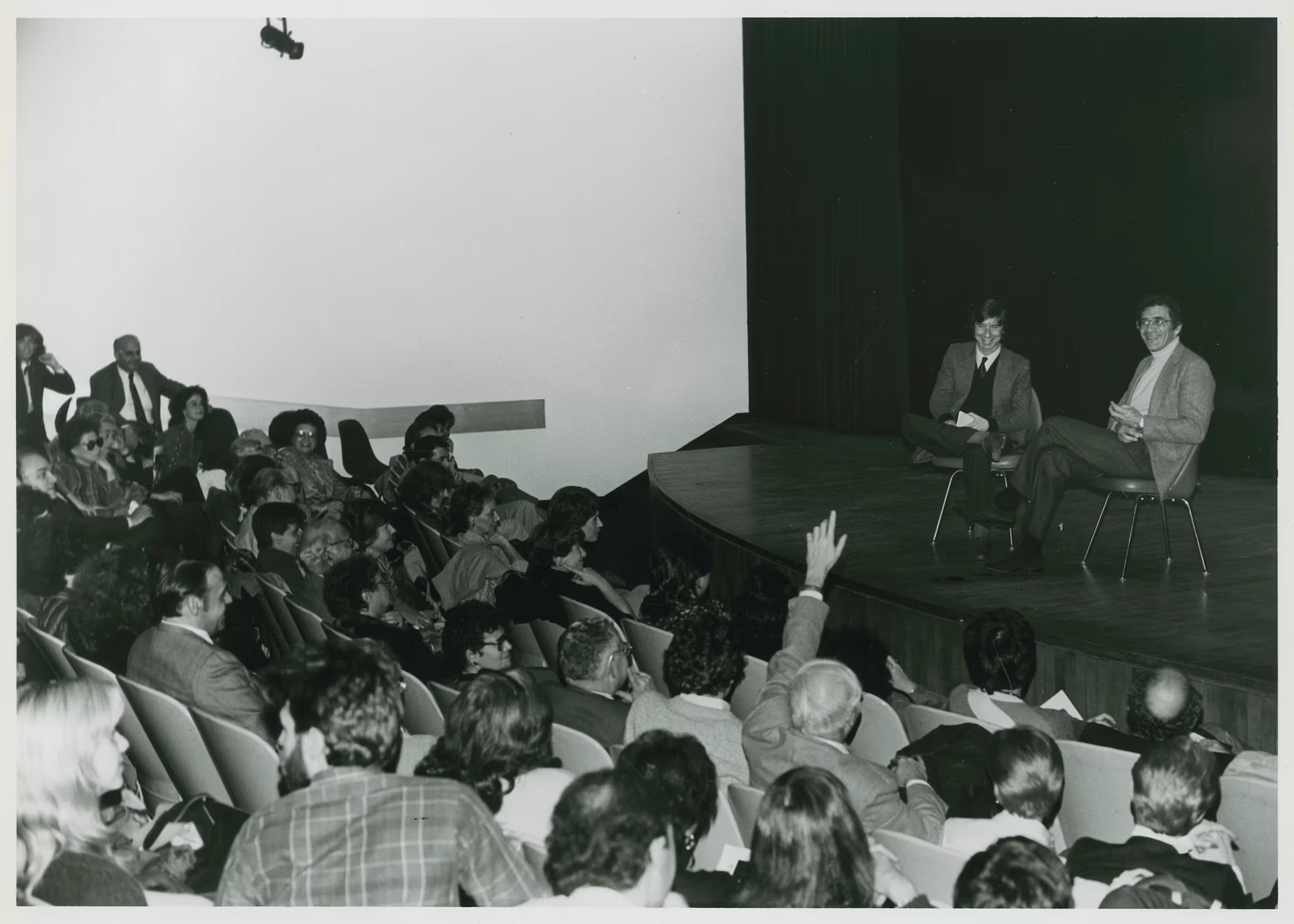
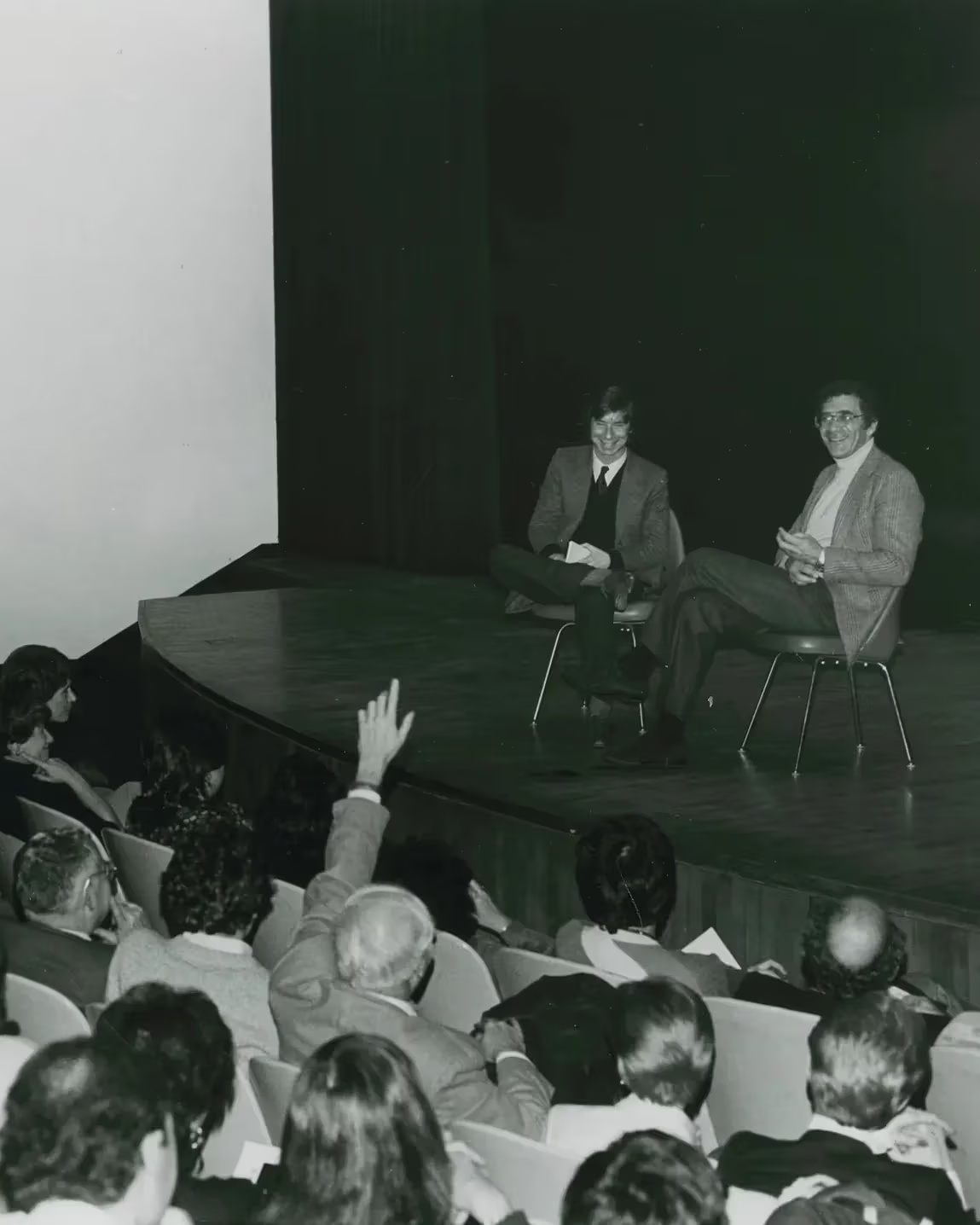
Ralph Appelbaum (BFA 1978 Film and Video), left, with director Sydney Pollack at an SVA Filmmakers Dialogue event, c.1980s.
Ralph Appelbaum (BFA 1978 Film and Video), left, with director Sydney Pollack at an SVA Filmmakers Dialogue event, c.1980s.
Who was the first director to say yes?
I can’t remember who was the first—I think it was either Hal Ashby, with Bound for Glory [1976], or Brian De Palma, with Phantom of the Paradise [1974]. But I invited all these people—John Schlesinger, who’s best known for Midnight Cowboy [1969]; Alan Parker, who’d had Midnight Express [1978] come out; and Michael Winner, who was successful with the Death Wish movies. I did a retrospective on the films of Robert Wise and printed a book, like a pamphlet, with an essay by William K. Everson, who was a film historian and also an instructor at the school.
Were you—or are you—ever nervous about getting up on stage with these big stars?
No, not really.
The only time I’ve gotten nervous was when I had Clint Eastwood. He came with Honkytonk Man [1982], and we did it at the Paris Theater. For me, Clint Eastwood was larger than life. His Westerns and the Dirty Harry series were very much films that I enjoyed, and I looked up to him. And he had all of the charisma that you would expect from a movie star, but he was also very nice and it was the start of a long relationship where I showed several of his movies and, if he wasn’t there, he enabled his actors and producers and other talent to come. So whenever I think I’m gonna get nervous about something, I just say, “Hey, I did Clint Eastwood. Nothing’s gonna match that one.”
One person who was a little intimidating, though, was Paul Schrader. I remember he had a can of beer in his hand. He was a little tough, but still generous with his time and informative, and he came back with his films later on, so I guess he had a good time. Almost everybody would come back more than once, because I think they liked the atmosphere. The people who attend are interesting, bright, real cineastes who ask good questions.
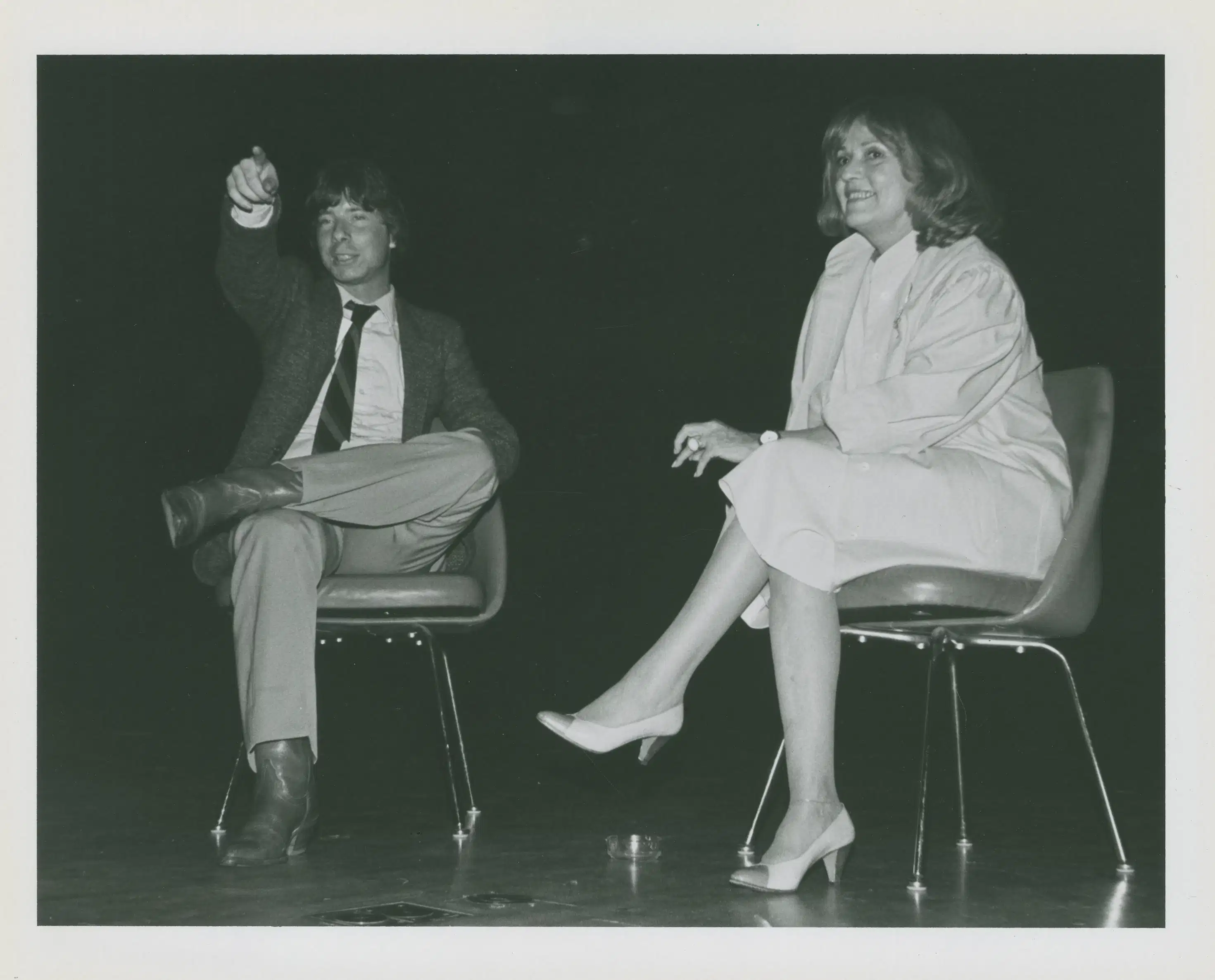
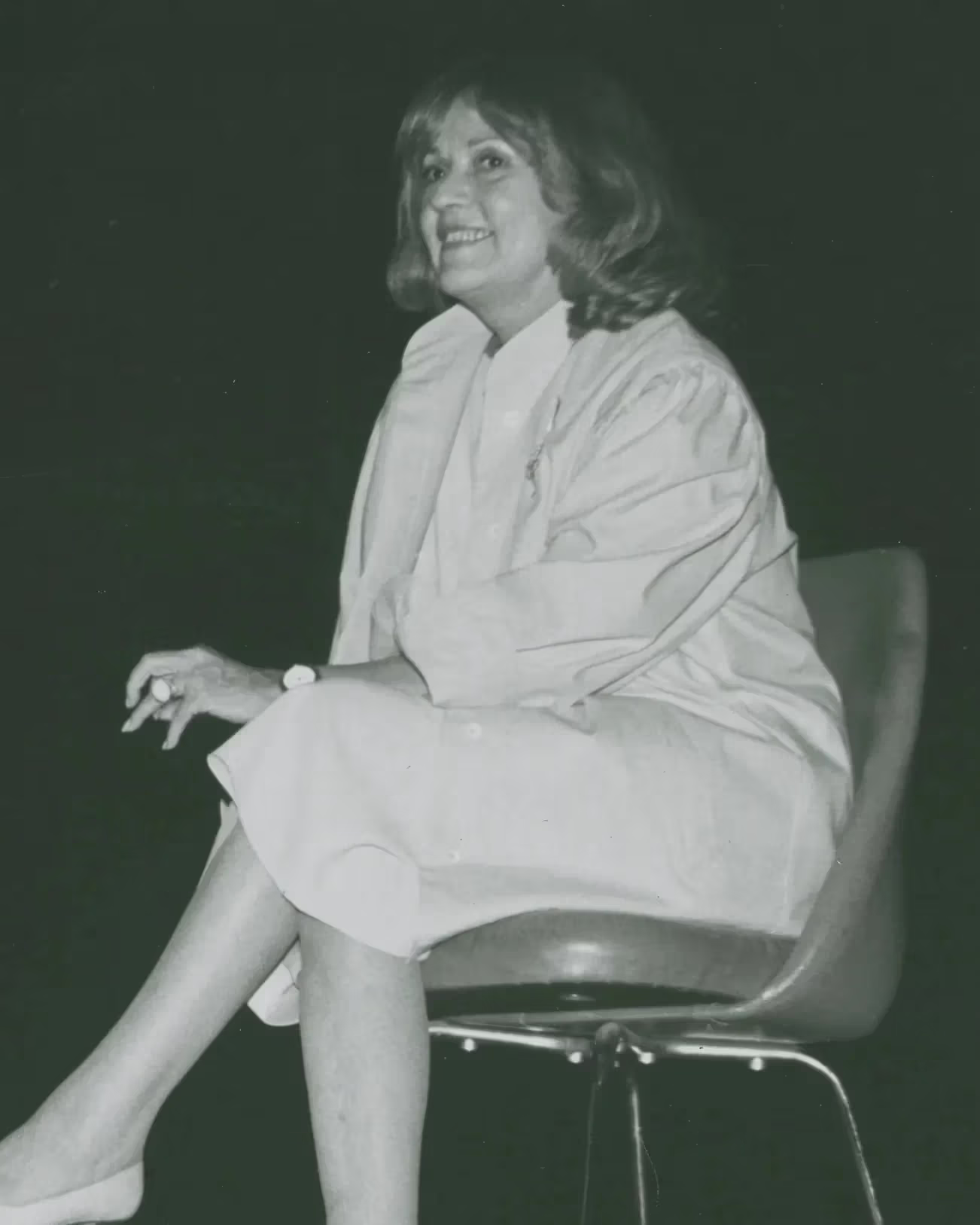
Ralph Appelbaum (BFA 1978 Film and Video), left, with actress Jeanne Moreau at an SVA Filmmakers Dialogue event, c.1980s.
Actress Jeanne Moreau at an SVA Filmmakers Dialogue event, c.1980s.
Forty-five years ago, you could look up the address of an actor or director and write them a letter. Today, that information is harder to find, things move faster, and the film industry has become so much more international. How do you program and schedule your events now?
The beginning of July is really when I start to look very carefully at what the Telluride, Toronto, and Venice festivals are going to spotlight. My audience wants the more “grown-up” movies, as opposed to those big summer blockbusters.
I try to see as many films as I can early, then I’ll go to the publicist or the studio—or the filmmaker, if I know them personally—and that’s pretty much how it works. It’s a constant juggling of, “You can get the film on a certain date, but will you be able to get the guest on that certain date?” Because you don’t know where they’re gonna be. Most of the time, it works out.
And how do you prepare for your interviews?
I always watch the film in advance, and I also try to see as many of the previous films that my guest has made, so that I can get a sense of what similarities one film has to another and what they like to explore.
If I do anything as an interviewer, it’s just to fade into the background and let the filmmaker talk about what their creative process is like and be the star of the night. I’m always interested in hearing what they like about a particular subject and what the challenges were during the making of a particular film.
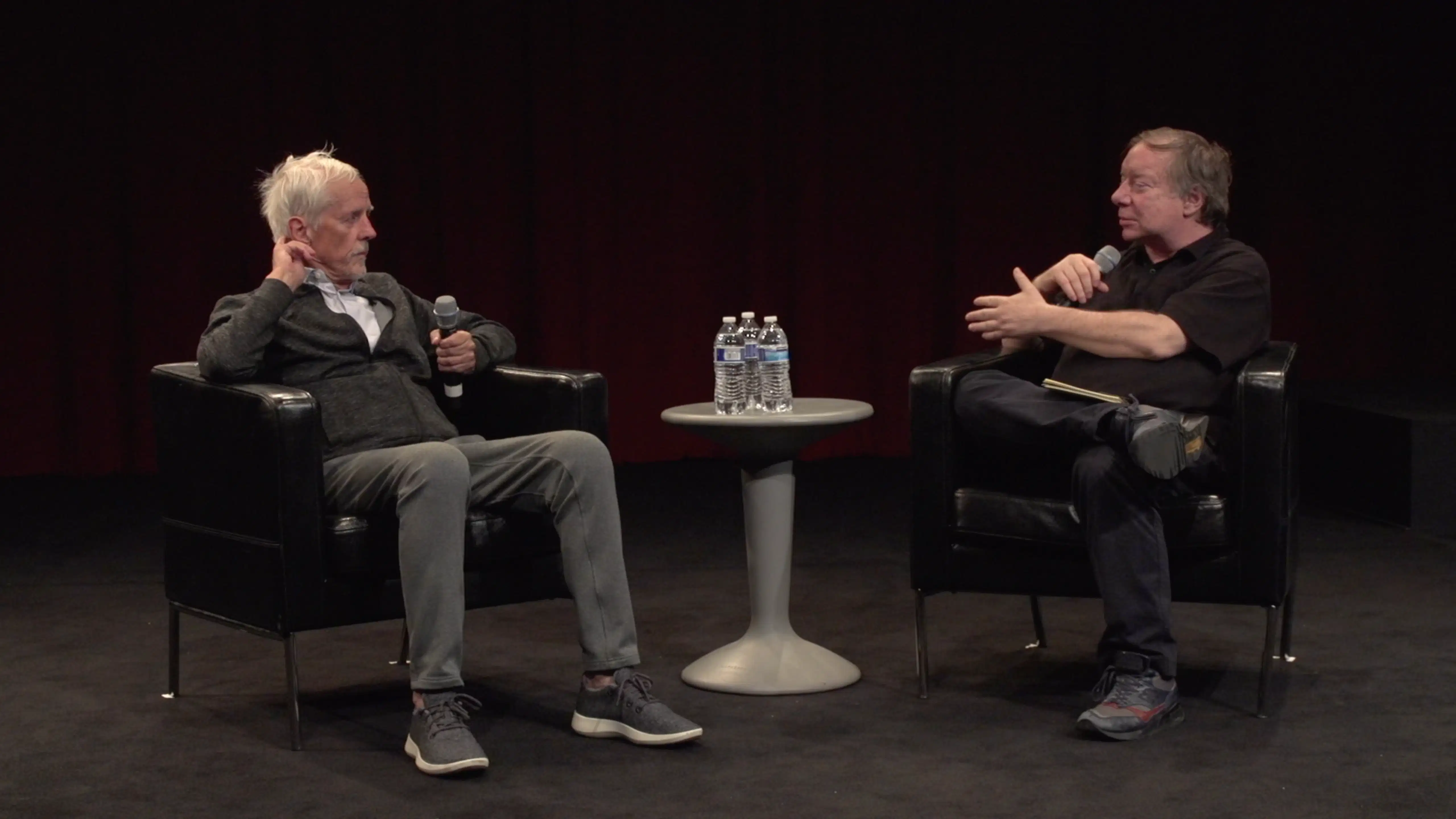
Director Michael Apted (left) with Ralph Appelbaum (BFA 1978 Film and Video) at an SVA Filmmakers Dialogue event for 63 Up (2019).
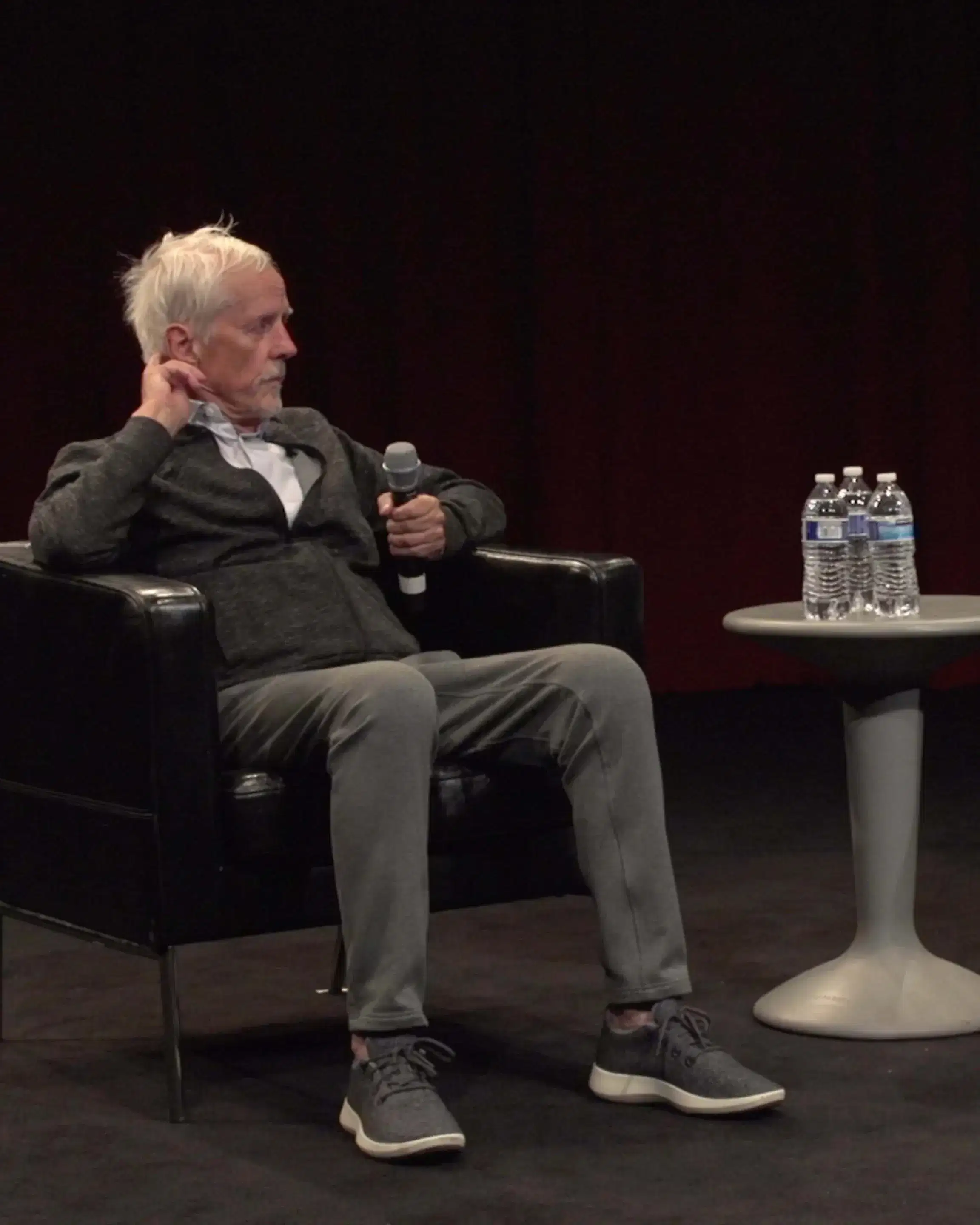
Director Michael Apted at an SVA Filmmakers Dialogue event for 63 Up (2019).
Who have been some of your memorable repeat guests?
I’ve shown several James L. Brooks films, beginning with Terms of Endearment [1983], the first film he directed. It was an amazing experience, because nobody had really seen it. Jim later told me that was the first public screening of it in New York and, you know, they were crying and laughing and everyone loved it. He’s just a unique talent and brings a unique perspective to everything he does. You really sense the humanity that he has. He came back with his next film, Broadcast News [1987], and he brought not only himself but also Holly Hunter and Albert Brooks, and it was a terrific night. He told me I was his good-luck charm!
Barry Levinson, I think I’ve probably shown 20 of his films; that’s probably the record. He first came with Diner [1982], and he brought some of the cast. United Artists at the time were having problems trying to figure out how to sell the film, and the audience responded so positively, and Barry was really pleased with that.
And another director who I was very fond of, who passed away a couple of years ago, was Michael Apted, who did all the Up documentaries and Gorillas in the Mist [1988]. He was just a lovely person. The first film of his I showed was a TV movie he made in England, called P’tang, Yang, Kipperbang [1982].
Are there any working filmmakers you haven’t been able to book yet but would love to have as guests?
Quentin Tarantino would be nice. I’ve never had him as a guest. I’d like to just talk with him about obscure movies he loves.
I made two invites to Steven Spielberg, years ago, when I was still a student. That would be the filmmaker I’d like to have. He had his secretary write to me a couple of times about how he’d like to, so I think I need to remind him.
This interview has been condensed and edited.
A version of this article appears in the fall/winter 2025–26 Visual Arts Journal.
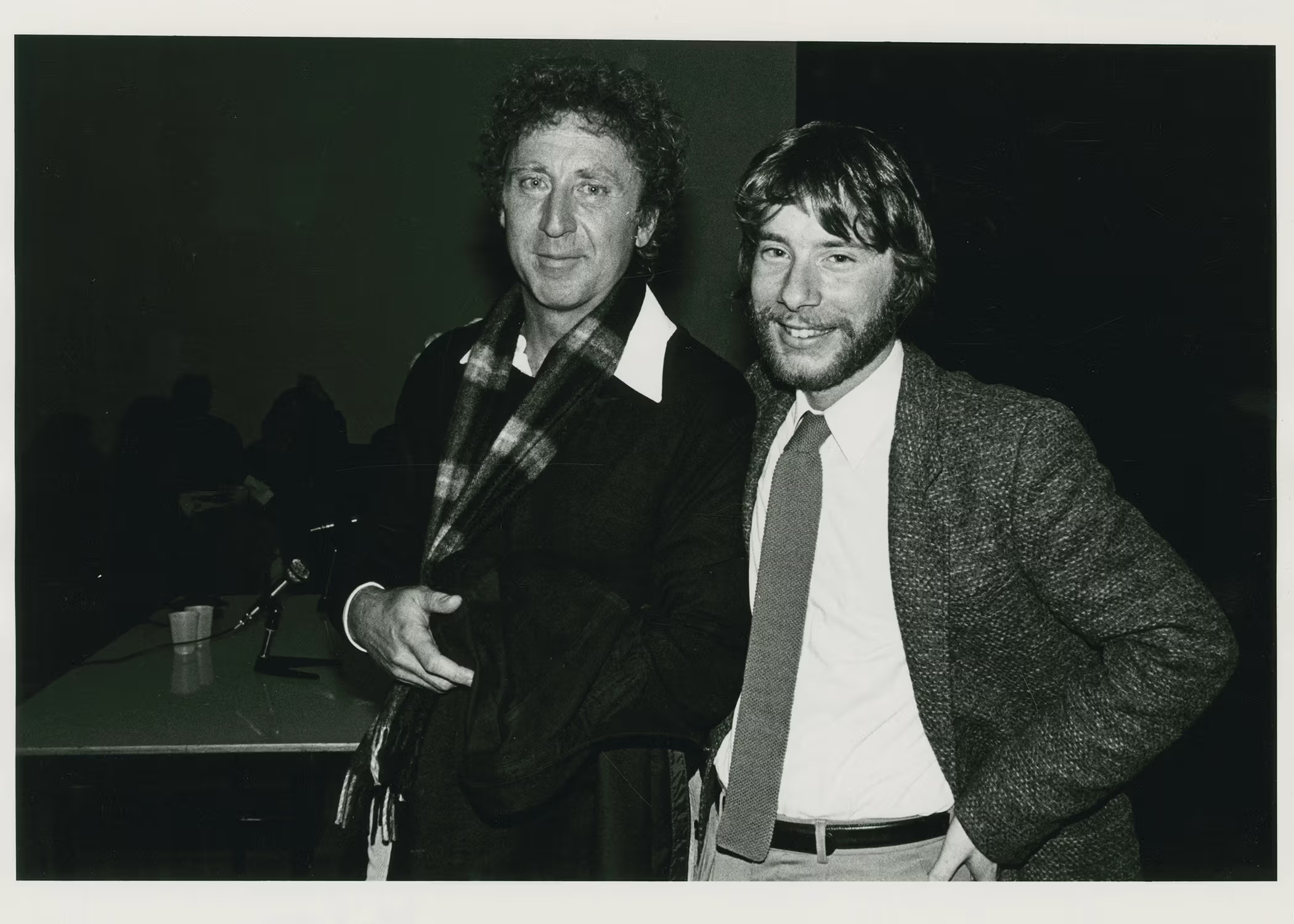
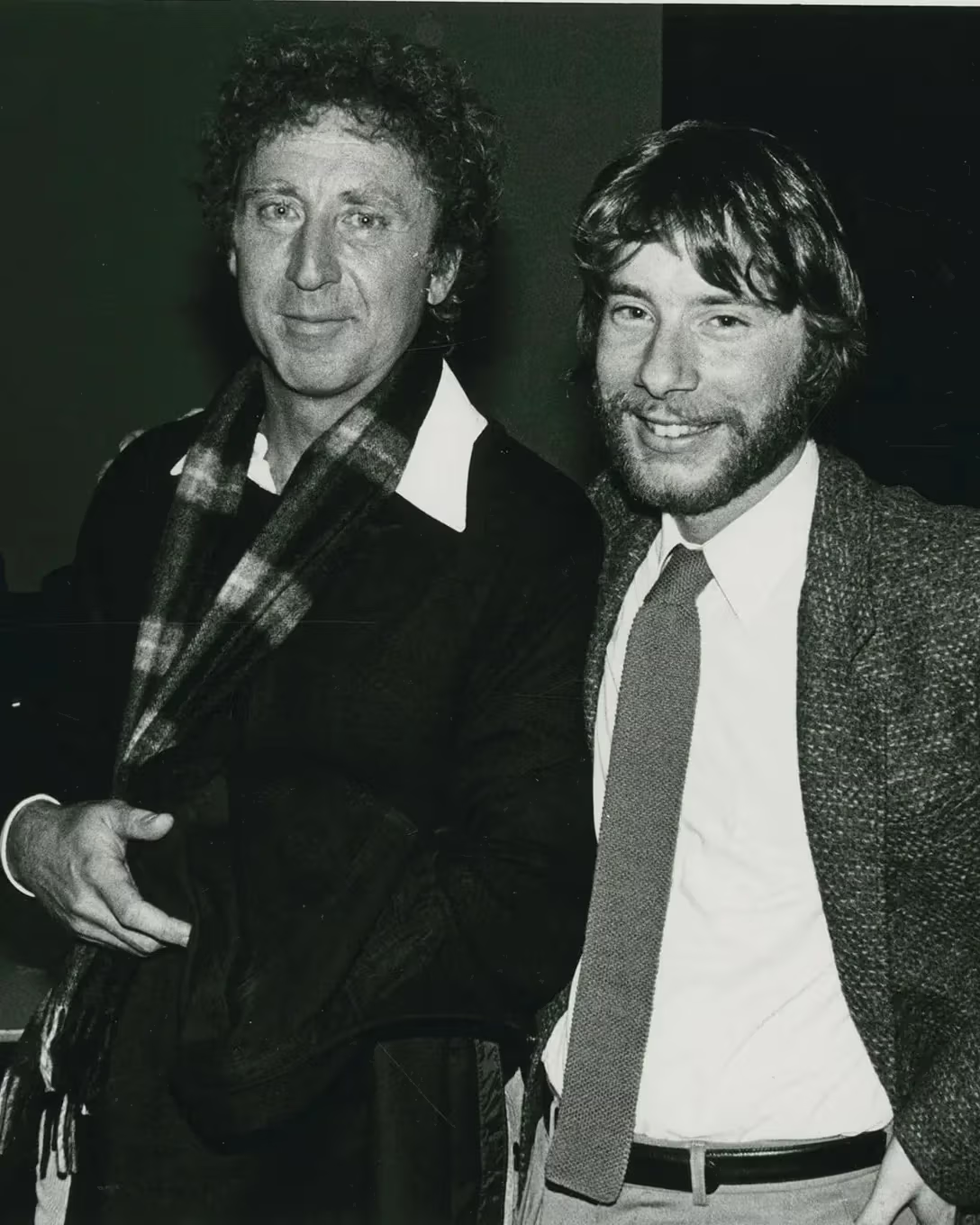
Actor Gene Wilder (left) with Ralph Appelbaum (BFA 1978 Film and Video) at an SVA Filmmakers Dialogue event, c.1980s.
Actor Gene Wilder (left) with Ralph Appelbaum (BFA 1978 Film and Video) at an SVA Filmmakers Dialogue event, c.1980s.