

The Social Documentary Film alumnus examines the Black perspective through various multi-media formats.
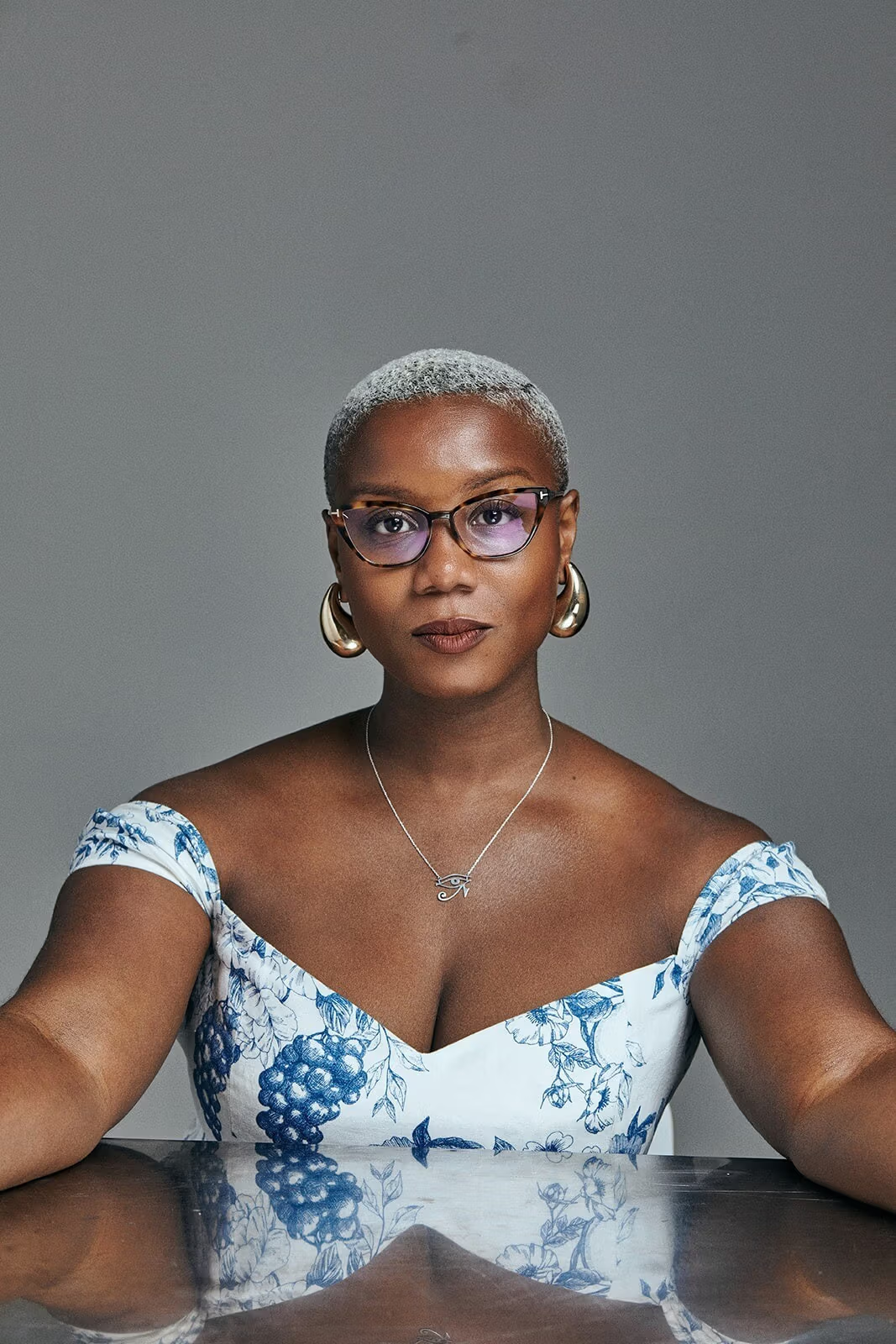
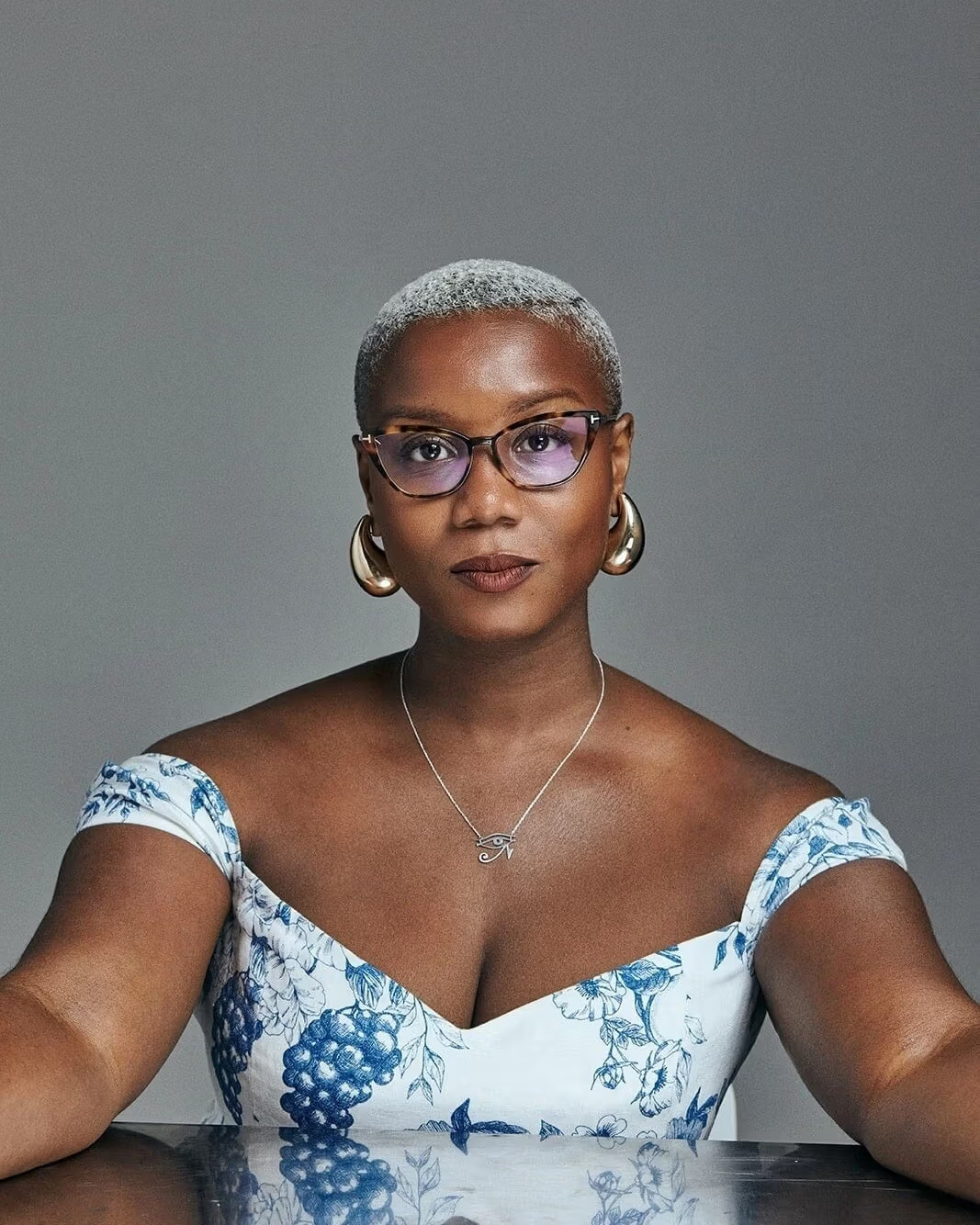
Artist and alumnus Ja'Tovia Gary (MFA 2014 Social Documentary Film).
Artist and alumnus Ja'Tovia Gary (MFA 2014 Social Documentary Film).
Ja'Tovia Gary (MFA 2014 Social Documentary Film) explores multiple perspectives of Black experience in her films, installations and sculptures. Centering on women, her work weaves together and validates subjective narratives in nonlinear currents of vision and sound, mixing archival and shot footage, social-media clips and hand-altered 16mm strips with installations incorporating altars, domestic objects and text.
After it was acquired as part of the Museum of Modern Art in New York’s permanent collection, Gary’s The Giverny Suite (2019), a three-channel video installation, went on view there last fall for an open-ended run. The Giverny Suite is a cinematic assemblage of poetic ruminations on the bodily integrity of Black Women, incorporating and building upon the artist’s single-channel video The Givery Document (2019), filmed in Harlem and in Claude Monet’s historic gardens in Giverny, France. The work was also acquired last year through a joint acquisition by The Block Museum of Art at Northwestern University in Evanston, Illinois; the Hammer Museum at UCLA; and the Smithsonian Institution’s National Portrait Gallery in Washington, DC.
Gary has received more than two dozen filmmaking awards from AFI Fest, BlackStar Film Festival and the Los Angeles Film Critics Association, to name a few. She was a 2022 Guggenheim Fellow and received a 2019 Creative Capital fellowship and a 2018 fellowship from the Radcliffe Institute of Advanced Study.
Earlier this year, the Visual Arts Journal spoke with Gary from her studio in her hometown of Dallas, to which she returned in 2019 after two decades in New York City.
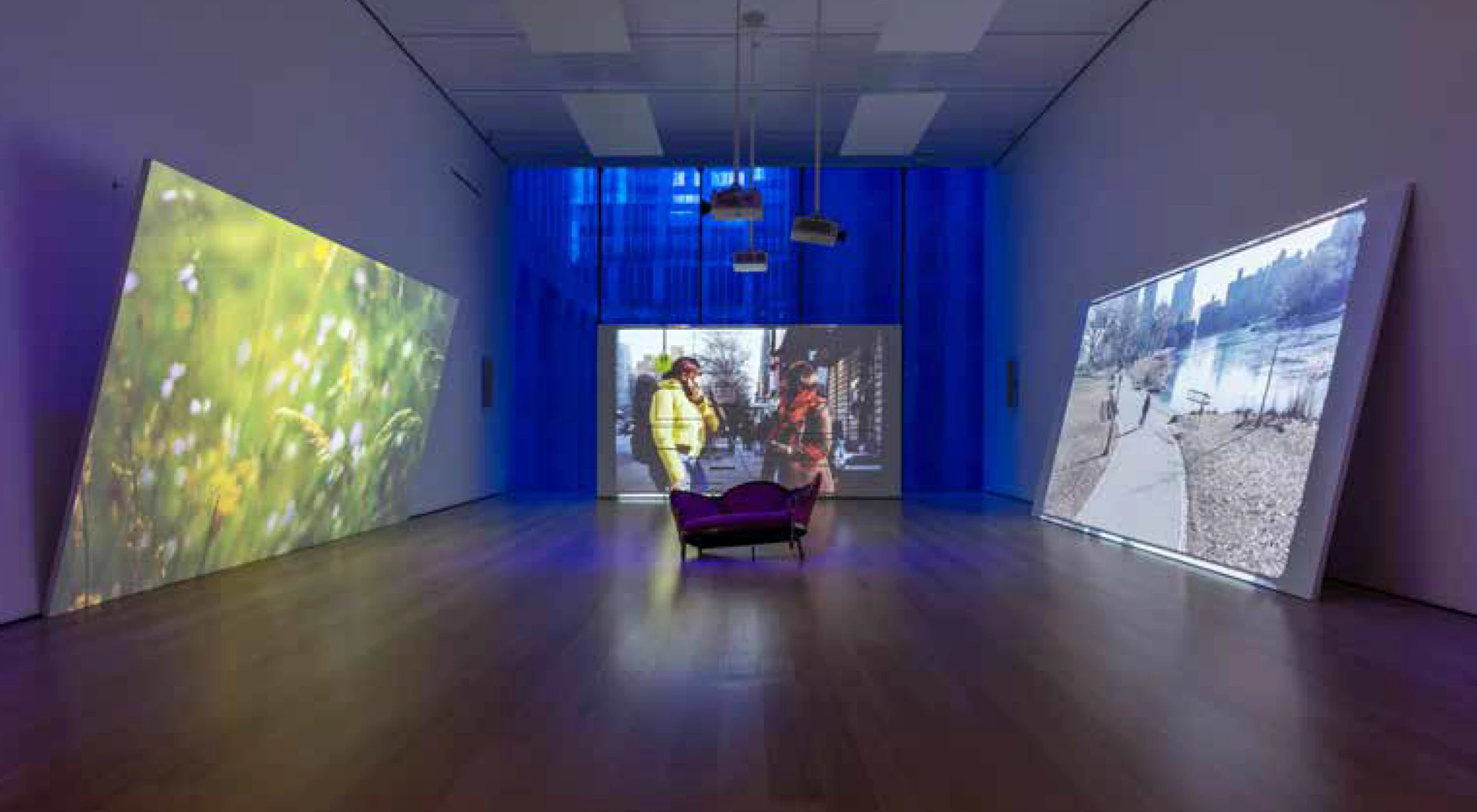
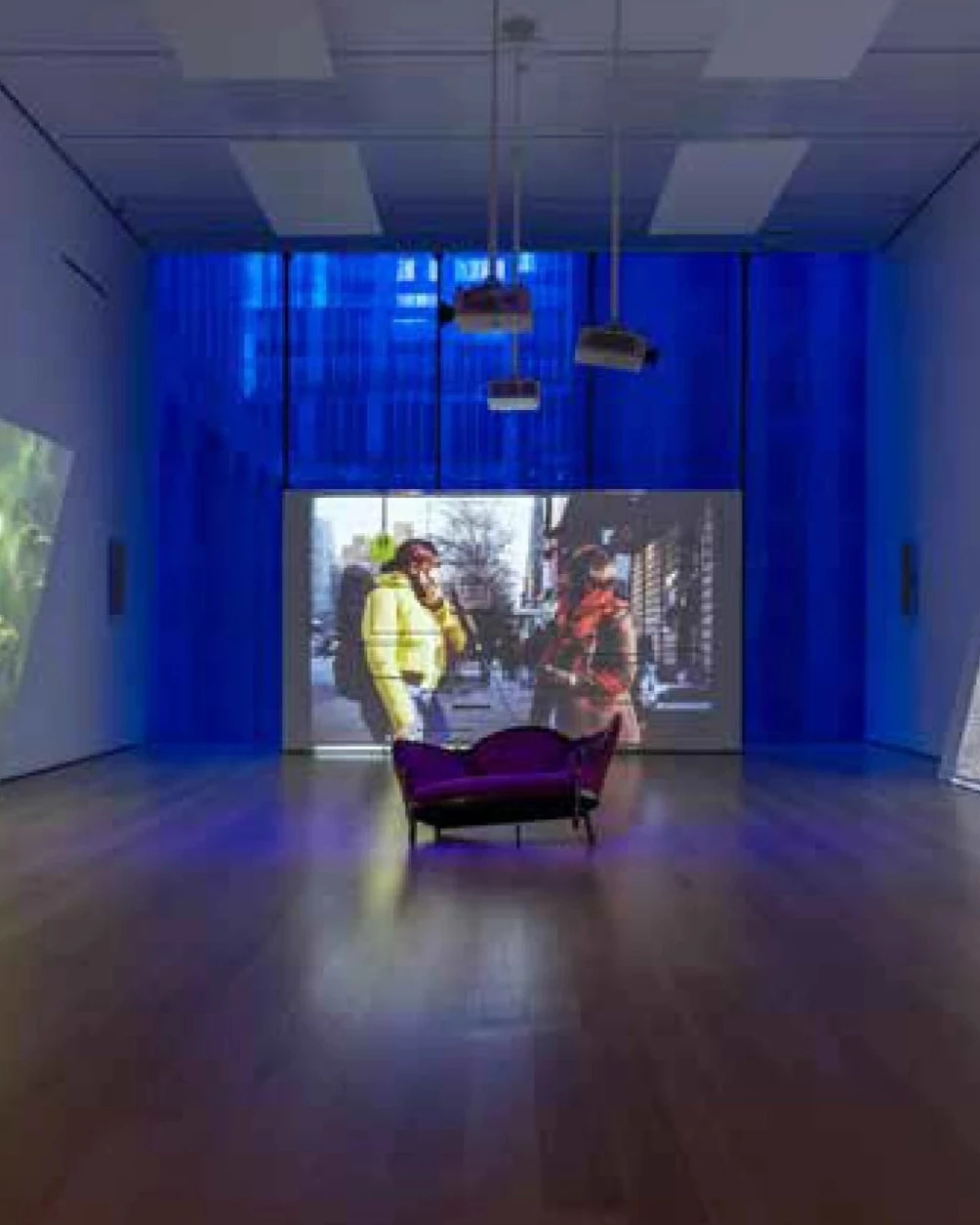
Ja'Tovia Gary, The Giverny Suite, 2019, three-channel high-definition video and 16mm film transferred to high-definition video; settee; 25 painted frames; altar to Yemaya (candle, seashells, anchor, fruit, plate, vase, flowers, glass jar of molasses, glass jar of rum, and fabric); and altar to Oshun (candle, mirror, cowrie shells, fruit, cinnamon sticks, plate, vases, flowers, glass jar of white wine, glass jar of honey, and fabric.
Ja'Tovia Gary, The Giverny Suite, 2019, three-channel high-definition video and 16mm film transferred to high-definition video; settee; 25 painted frames; altar to Yemaya (candle, seashells, anchor, fruit, plate, vase, flowers, glass jar of molasses, glass jar of rum, and fabric); and altar to Oshun (candle, mirror, cowrie shells, fruit, cinnamon sticks, plate, vases, flowers, glass jar of white wine, glass jar of honey, and fabric.
Your work embraces subjectivity, is often layered or collaged, and can be described as orchestral or choral. Can you talk about the structural role of this approach in your practice?
When we talk about subjectivity, a part of that is me wanting to be very honest about my position as a storyteller, as a filmmaker. When we think through Western storytelling, oftentimes the power or the viewpoint behind the structure or the means of production — whether it's documentary, nonfiction, or fiction film — is obscured. The personal or political imperatives of the maker are obscured behind a thing called objectivity.
I knew in school when I was hearing that word that it was a red flag. I'd been watching television and cinema since I was very young, and I knew when there was a point of view.
In fact, that's what they want. But, that point of view has to fall within certain formats or ways of thinking. I've always pushed back on that particular structure, whether we're talking about a story structure or whether we're talking about power structure. It was important for me to bring my clear point of view, which is often one that is pushed to the side, often one that is diminished. It was important for me to make that central.
As Toni Morrison talks about: I claimed the margins. I stood at the margins and claimed it as the center. This is where subjectivity comes from. I understood that my lived experiences, the things that I knew, the things that are very specific to me as a Southern Black queer woman, are important to infuse into the work.
This notion of the chorus or this notion of collage or assemblage, making something out of nothing, taking multiple voices in order to put forth a cohesive idea, is a part of a Black womanist, a Black feminist tradition. It's not just about me and what I think. I'm a stand-in for other people in the community, other folks who might see themselves in my experiences, my body or my background. Creativity and storytelling is in fact a critical terrain. It's not just where imagination goes to flourish. It's where people are wrestling for power, people are wrestling for their right to define reality, their right to assert their perception of reality as the dominant perception.
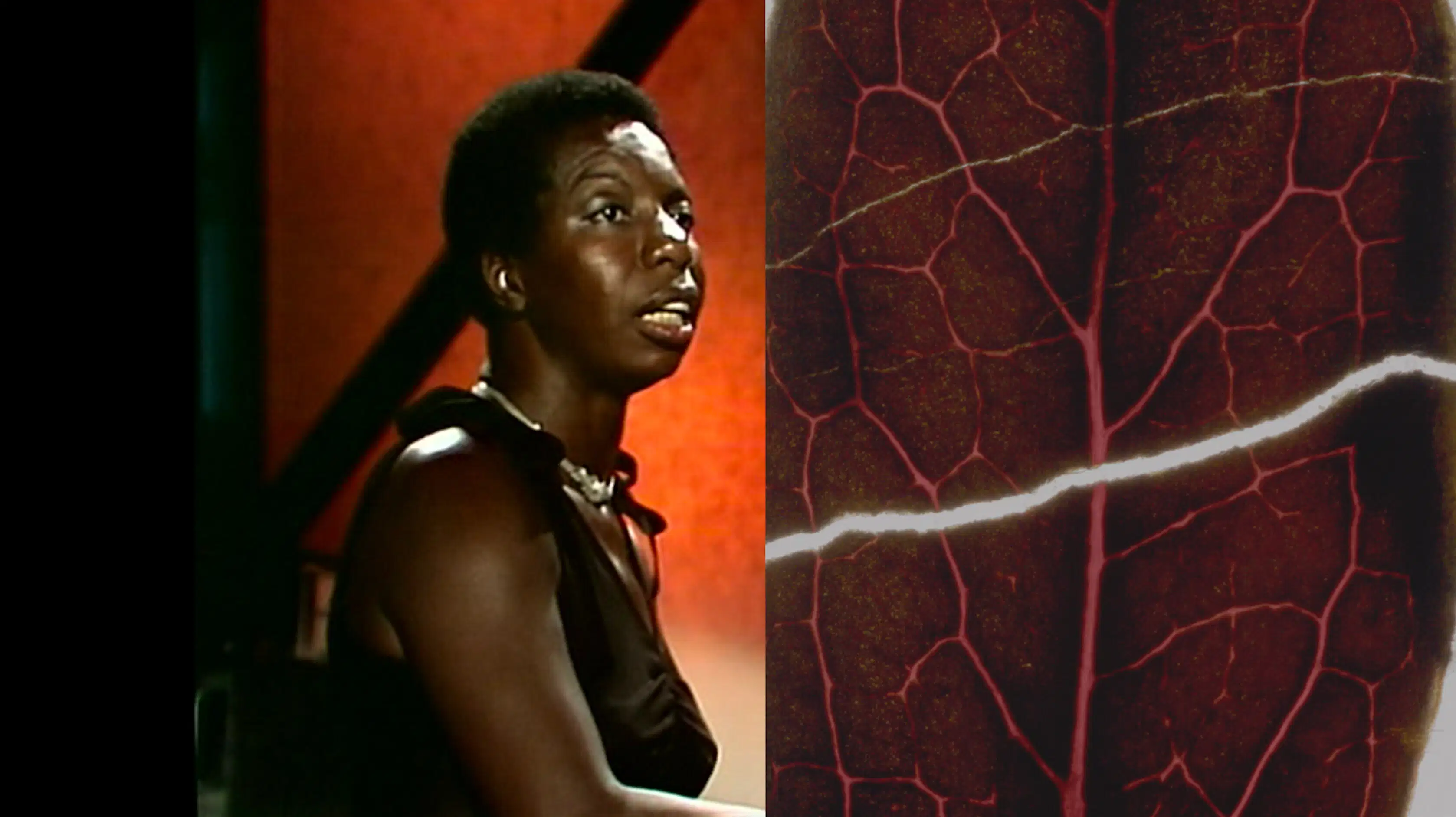
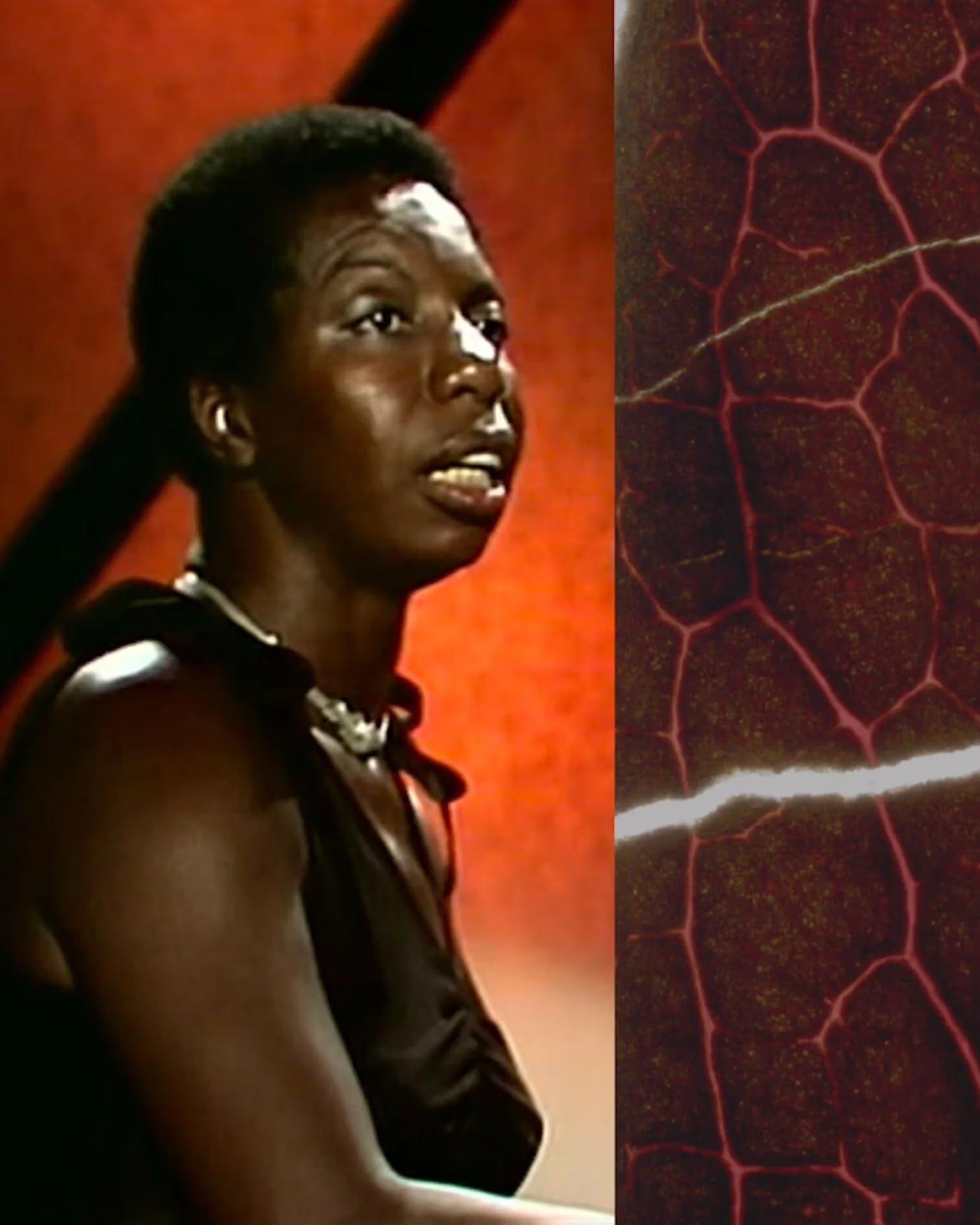
Ja'Tovia Gary, details from The Giverny Document, 2019, single channel, 41 min.
Ja'Tovia Gary, details from The Giverny Document, 2019, single channel, 41 min. © Ja'Tovia Gary.
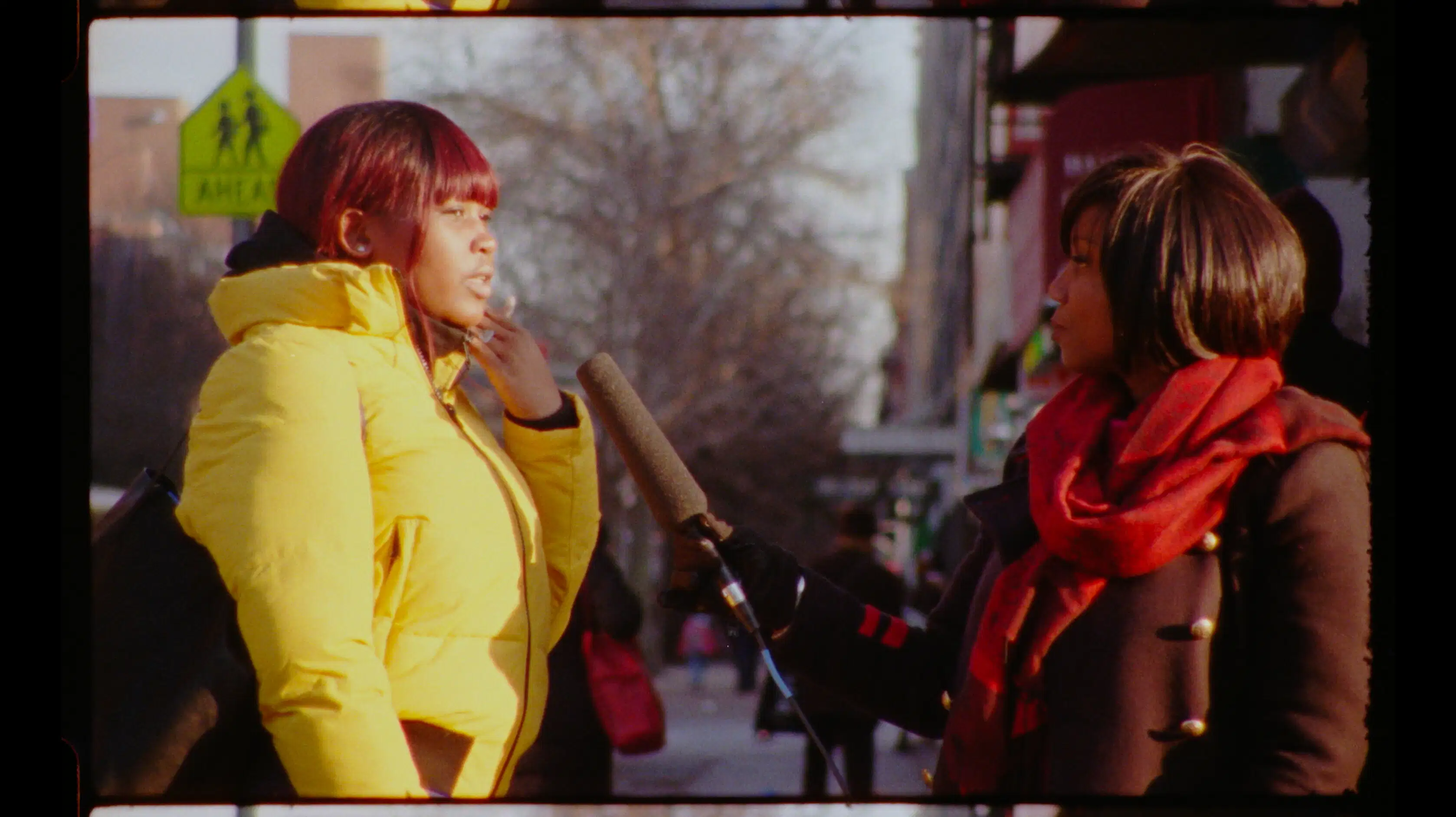
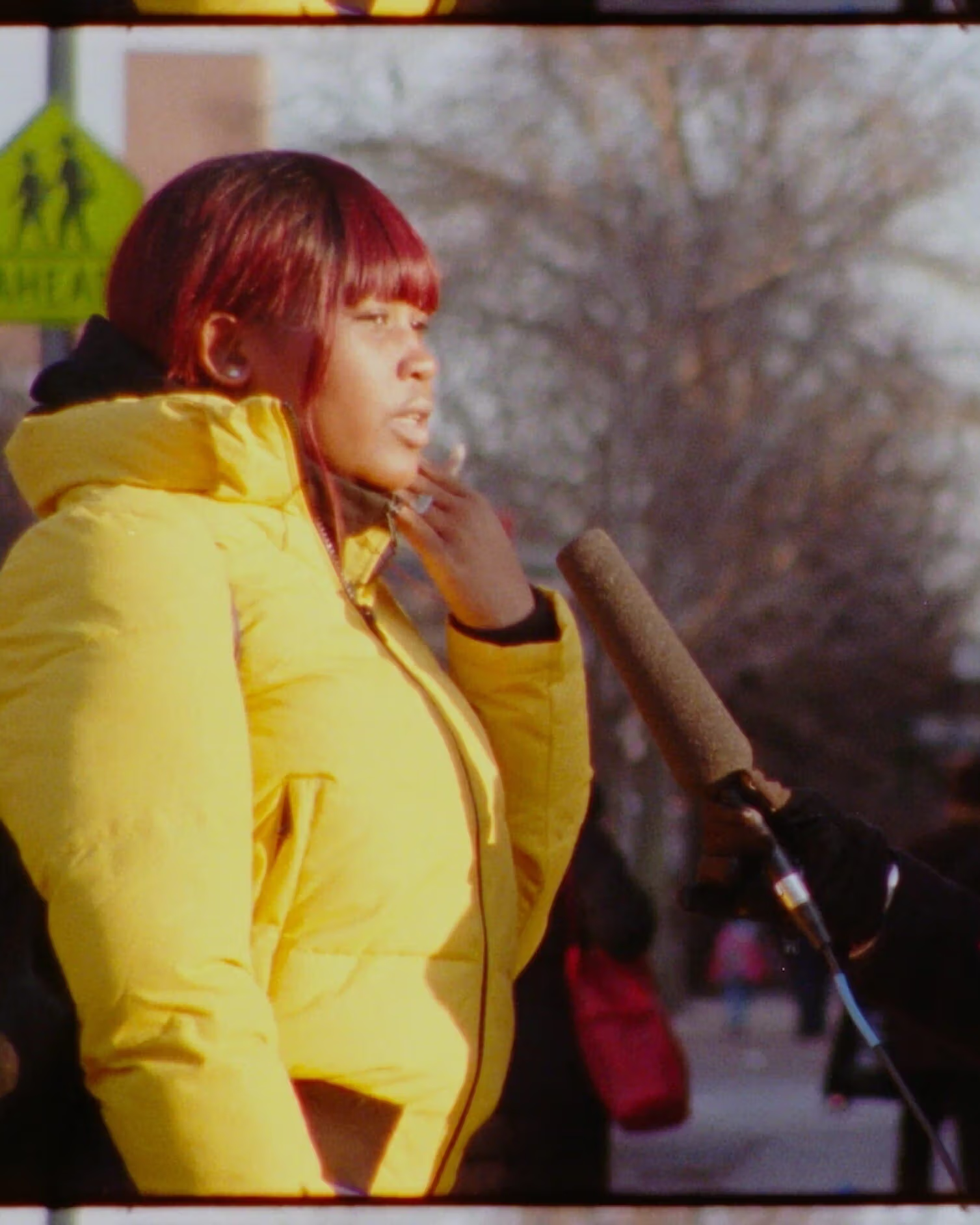
Ja'Tovia Gary, details from The Giverny Document, 2019, single channel, 41 min.
Ja'Tovia Gary, details from The Giverny Document, 2019, single channel, 41 min.
Is there a specific scene in The Giverny Suite where these ideas come to life most succinctly?
People respond a lot to the interviews, and to me the interviews are really revelatory. That kind of vox populi woman on the street interview is a documentary convention that later went on to news and other formats. But, it’s actually documentary film 101. We would do them in class. The teacher would say, “We’re going to the street. Break up into teams of two or three and go ask people questions.” [Laughs] So it’s kind of back to basics.
The interviews were exciting because they revealed certain chasms or breaks. For example, we’re asking everyone the same question [The question, Do you feel safe?, was asked to women on the street in Harlem, USA], and of course all of the answers are varied. But, the variances and the variables that emerged were often based on age. Older women were not necessarily as fearful in terms of their safety. That’s not to say they didn’t feel unsafe, but it took them a minute. I had to be cool and ask more. I had to drill down for them to finally get to “Well, maybe I’m not.”
Also, to see and hear people reference the spiritual, “My mother prays for me before I leave the house.” So understanding the very real role of spirit and faith in shoring up one’s lived experiences, one’s realities in terms of what danger I might meet on the street.
A lot of things were clarified in that interview section. There’s funny moments. But then there’s a lot of thoughtful moments that make you think and say, “Well, hm. I wonder why that’s the case?”
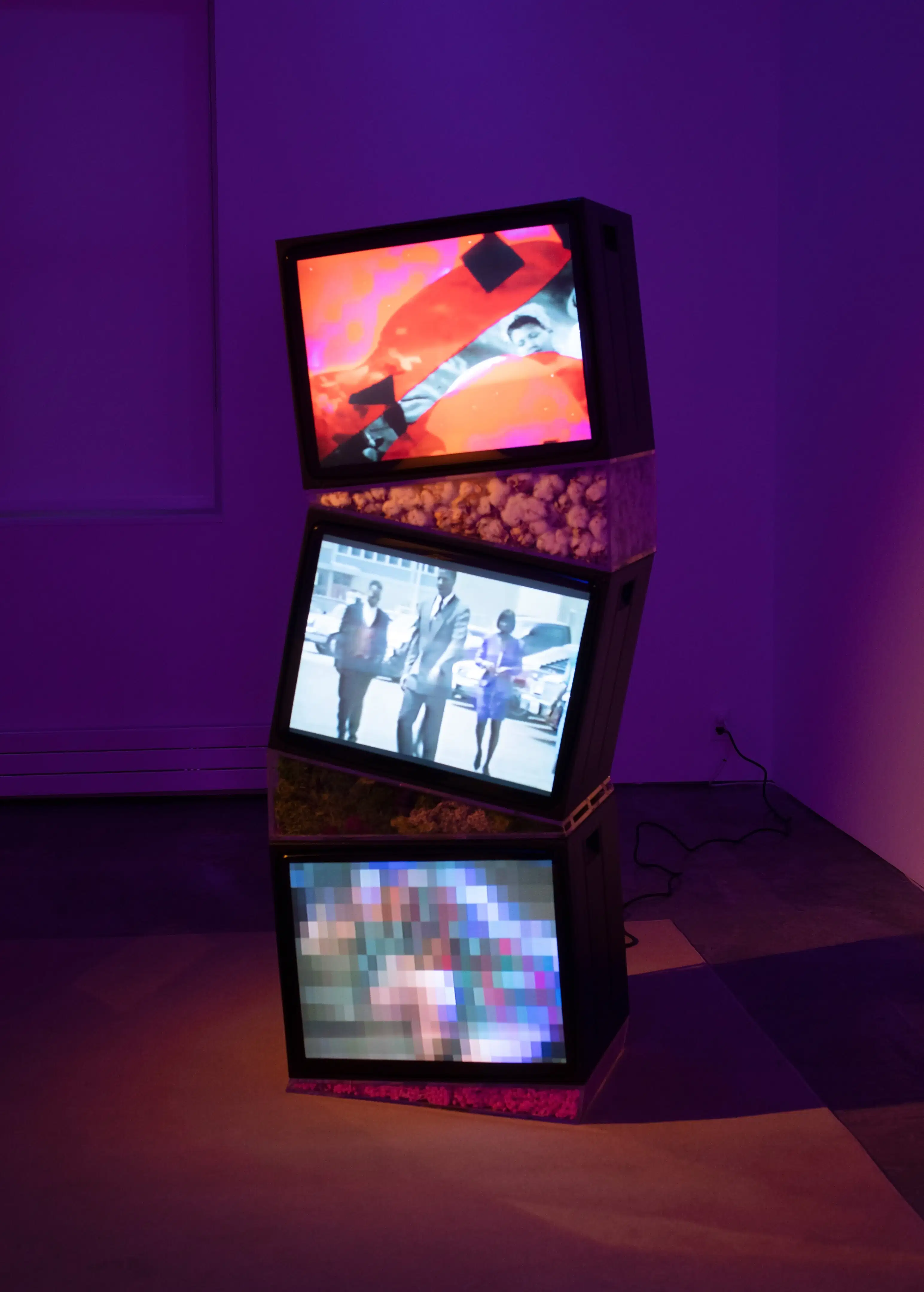
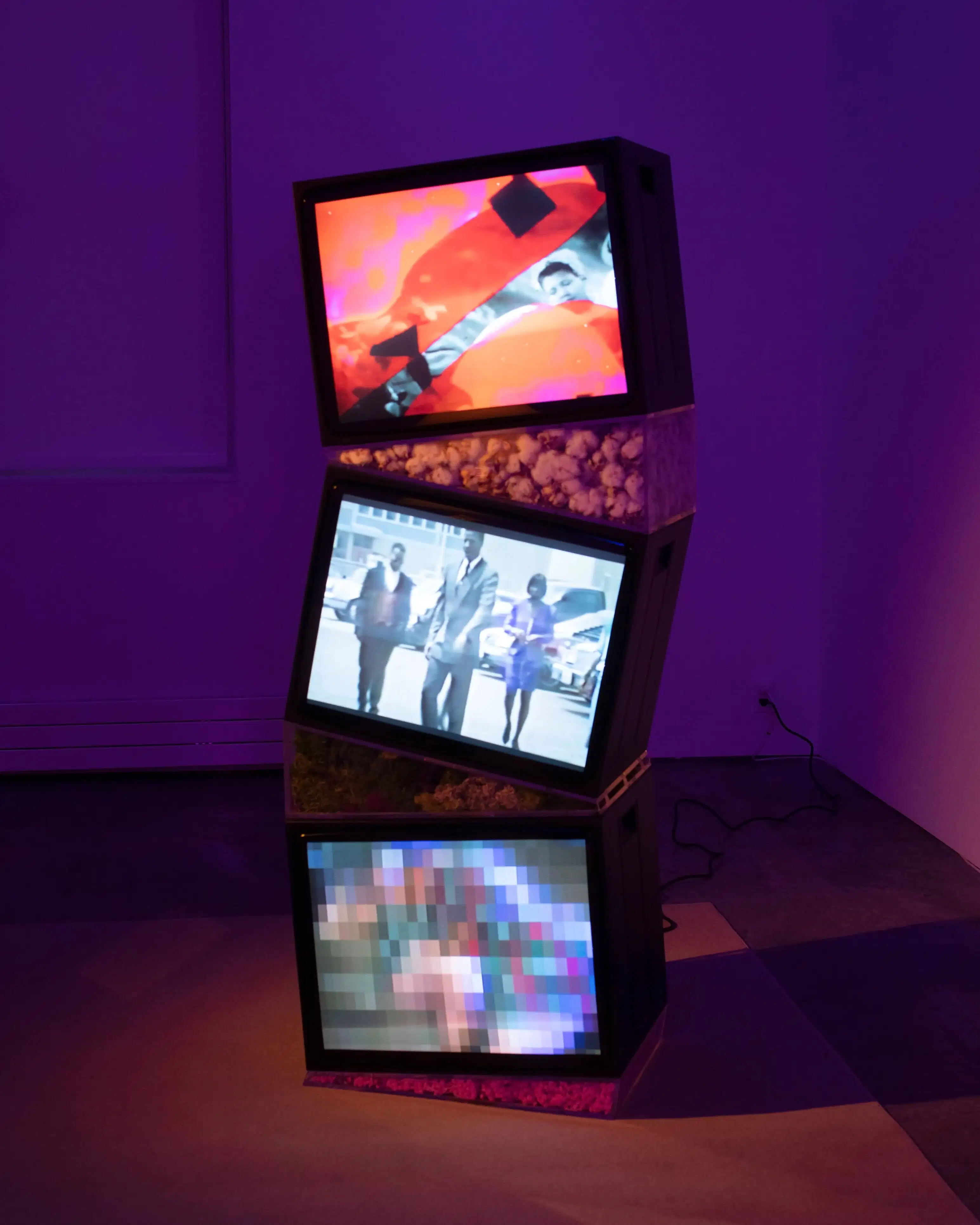
Ja'Tovia Gary, Precious Memories, 2020, HD video and SD video from 16mm film on 3 CRT monitors, acrylic, dried cotton, moss, dried helichrysum, upholstered recliner chair, carpet, wood and glass table, framed photograph, table lamp, two stage lamps.
Ja'Tovia Gary, Precious Memories, 2020, HD video and SD video from 16mm film on 3 CRT monitors, acrylic, dried cotton, moss, dried helichrysum, upholstered recliner chair, carpet, wood and glass table, framed photograph, table lamp, two stage lamps.
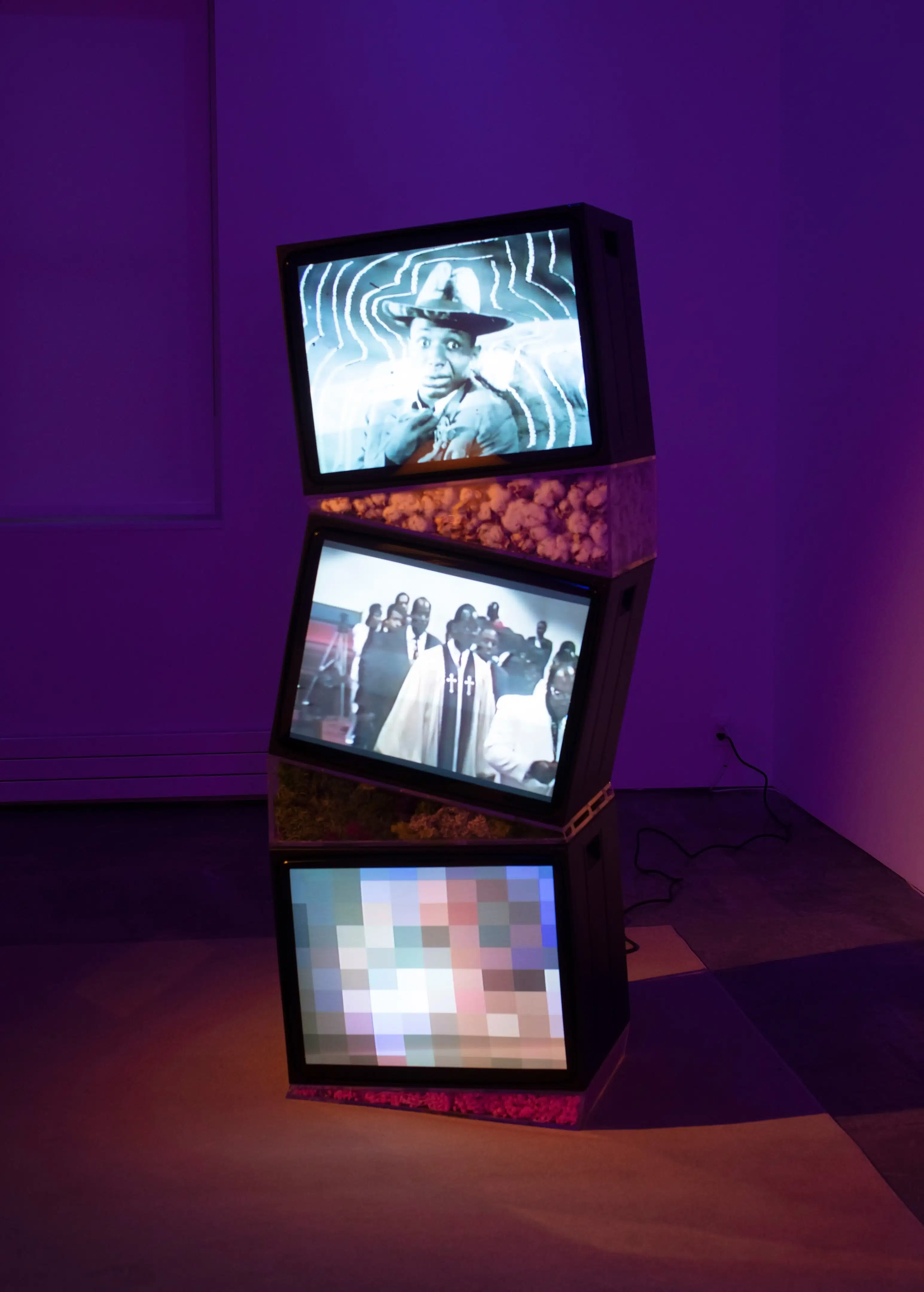
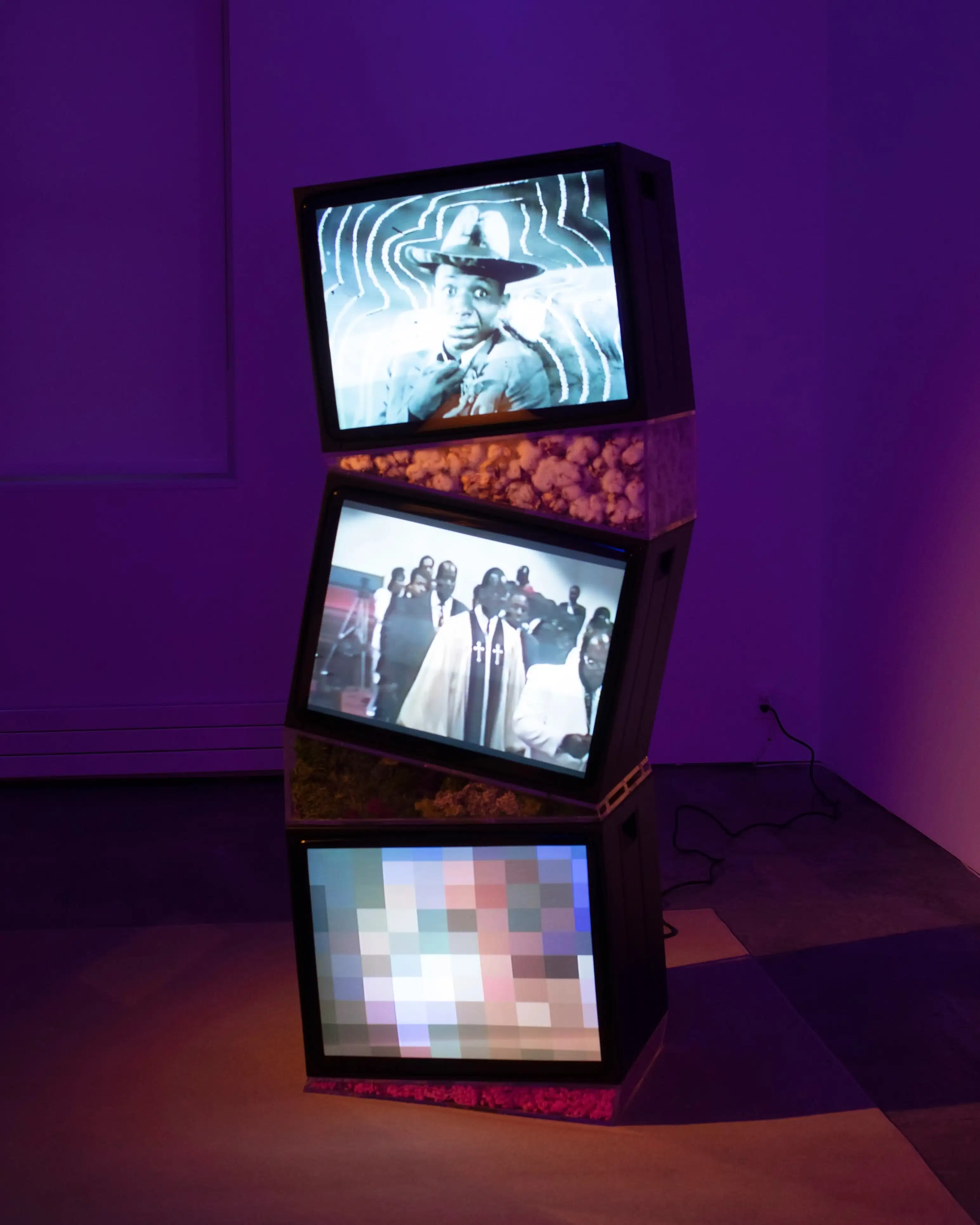
Ja'Tovia Gary, Precious Memories, 2020, HD video and SD video from 16mm film on 3 CRT monitors, acrylic, dried cotton, moss, dried helichrysum, upholstered recliner chair, carpet, wood and glass table, framed photograph, table lamp, two stage lamps.
Ja'Tovia Gary, Precious Memories, 2020, HD video and SD video from 16mm film on 3 CRT monitors, acrylic, dried cotton, moss, dried helichrysum, upholstered recliner chair, carpet, wood and glass table, framed photograph, table lamp, two stage lamps.
In your 2023 film Quiet As It’s Kept, one theme appears to be the relationship one has with oneself and the importance of always knowing who we are. Relationships seem to be a large part of your process — with yourself, with your family, with elders, with your north stars, such as Morrison and Nina Simone. How do relationships impact or inform your process?
I think about this a lot. I’m obsessed with a few things. One of which is imagining if there were no white people and Black people had to contend with ourselves, each other. What would we be left with in terms of these struggles?
Essentially, the intramural is this obsession, the interior and the chasms that split the interior, whether it be: light skin/dark skin, poor versus rich or bourgeois, men versus women, gays versus straights, the generational chasm, young versus the old, cisgender versus transgender. I think about all of the kinds of binaries that have been exacerbated by white supremacy, but not necessarily fully perpetuated by white people.
What are the things that we would be left to deal with if this overarching juggernaut of white supremacy were removed? We still have to deal with white supremacy, but if we removed it and just thought about the chasms on the inside, the ones in the family, the issues in the church or the issues in the community.
Black families, Black sociality, Black relationships, this is where my mind is centered. It’s what interests and excites me. If I were a sociologist, I would ask: what are we going through? What do our relationships reveal about ourselves and about each other? What are some of the holdovers of the period of enslavement?
A lot of these questions I’m asking in the films. I’m trying to explore both large and small questions. So Quiet As It’s Kept is a response to [Toni] Morrison’s The Bluest Eye. And in The Bluest Eye, she’s talking about colorism, she’s talking about internalized colorism, externalized colorism. She’s talking about the gaze, psychoanalysis.
I wanted to think through these concerns with a contemporary lens. If the gaze for Morrison was manifested through Hollywood films and cinematic references like Shirley Temple, the contemporary gaze would be through phones and apps like Twitter and Instagram. You’re scrolling and seeing what’s beautiful, or what is perceived as beautiful and what’s perceived as desirable, therefore, what is seen as valuable, what is seen as who deserves to live, whose life is more valuable based on desirability, politics, European beauty standards, money, patriarchy, white supremacy, et cetera. All of these things are prevalent and persistent in that algorithm.
That’s why we have the TikTok videos in the film. That’s why we have these conversations around beauty. I give a kind of beauty tutorial halfway through the film. It’s just me trying to think through the contemporary manifestations of some of these questions that Morrison asks in her novel.
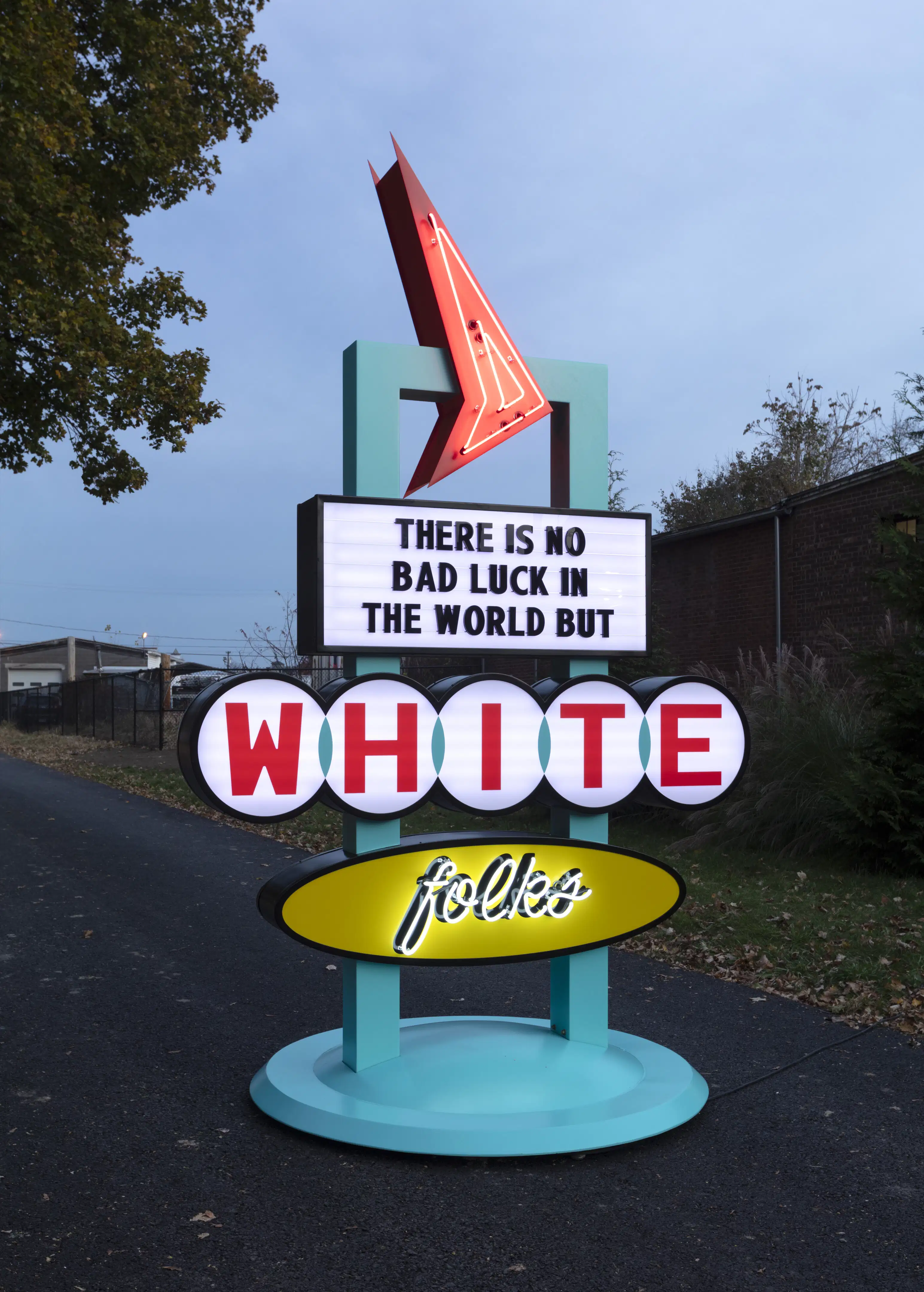
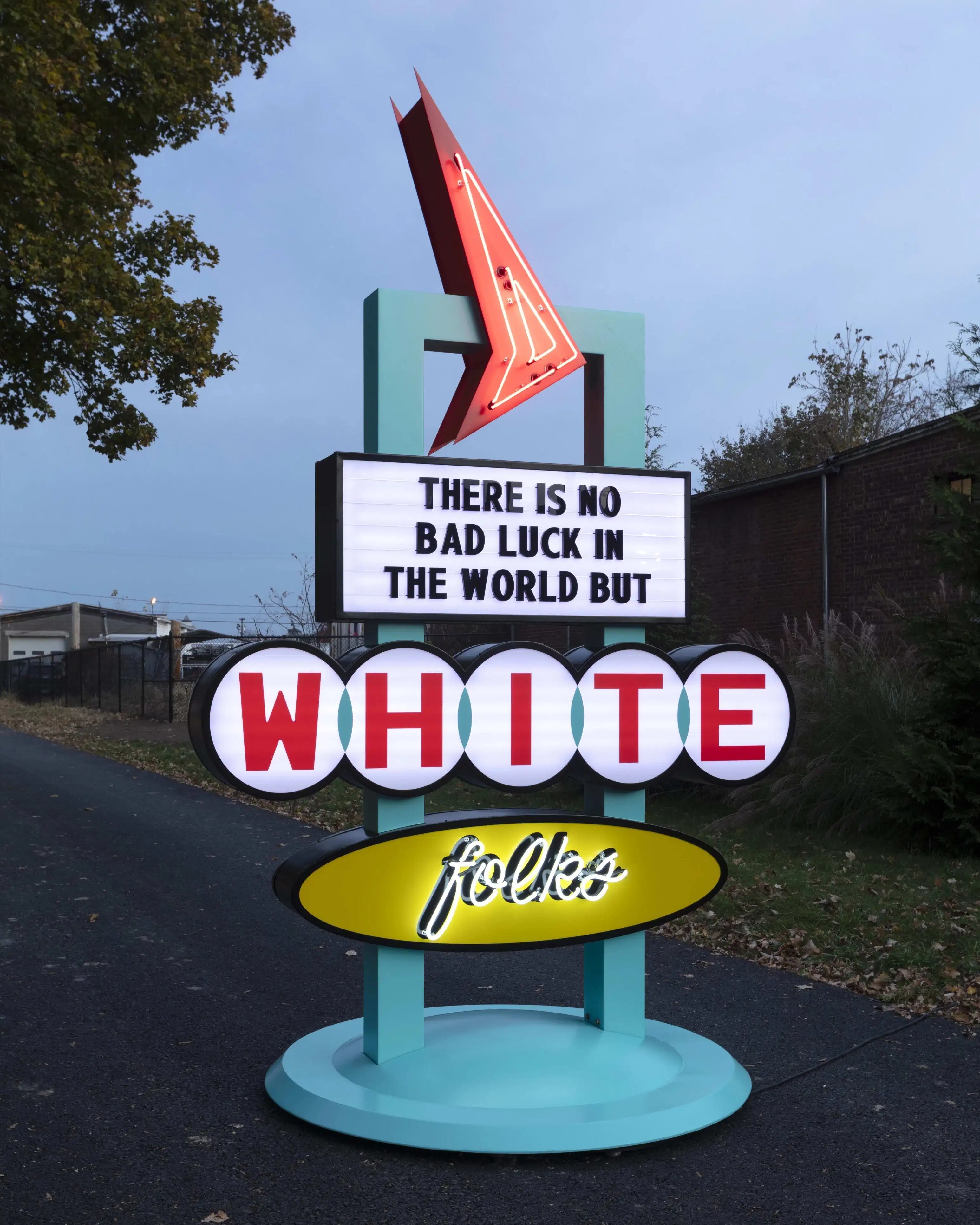
Ja'Tovia Gary, Citational Ethics (Toni Morrison, 1987), 2021, neon, metal, acrylic.
Ja'Tovia Gary, Citational Ethics (Toni Morrison, 1987), 2021, neon, metal, acrylic.
What do you think has been most pivotal in your success, the most pivotal experience or moment or revelation in your success thus far as a filmmaker?
For one or two years there was an African American Film Festival at the Smithsonian’s National Museum of African American History and Culture. I was on a panel in 2018 or 2019 with Julie Dash. That was really incredible. To be on a panel with Julie Dash is pretty wild, but to be in conversation with Julie Dash and to think through ideas…! For me, that was a pivotal moment. It felt affirming, like I was doing what I was supposed to do, and now I’m meeting the people who have inspired me. So when I feel fearful, unsure about my choices or the path that I need to take, those sorts of things lift me back up.
Along with Dash, Morrison and Simone, who are some other artistic influences past or present?
I probably feel the closest to Zora Neale Hurston. I think we’re aligned in terms of our work and interests. She was really interested in Black folk life, and intramural. She was interested in Black spiritual traditions, whether they are coming from Jamaica, Haiti or the Black church in the South. Also, a lot of people don’t know this, but she was technically the first Black woman filmmaker. She has a bunch of early, kind of experimental, hard to describe footage. She’s just filming Black people in the South — field recordings.
I’m also really invested in the work of Lorriane Hansberry—her commitment to her political life and her political convictions and how that is infused with the art is incredibly inspiring and it gives me courage. There’s just so many! Octavia Butler—I like a strange Black woman who’s thinking interstellar thoughts. I’m also a huge fan. And a contemporary, although I’m slightly younger, is Cauleen Smith.
I like folks who are thinking outside of the box, doing their own thing, people who don’t feel they have to go down a prescribed road or try to mold themselves into something that will be more accessible. That’s really hard to do. Being yourself is actually really hard. I’m interested in Black women who can be themselves.
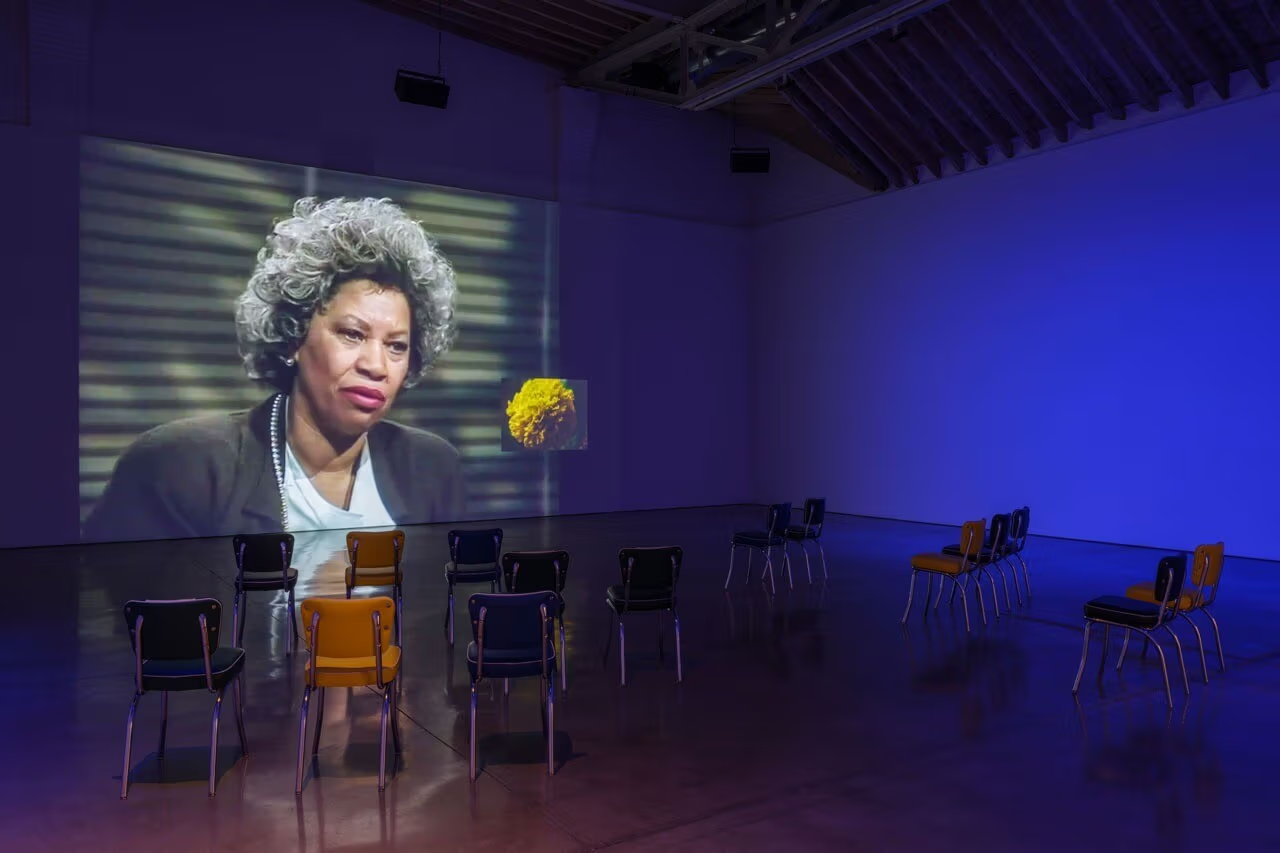
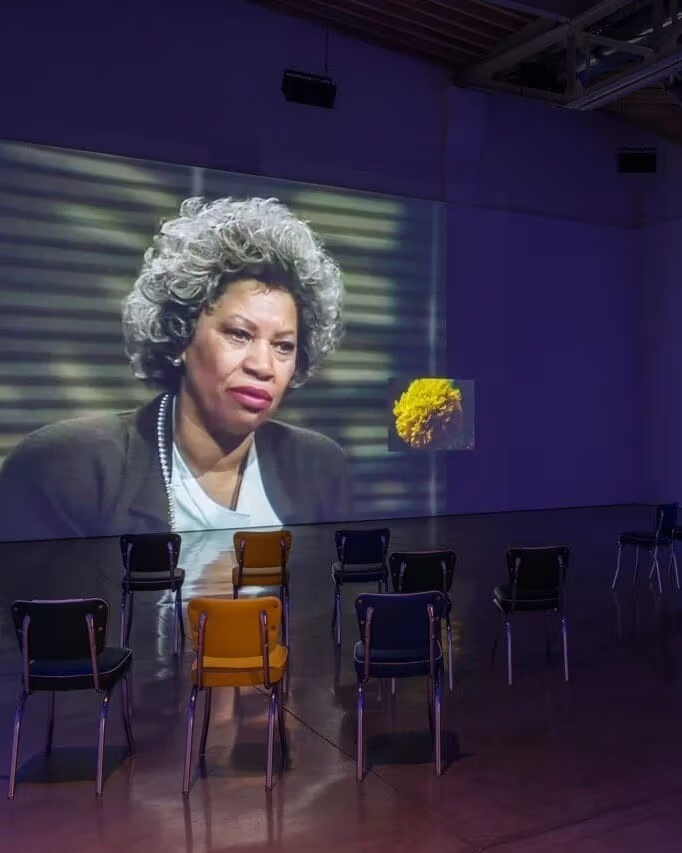
Ja'Tovia Gary, You Smell Like Outsite... at Paula Cooper Gallery, 2023.
Ja'Tovia Gary, You Smell Like Outsite... at Paula Cooper Gallery, 2023.
Early on in your creative pursuits, you were an actor. Does that background in performance show up in your work now?
It’s crazy because I have a friend who’s known me since I was 16 or 17, when I was an actor. They say, “You’re still an actor,” [Laughs]. They’re like, “You may not be opting to perform right now, but you’re still an actor.” And, I feel like that’s very much true. I’ve literally placed myself in almost all of my films.
I’m placing myself in the works because they’re autoethnographic. You can get to a truth through me. I’m using my body, my life, my experiences to talk about larger ideas. For example, if I’m in The Giverny Document and I’m playing the role of the Négresse Impériale in [Monet’s] garden, well, what am I a signifier for? Or thinking through the colonial gaze, then we can think through the Black body in Western art; or Black women’s roles in the slave community and our bodies as these spaces of capitalist commodification, et cetera.
So I am the stand-in. You can place your body here now because of my body. My body is simply in many ways just a signifier. I found myself in that garden and felt put upon and acted upon in that space in such a way where I was feeling like maybe my safety was in question. So let’s have this conversation via my body.
So though it’s not acting, it’s in some ways doing a lot of the labor that actors do. They ask these larger questions around a character’s wants and desires, questions around story, the challenges that the character faces, those same things are being brought to bear in my work.
Also, performance is a way or exerting a kind of power. [Academic and writer] Saidiya Hartman talks about performance as a kind of recalibration: you’re resetting the terms of the space through your body and actions. So when I stepped into that garden I definitely say it as a set.
You debuted a new neon sculpture from your series, “Citational Ethics,” at Art Basel in Miami last year. Can you tell us about it?
There are three Citational Ethics works. That was the third one, it’s a little bit different. It features Zora Neale Hurston, the others are based on text by Toni Morrison and Saidiya Hartman. It’s also in neon, but the other ones usually have the actual citation, the text, in very bold neon. But this text is kind of hidden. It’s etched into obsidian stone. And the neon is shaped to form a kind of vanity set.
The citation is from Zora Neale Hurston’s book of folklore called The Sanctified Church. In this text, there is an essay on the mythological figure High John the Conqueror, who was said to be able to evade capture. He was a kind of trickster figure. He would bring laughter and joy and music to the enslaved. He would bring a kind of levity. He was a jokester. He could out-think the Master. So the actual citation is “Then the whisper put on flesh.” What she’s saying is High John the Conqueror began as a will to sing, a desire for a kind of levity. He sprang forth in the minds of the people. So they thought him up first, and then he became a real man.
This is an act of conjuring, of manifestation, of power. We need something that is going to get us through, somebody who’s going to bring laughter and song. We need somebody who’s going to make the Master look like a fool every once in a while.
So the idea is this mirrored vanity as a portal, as a site of divination and conjure. Obsidian stone is often called a scrying stone. To scry means to gaze, to envision. And so it is said that if you look at obsidian long enough and if you have the power, then you will begin to see visions. So the work is a physical sight of enactment, a site of engagement, a site of conjuring and making, self-making, collective self-making, et cetera.
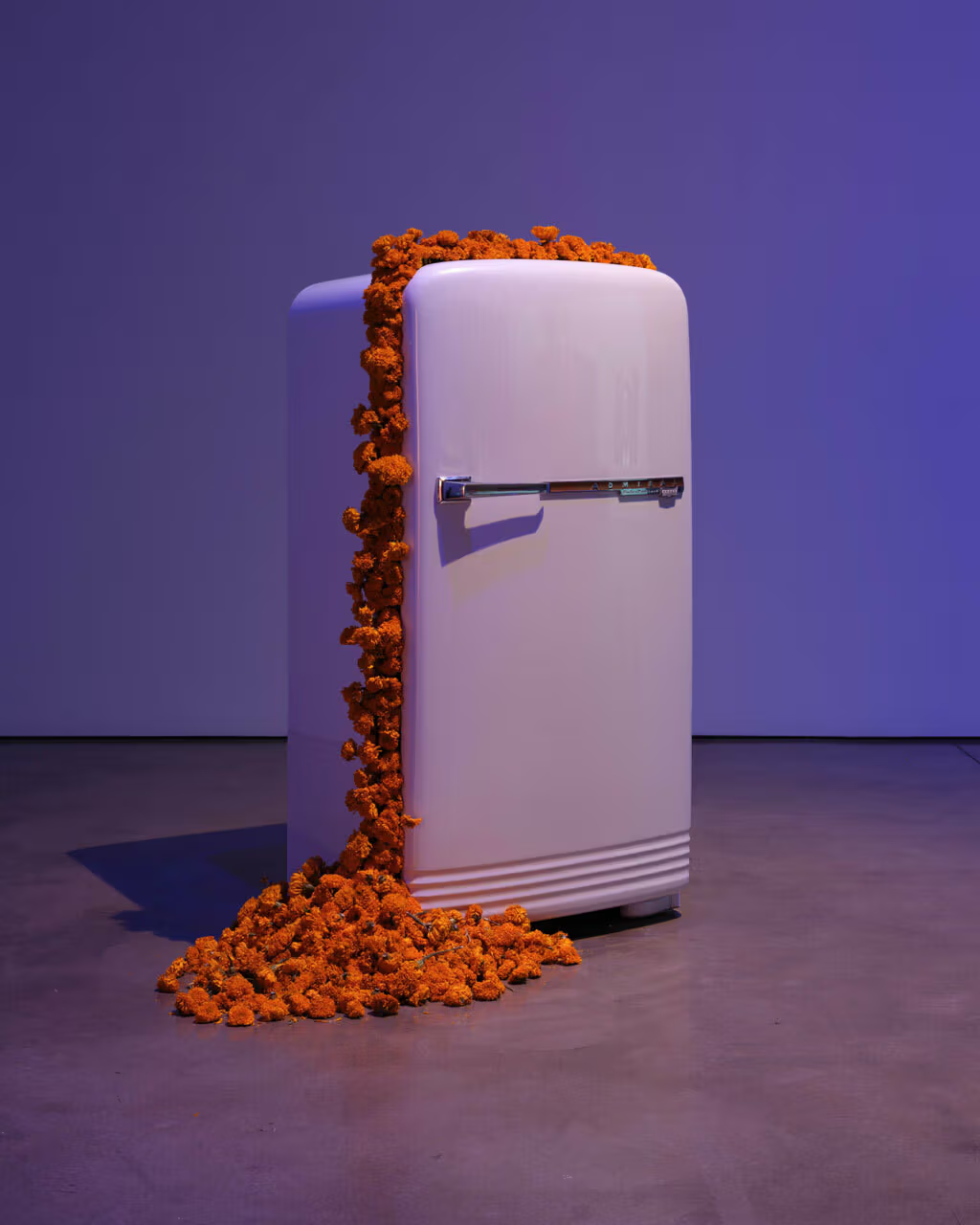
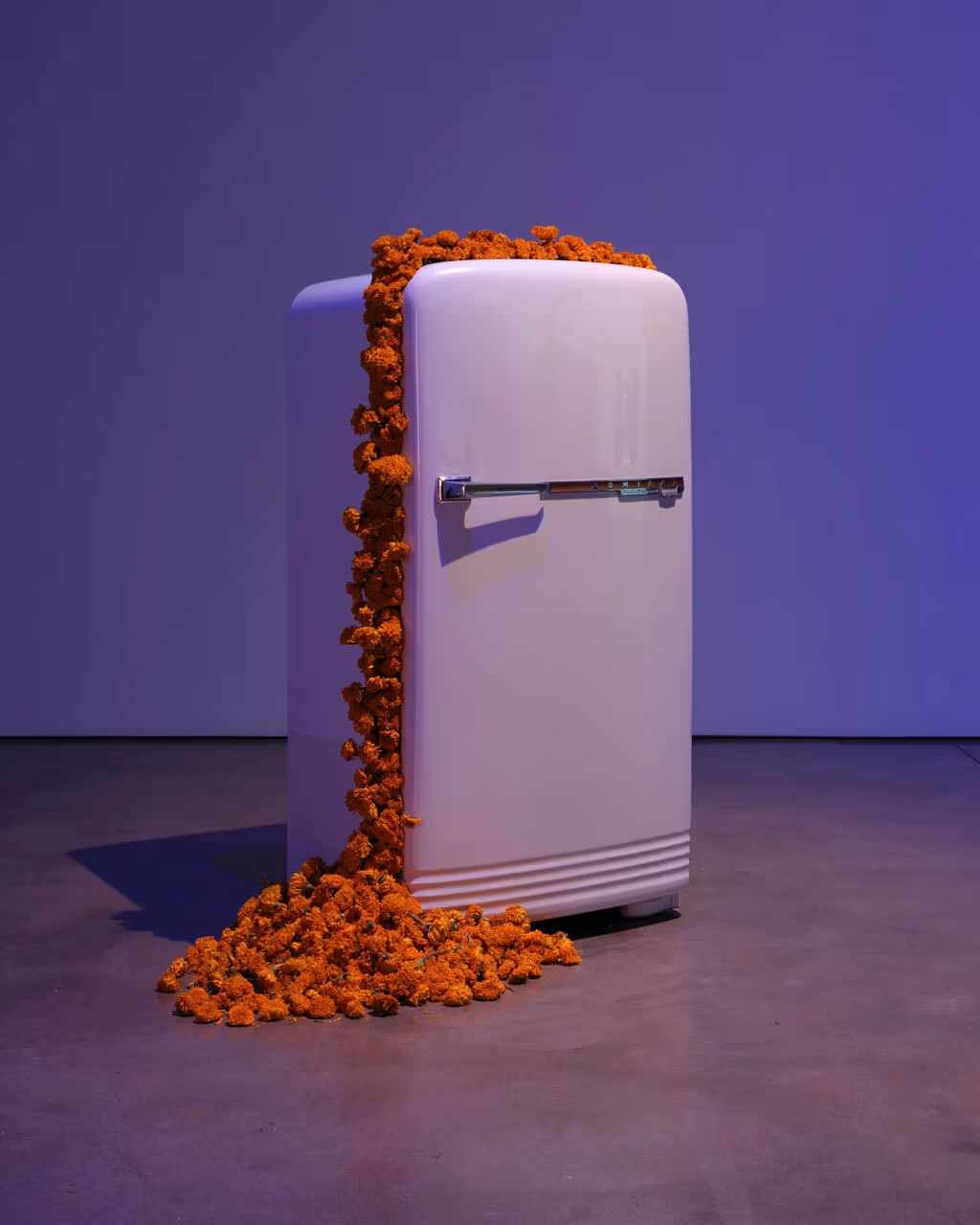
Ja'Tovia Gary, You Smell Like Outsite... at Paula Cooper Gallery, 2023.
Ja'Tovia Gary, You Smell Like Outsite... at Paula Cooper Gallery, 2023.
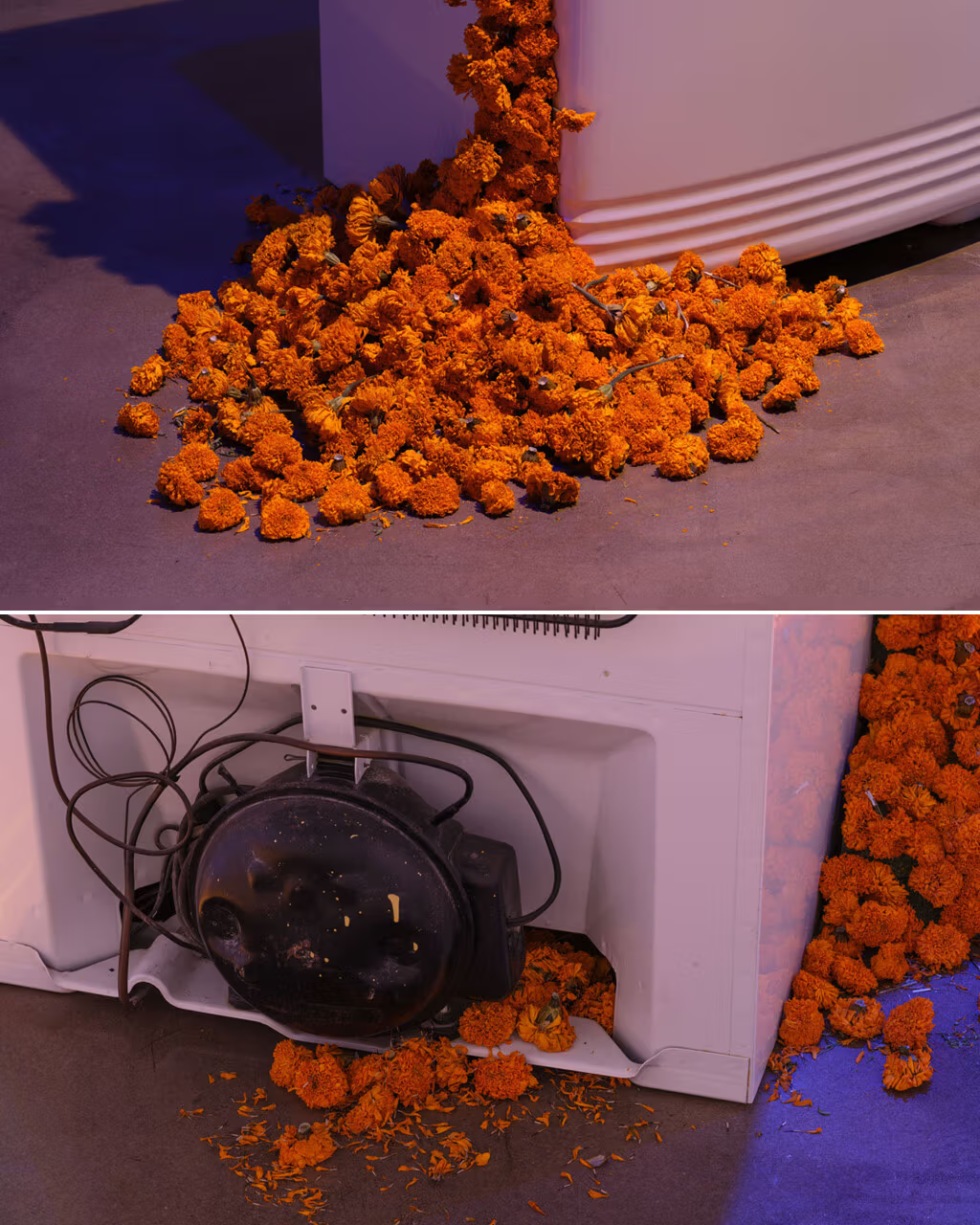
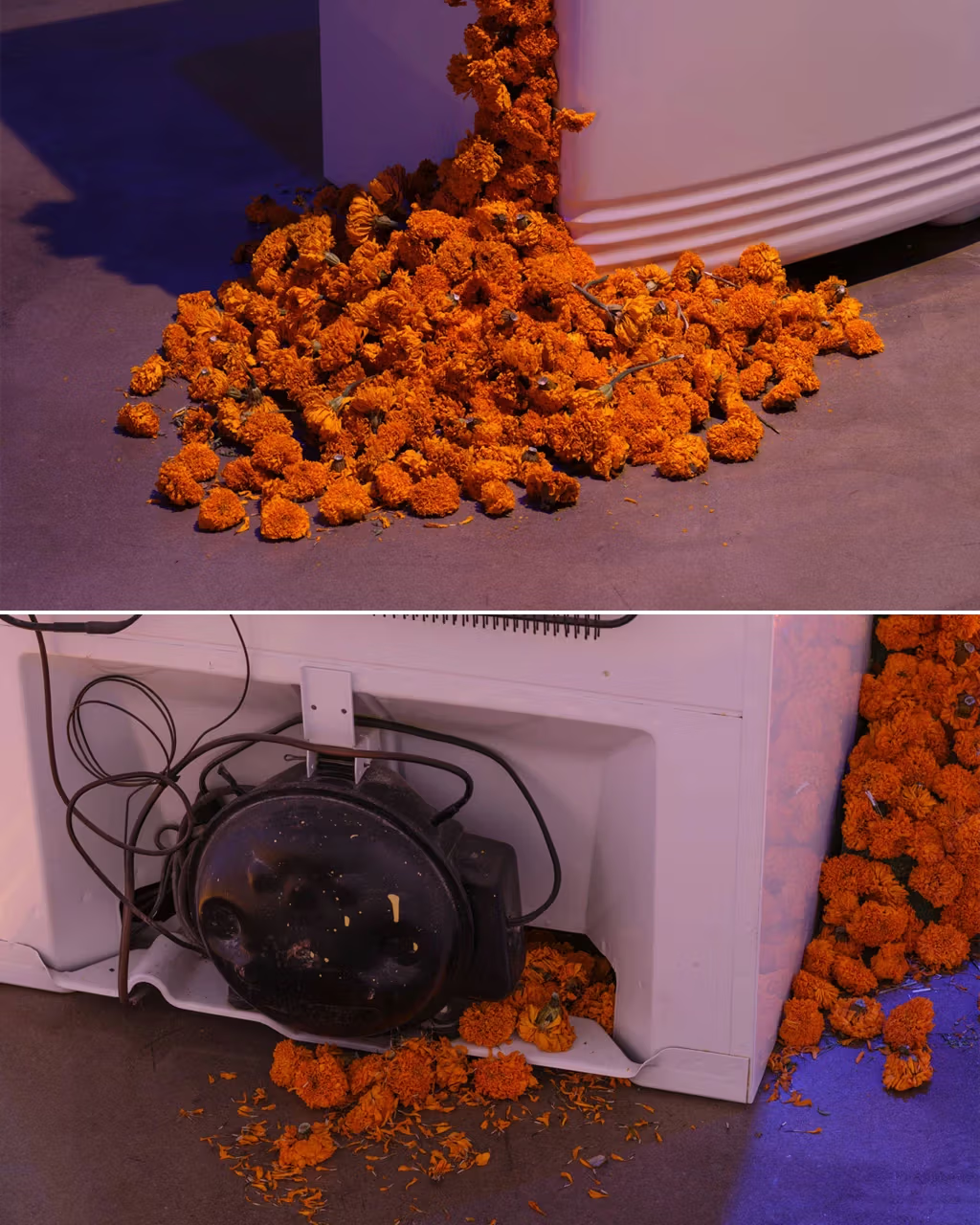
Ja'Tovia Gary, You Smell Like Outsite... at Paula Cooper Gallery, 2023.
Ja'Tovia Gary, You Smell Like Outsite... at Paula Cooper Gallery, 2023.
Is there a dialogue between the neon sculpture and your work in film in terms of medium and materiality?
I’m still trying to figure that out. I think the connection is maybe conceptual. The films are archival heavy. They deal with source material, and the [“Citational Ethics”] citations are sourced material. I think it’s my way of working through this obsession with the archive, this obsession with source material, but in a different medium.
It’s important for me to be in conversation with the past and say, “I was here,” understanding that this is a continuum and that at some point these things will be left behind for people 75, 150 years from now.
I look at both the films and the sculptures as these future relics. Someday, somebody’s going to find them and say, “Okay. Wow! What was going on? What was on their brain? What was happening? What was the context?” Because they’re able to engage with that material, they’re also going to be engaging with what came before it. You’ve got Nina Simone in there [archival footage in The Giverny Suite] saying, “Well, I would hate to have to sing a song, I would hate to have to even write a song like this.” So, the directive is to go and get in the stacks, to go and find out who is that guy she put in the film? Who is that woman talking about writing something about Black people in Ohio? You have to understand that something came before you. You did not just emerge.
What advice do you have for up and coming filmmakers or artists — artists in general, artists of color and Black women artists?
I would recommend that folks learn about something other than filmmaking and art. Don’t just take drawing or cinematography or sound or sculpture. Go learn the history of America, the actual history from the people who didn’t win. Learn about the period of enslavement, or African fights against imperialism. Get a full, well-rounded education so that your art can be substantive. It’s not just about how interesting the work is or how fresh or how beautiful the work is. We’re always fighting against some sort of juggernaut of power. The artist has a role in that.
The artist exists in the domain of truth-telling, in the domain of those who are care workers and educators. It shouldn’t be under the control of the tyrant. The artist has to be free. I forget who says this: “The king fears only the poet.” Thank God for the poet. Right? You’ve got to be somebody that they fear. [Laughs]
This interview has been condensed and edited for length.
Diana McClure is a Brooklyn-based writer and photographer, and a regular contributor to the Visual Arts Journal.
A version of this article appears in the spring/summer 2024 Visual Arts Journal.
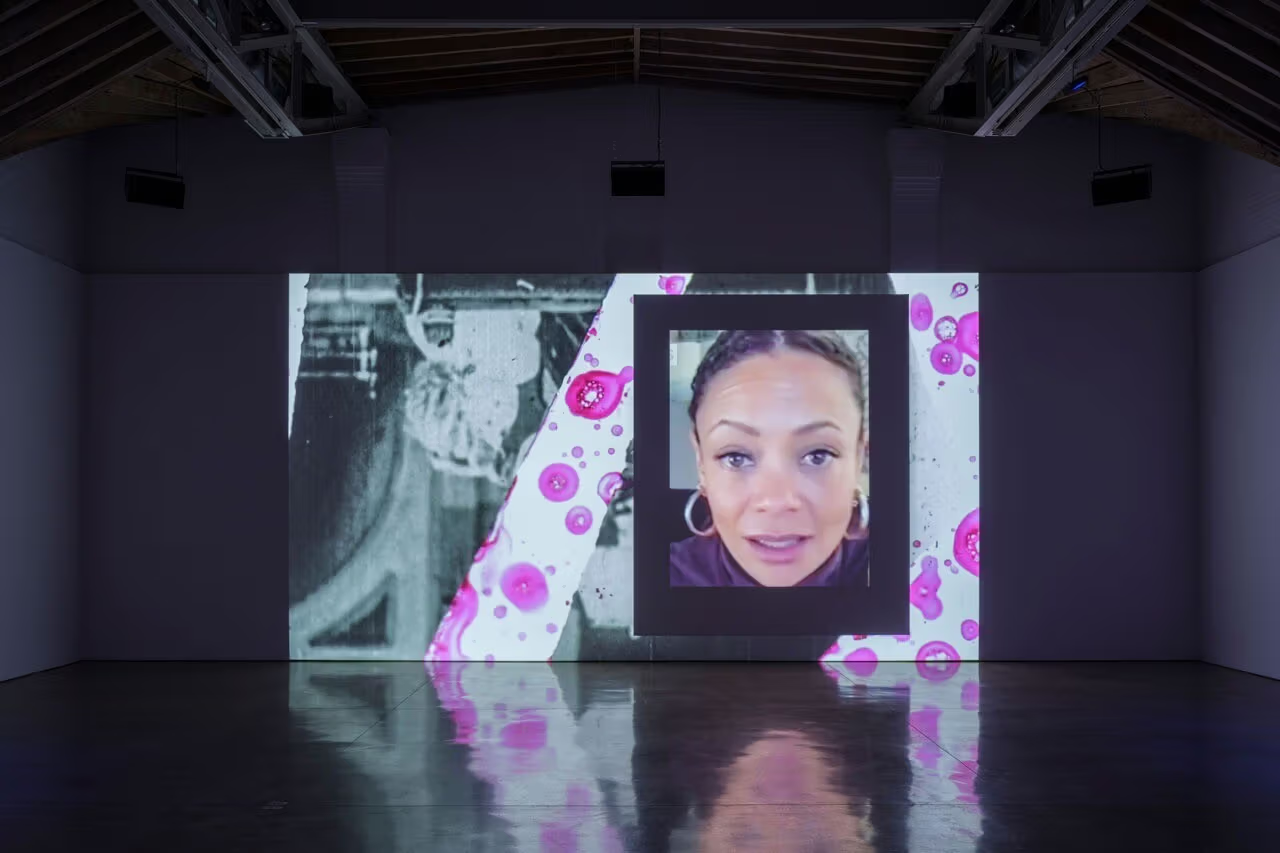
Ja'Tovia Gary, You Smell Like Outsite... at Paula Cooper Gallery, 2023.
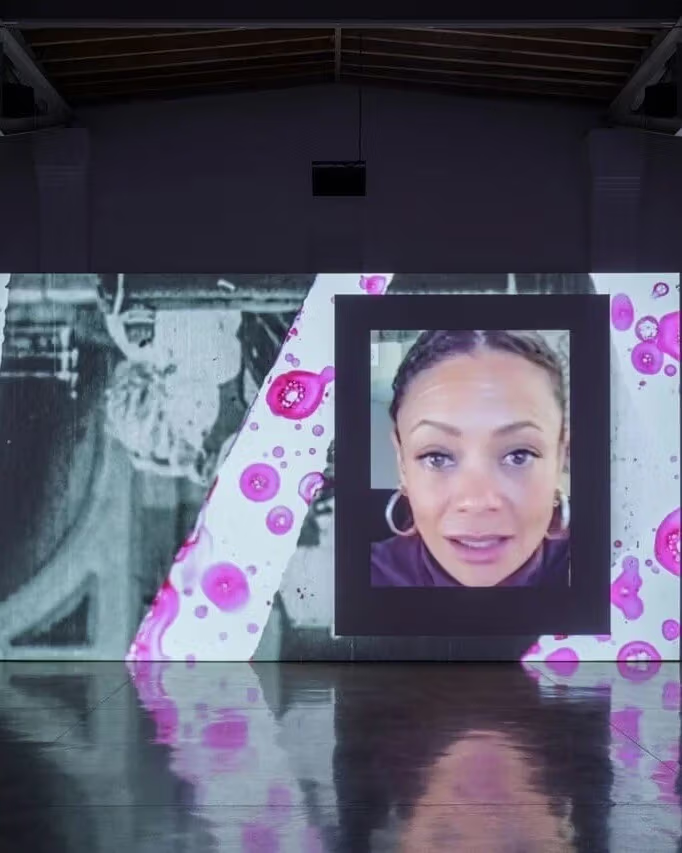
Ja'Tovia Gary, You Smell Like Outsite... at Paula Cooper Gallery, 2023.