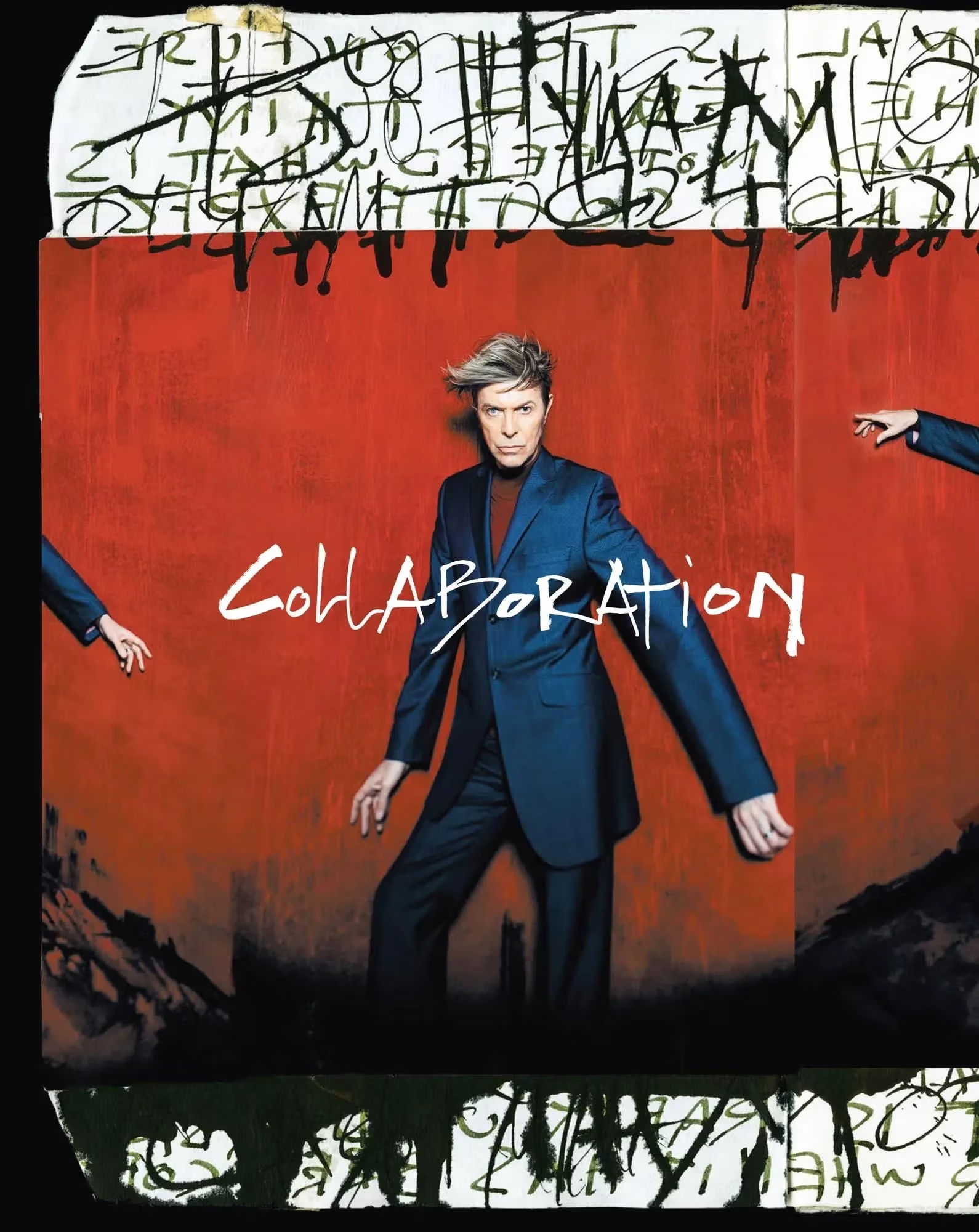
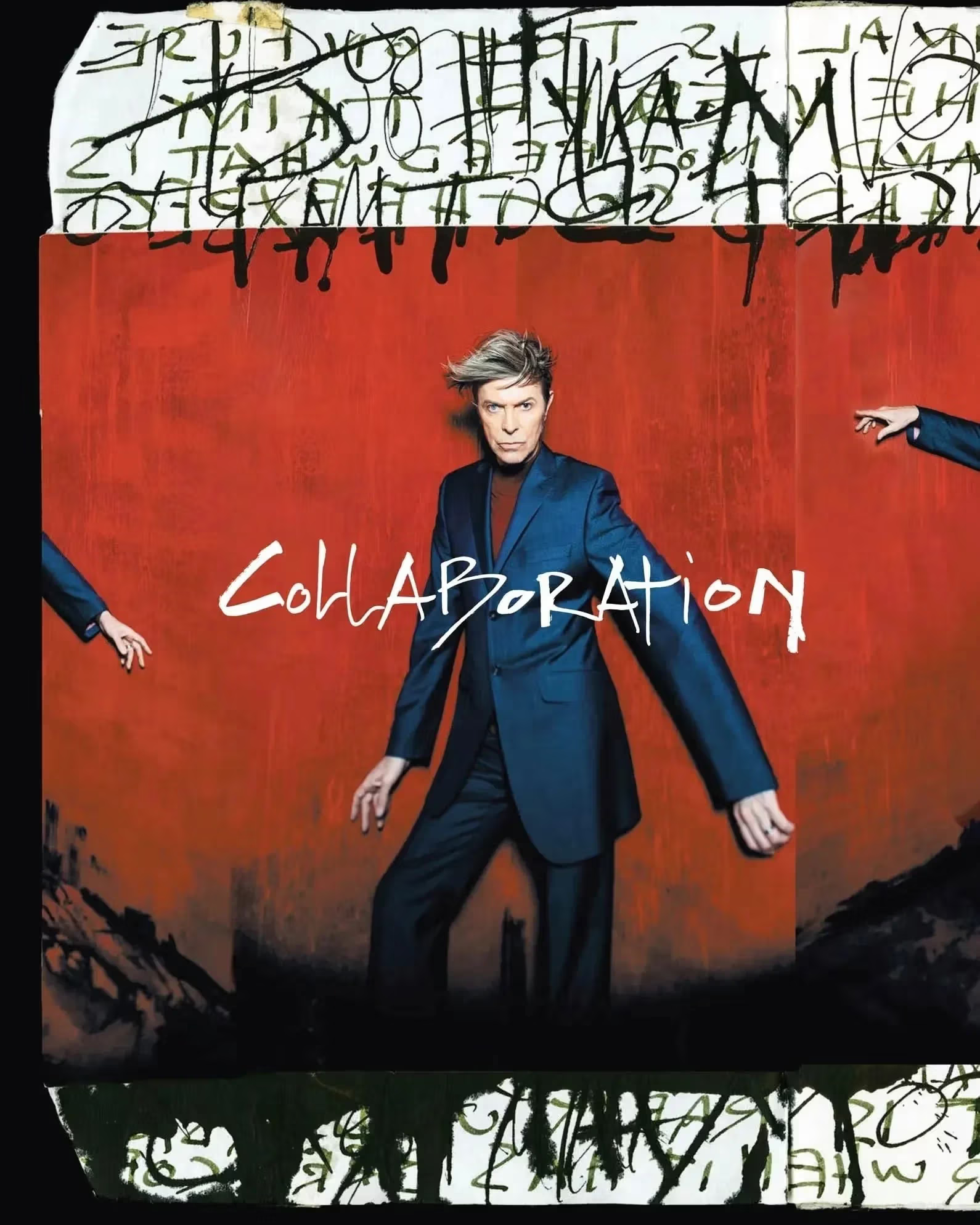
In a new book, the photographer revisits his years-long collaboration with the late, legendary David Bowie.
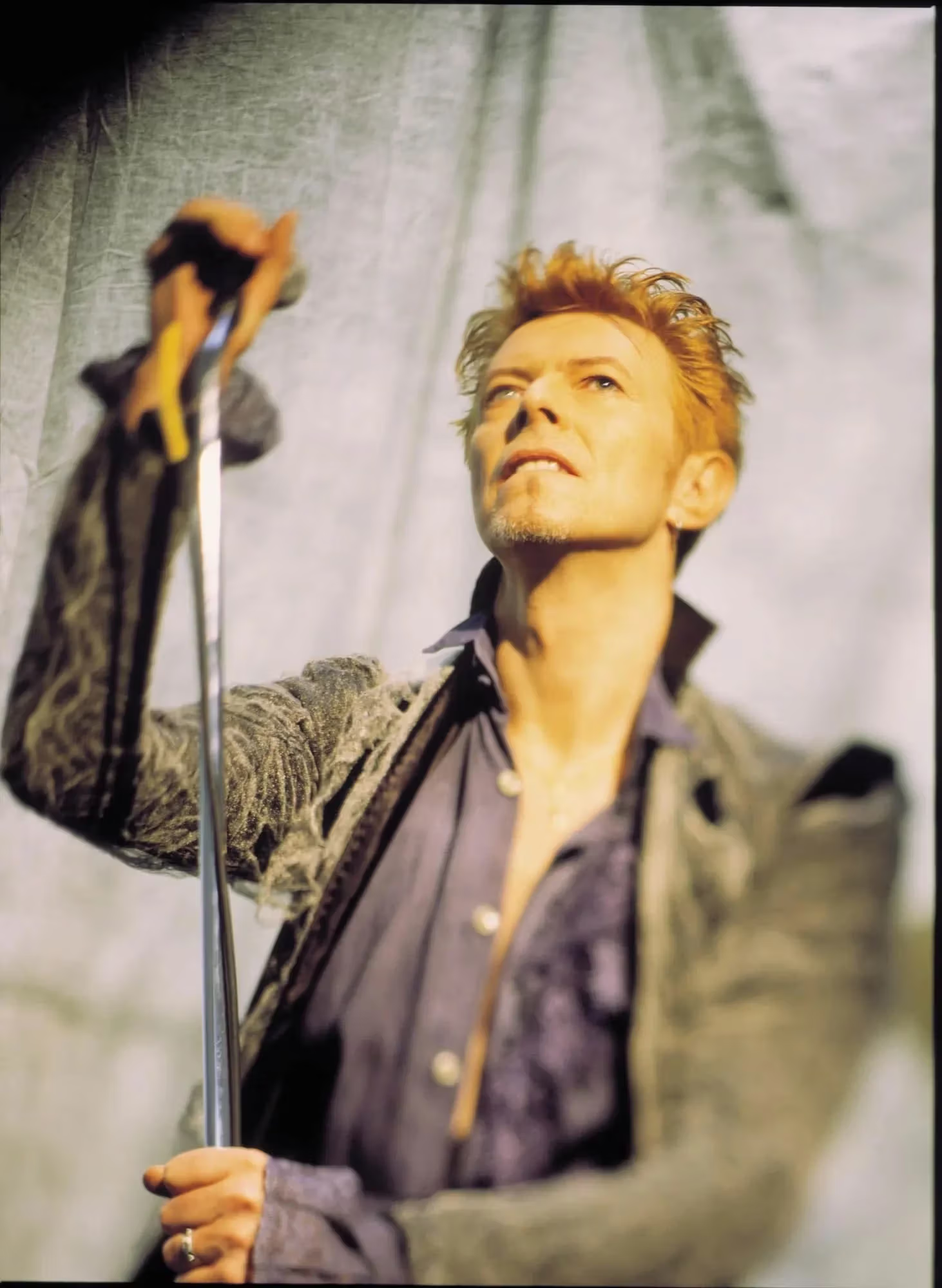
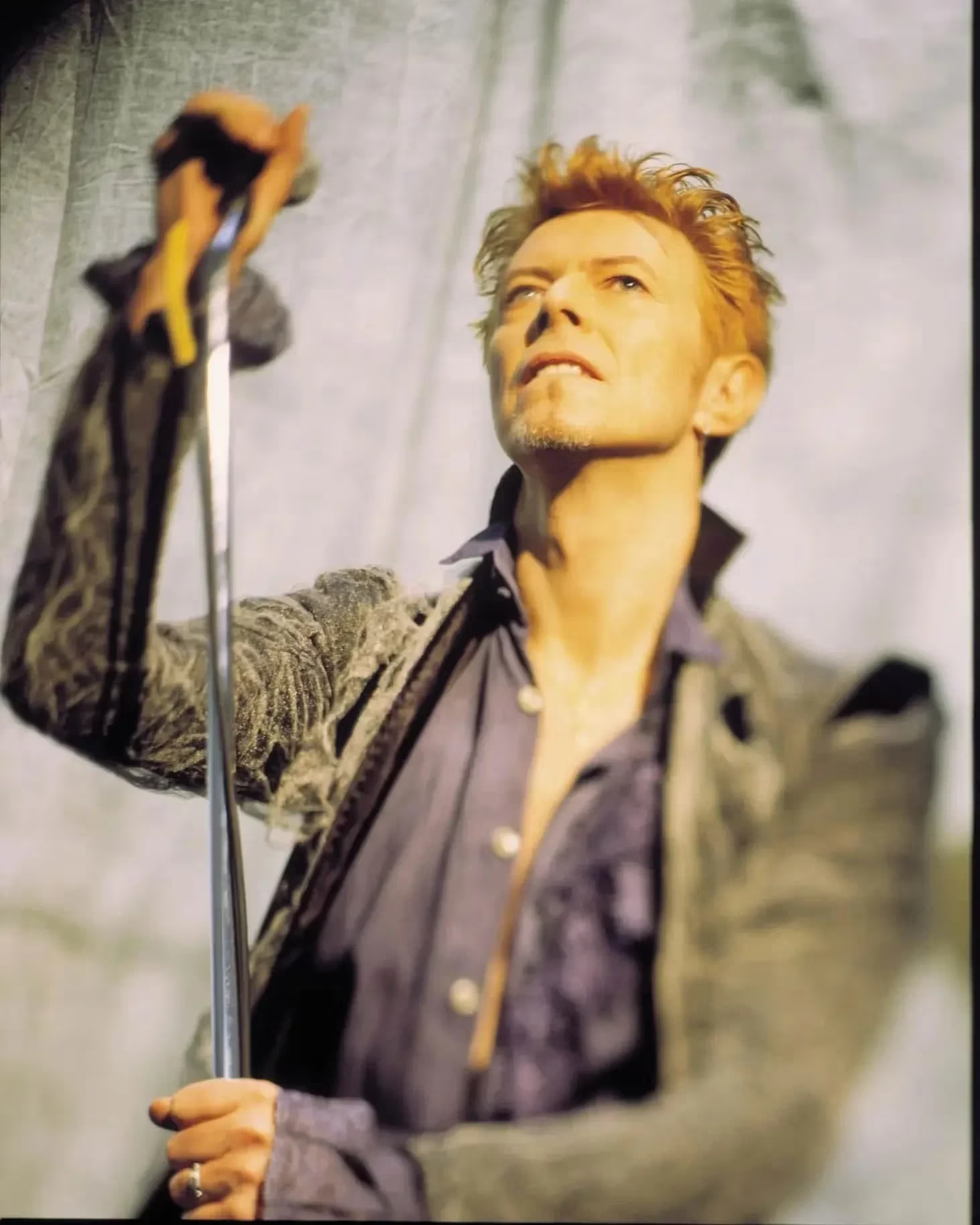
David Bowie in 1996, from a photo session with Frank Ockenfels 3 (BFA 1983 Photography) for Bowie’s 1997 album, Earthling.
David Bowie in 1996, from a photo session with Frank Ockenfels 3 (BFA 1983 Photography) for Bowie’s 1997 album, Earthling.
SVA alumnus Frank Ockenfels 3 (BFA 1983 Photography) doesn’t chase perfection. In fact, he leans into the beauty of flaws: smudges, scratches, blur, and distortion. In his work, those “imperfections” aren’t mistakes—they’re a spark that gives the imagery life.
Those creative instincts, the curiosity to explore and push the limits of an image, served him well with his long collaboration with the late David Bowie, who died in 2016. The legendary musician became an artist’s muse, game to pursue all of Ockenfels’s experiments, many of which are now collected in Collaboration: Frank Ockenfels 3 X David Bowie: Photographs, a volume from Abrams that spans 16 sessions from 1991 to 2006 and includes process material like contact sheets and sketchbooks.
Ockenfels traces his chemistry with Bowie to their first shoot in 1991 (for Bowie’s short-lived rock band, Tin Machine), which hinged on a small gamble: using his Polaroid camera to create an impressionistic “painting” with light and then showing it to Bowie. Bowie recognized a familiar impulse in that approach—an insistence on moving forward.
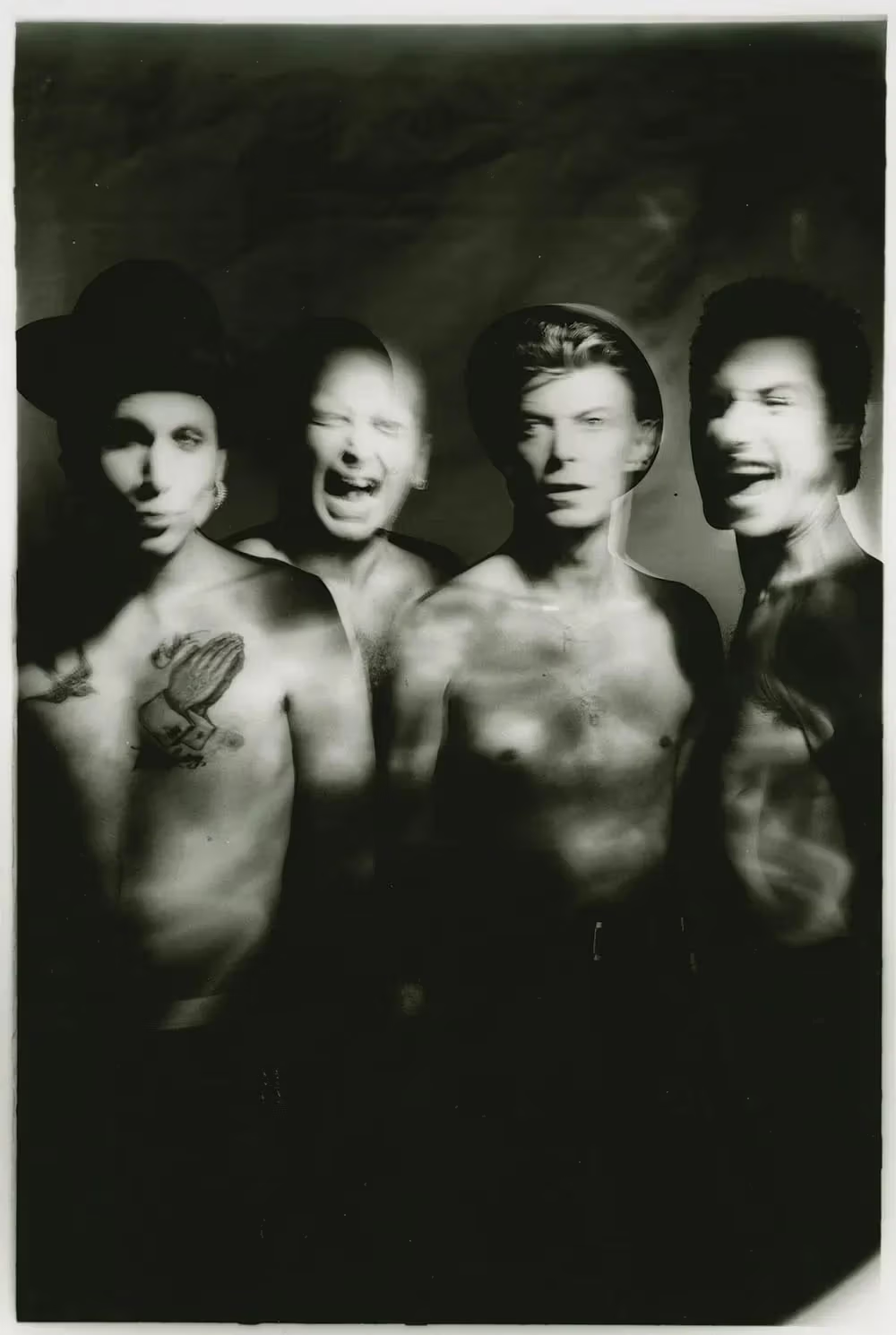
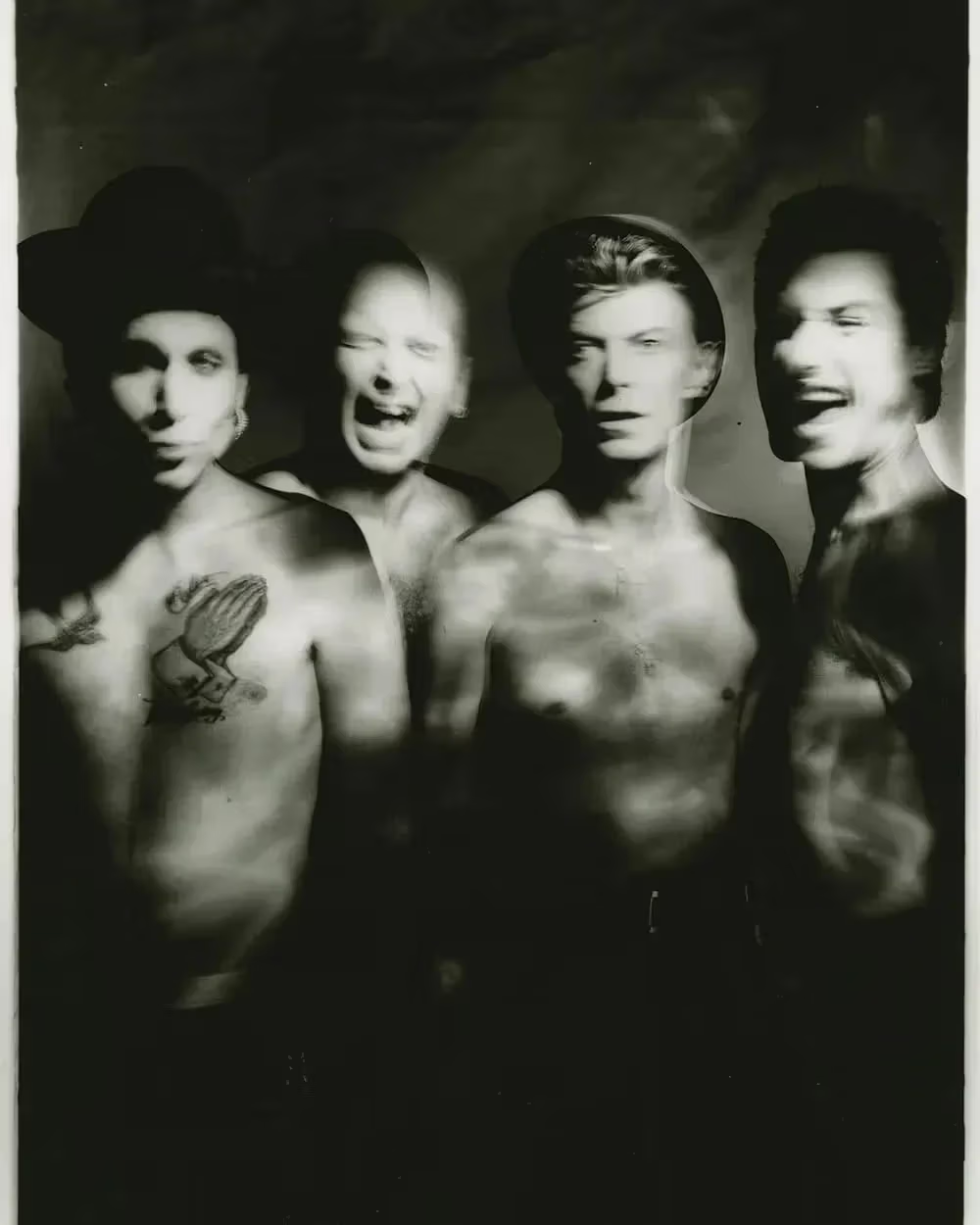
Tin Machine in 1991 for Creem. Photo by Frank Ockenfels 3 (BFA 1983 Photography).
Tin Machine in 1991 for Creem. Photo by Frank Ockenfels 3 (BFA 1983 Photography).
“What I’d seen in his musical history was his curiosity about what’s next, not to repeat but to grow and try things that weren’t conventional,” Ockenfels says. “He was a true artist. [He didn’t] do what is expected, but what answers the question or voice in your head, to feel scared and uncomfortable.” Ockenfels felt much the same: “I was on a journey to make every day a different image—one that was created in that moment.”
Across their many collaborations spanning 15 years, Bowie’s receptivity was a constant. “From Day One, he was open to my ideas, to try and accept if it failed or where it went [and] this never changed,” Ockenfels says. “He never told me what to shoot, only what the images would be used for. He was open and warm, no ego or need to be treated in a special way. He had no entourage and often came to the shoot alone or with [his longtime assistant] Coco. From Day One to our last meeting, he was the same.”
That trust shaped the way they worked. Bowie arrived with things to try, including props and costumes that he wanted to play with. Ockenfels conceived the settings—lighting, staging, a mood—and then they played until the photograph announced itself. “In any good collaboration, there is no need to have ownership,” he says. “It only exists because of what has happened in that moment. A simple image against a blank wall comes to life when the subject does something in the space you have created. The same with props and wardrobe—he would bring [them], and together we found what was needed.”
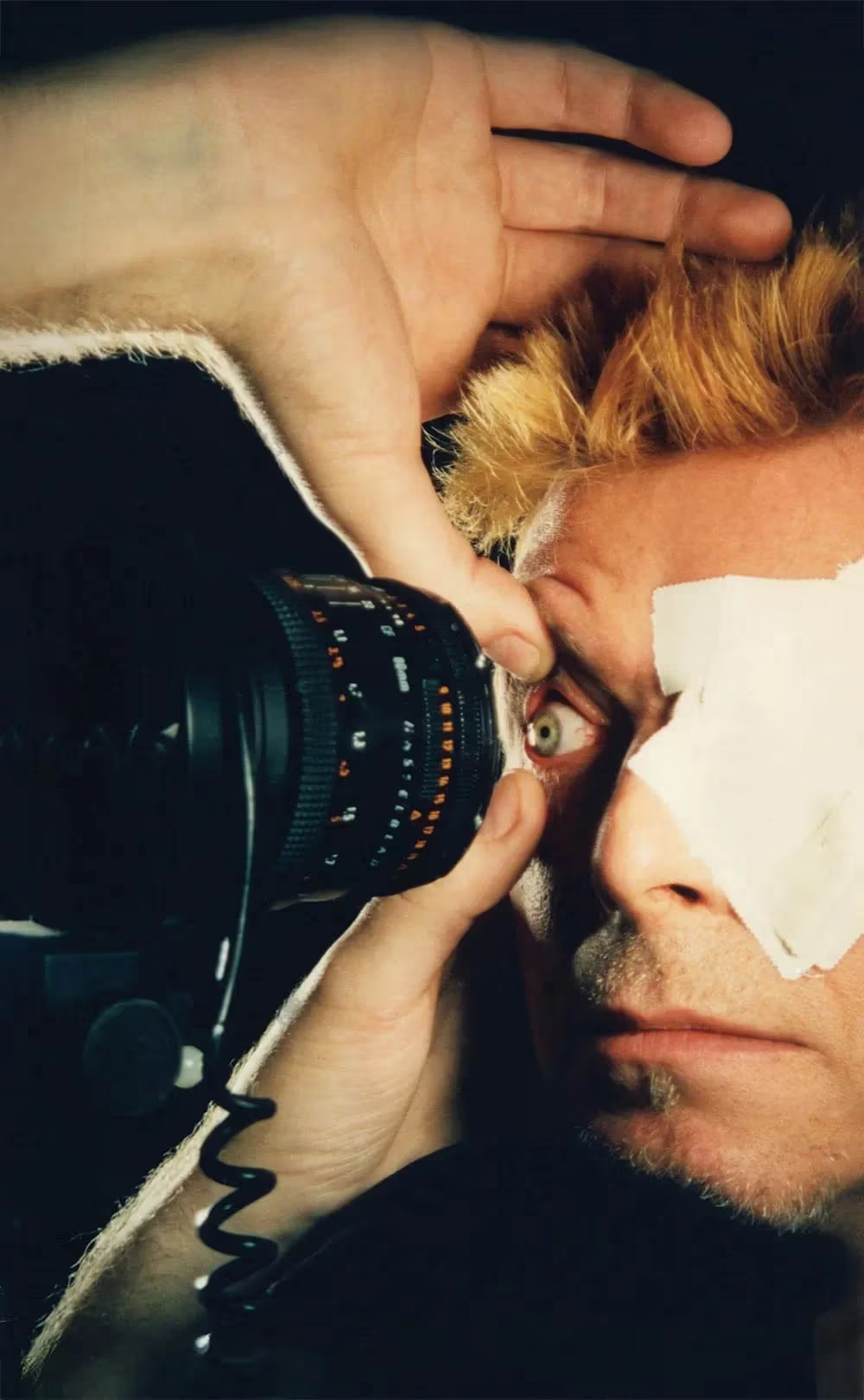
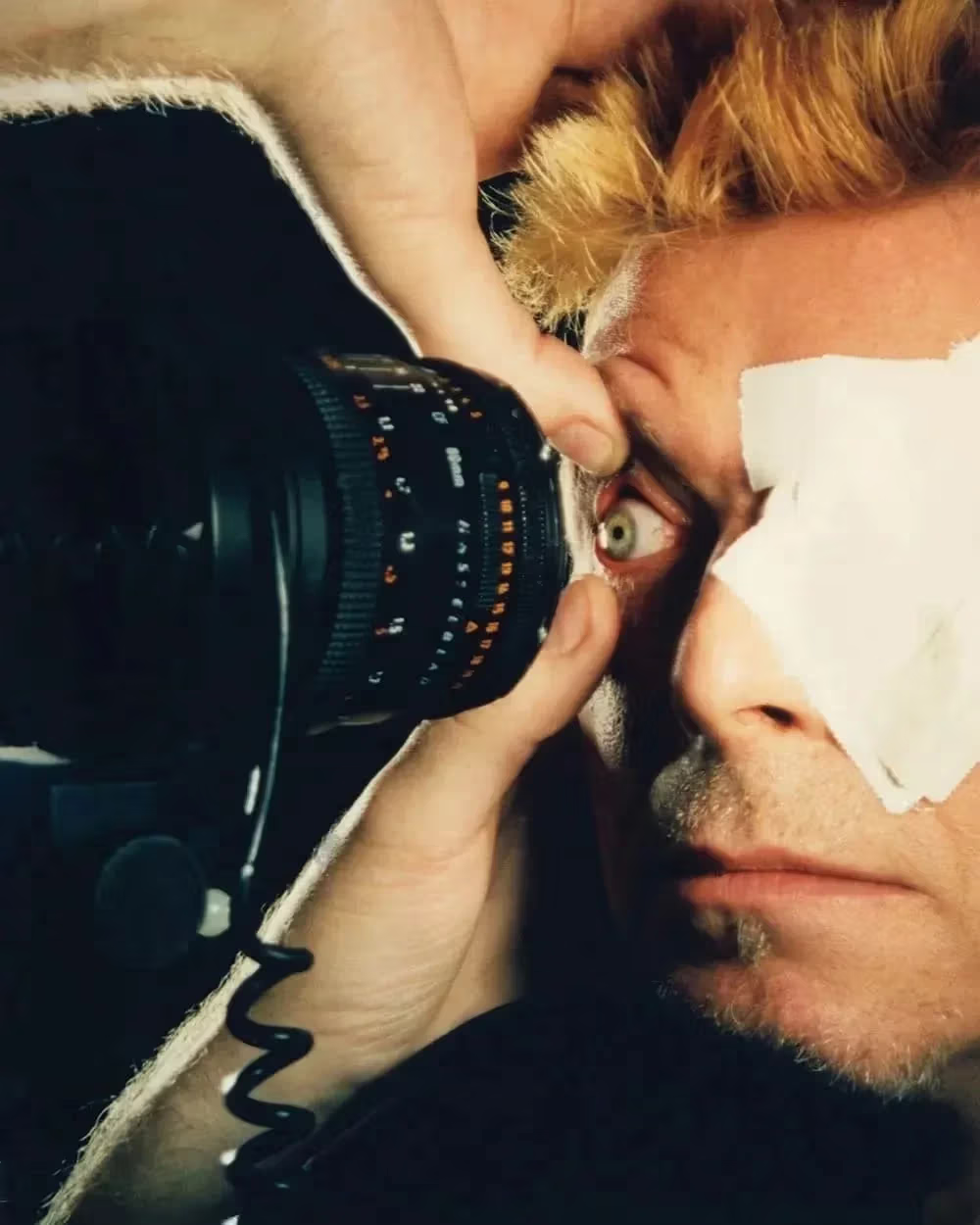
Behind the scenes of the 1996 photo shoot for David Bowie’s Earthling (1997). Photo by Frank Ockenfels 3 (BFA 1983 Photography).
Behind the scenes of the 1996 photo shoot for David Bowie’s Earthling (1997). Photo by Frank Ockenfels 3 (BFA 1983 Photography).
If one session captured the tension and thrill of working right at the edge of failure, it was the photo shoot for Bowie’s 1997 album, Earthling—specifically, a moment when Bowie asked Ockenfels to photograph his eye.
“This was before digital, and we shot on transparency,” Ockenfels explains. “[With] a macro lens on a Hasselblad, [even] a breath would change focus and [meant] waiting at the lab to see if it had one out of 12 frames in focus.” The uncertainty wasn’t a setback, though; it was the engine. “The Earthling shoot was a lot of trying things, not sure if it would work, and the images were one-of-a-kind. It was amazing.”
That spirit is also why Collaboration refuses to present the portraits as a polished highlight reel. Ockenfels pulls readers into the process with contact sheets, sketchbooks, collage-like pages with notes and drawings. The collaboration feels lived-in, not lacquered. “I've always liked to see behind the curtain, the choices made and the ones not,” he says.
Bowie shared that curiosity. “David liked my journals and often would look through whatever one I had in my bag while I set up; he liked the manipulation of my writing backwards,” Ockenfels says, referencing one of his techniques of including scribbles and scrawls from his journals into his photos.
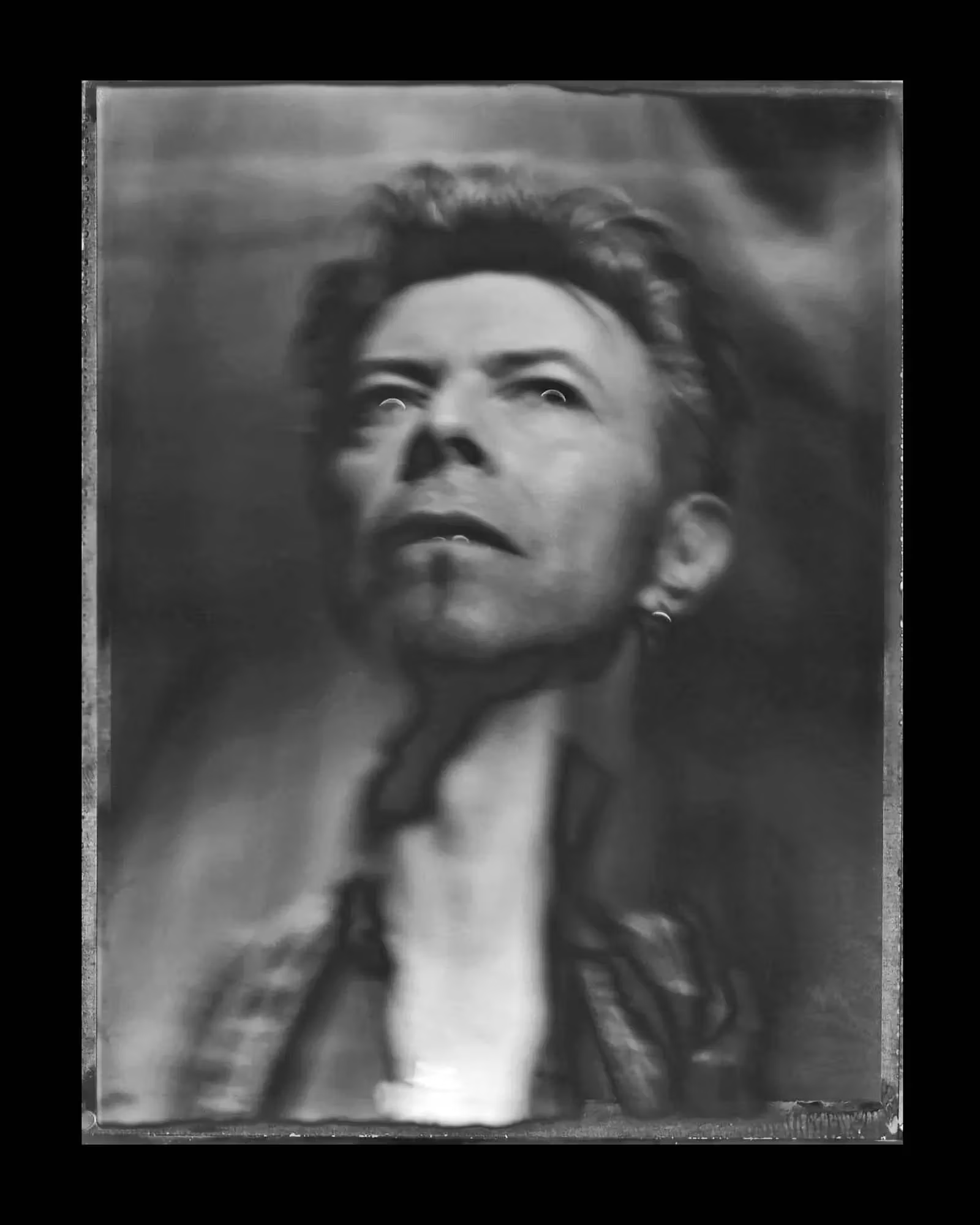
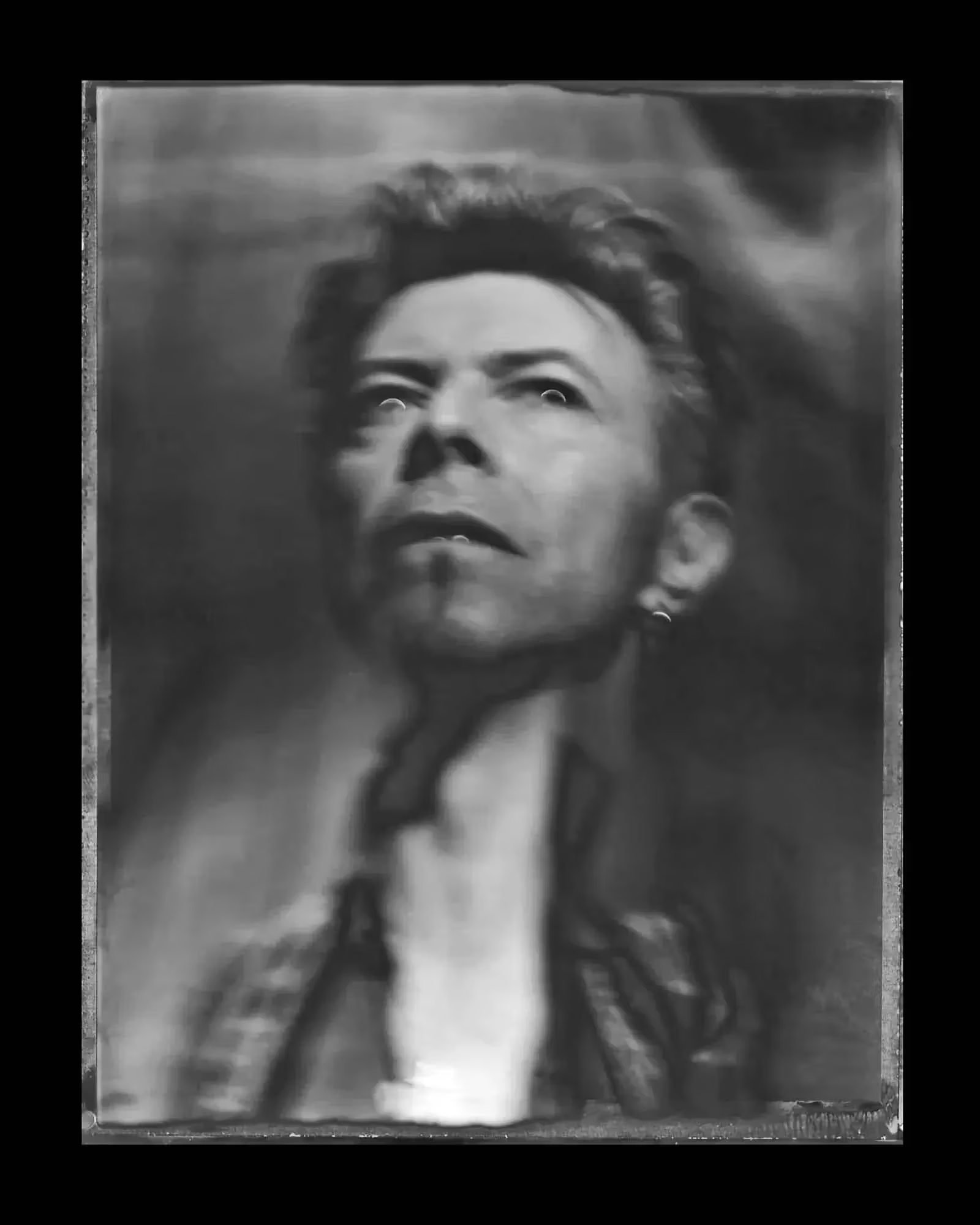
David Bowie in 1996, from a photo session with Frank Ockenfels 3 (BFA 1983 Photography) for Bowie’s 1997 album, Earthling.
David Bowie in 1996, from a photo session with Frank Ockenfels 3 (BFA 1983 Photography) for Bowie’s 1997 album, Earthling.
Even when Bowie was fully in “experiment” mode, the signal, Ockenfels says, was simple commitment. Simple press assignments were the ones the pair found the most difficult, because the record label wanted a mostly straightforward presentation. “But we would look for the twist in each.”
That twist often meant refusing the “perfect” version of Bowie. “The distortion portraits we did for Earthling are an example of art over the need to look handsome,” Ockenfels said. “It was an idea I had tested with my wife, and he loved the idea of the abstraction of beauty or the human form, like what Francis Bacon did in his portraits.”
Asked for a favorite memory of Bowie, Ockenfels recalls visiting the musician at work in the studio. “The time he asked me to meet him at a recording session was my favorite,” he says. “I stood in the control room and listened to David discuss the song, and when he turned to go into the booth, he smiled at me and said Come on. I sat in the four-by-four booth with him and took pictures. Between takes, we talked. It was just the two of us.”
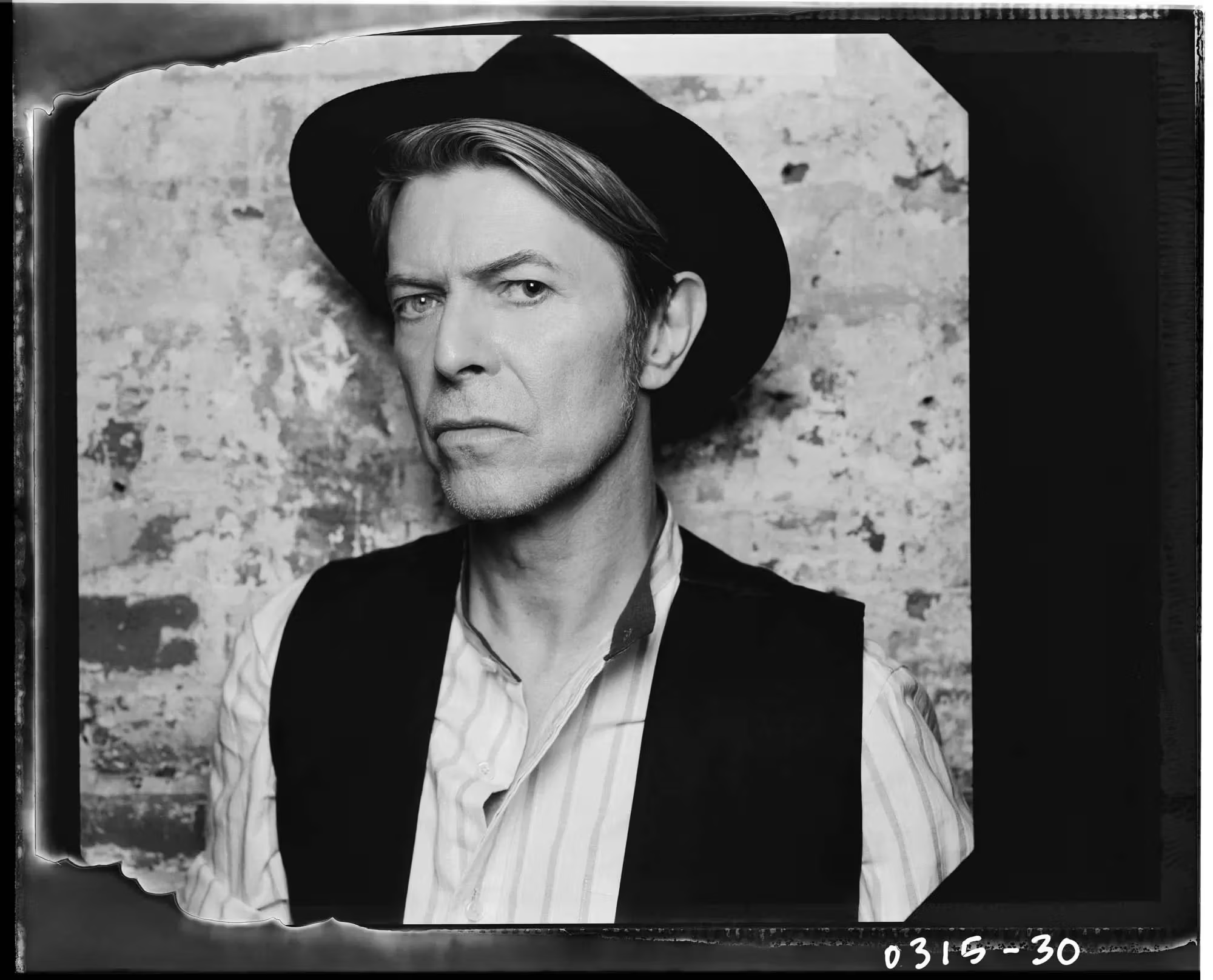
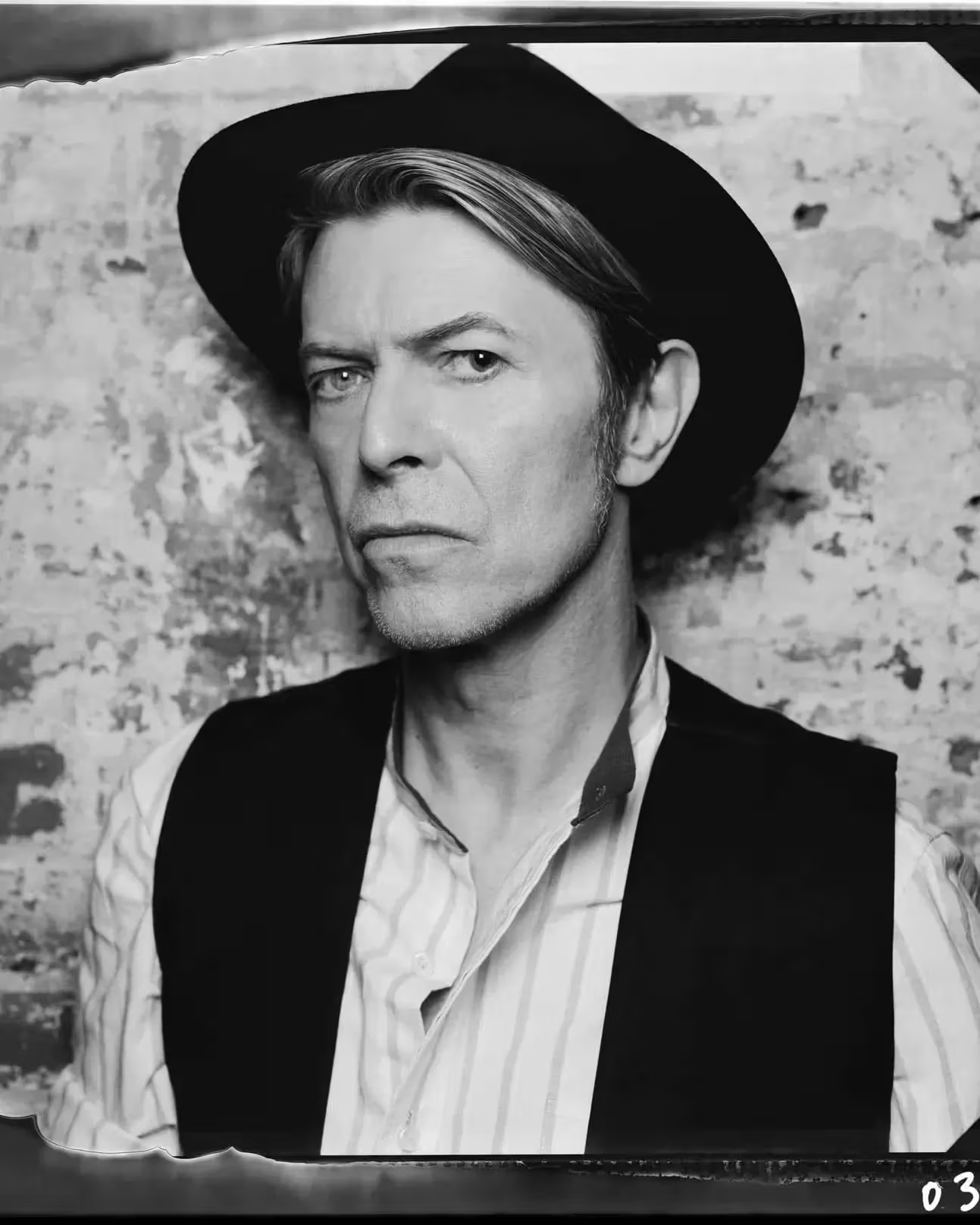
A contact-sheet image from a Frank Ockenfels 3 (BFA 1983 Photography) photo session with David Bowie, circa the latter’s 2003 album, Reality.
A contact-sheet image from a Frank Ockenfels 3 (BFA 1983 Photography) photo session with David Bowie, circa the latter’s 2003 album, Reality.
Collaboration: Frank Ockenfels 3 X David Bowie: Photographs (Abrams) was published late last year by Abrams in both hardcover and e-book editions. It features a foreword by music journalist Joe Levy and is available online and through major booksellers and retailers.