

Steven Heller, Mirko Ilić and Beth Kleber have authored ‘Milton Glaser: POP,’ a groovy new book featuring the iconic designer’s 1960s and ’70s work.
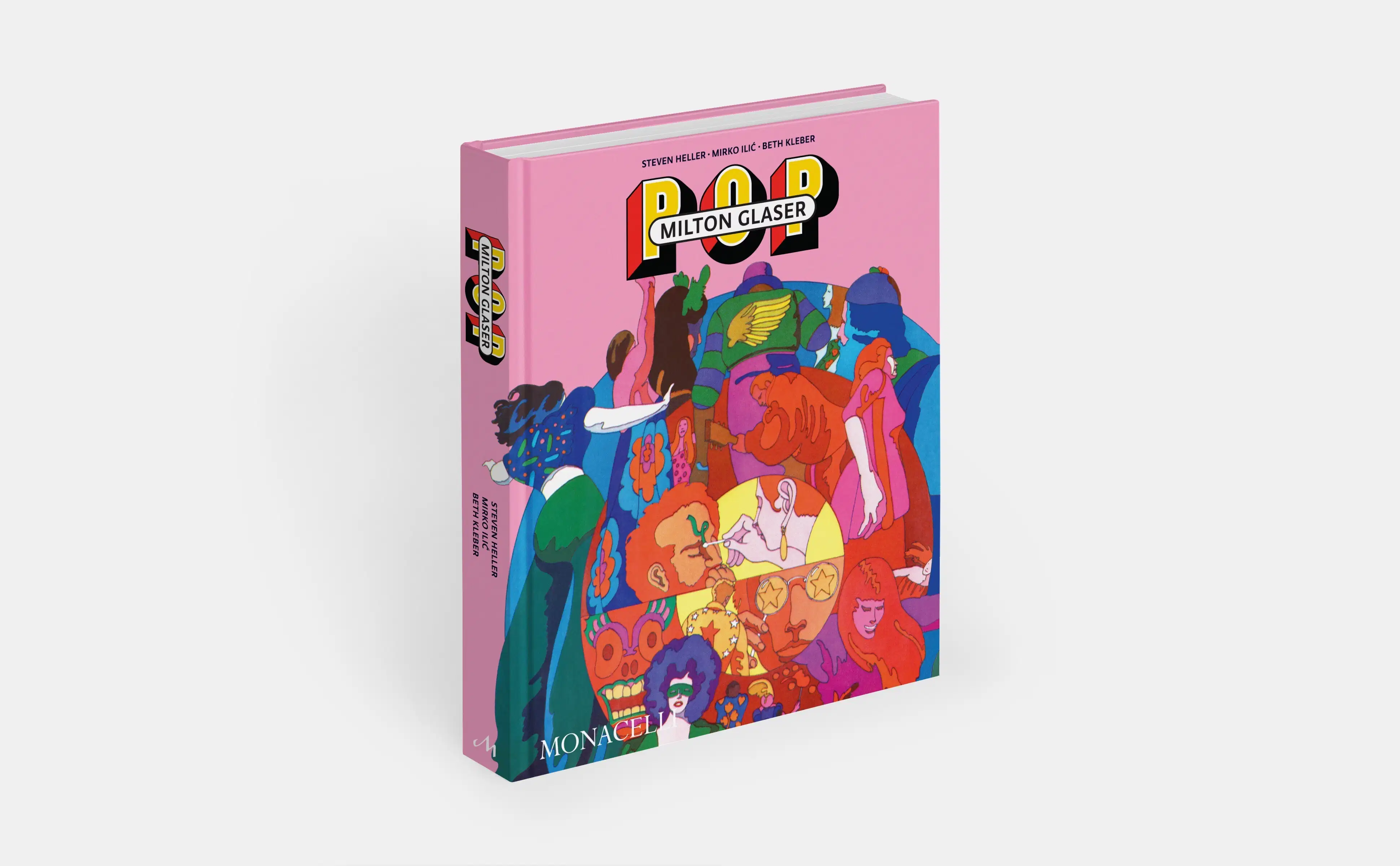
Milton Glaser: POP, by Steven Heller, Mirko Ilić and Beth Kleber.
What does pop mean in Milton Glaser’s art? Milton Glaser: POP—a groovy new book from three longtime School of Visual Arts community members and published by The Monacelli Press, and a companion exhibition on view this spring at the College—aims to answer that question. In this bold graphic tome, celebrated author and MFA Design Co-Chair Steven Heller; designer, illustrator and activist Mirko Ilić, who has taught in the MFA Illustration as Visual Essay program; and Beth Kleber, head archivist at SVA and the Milton Glaser Design Study Center and Archives, explore and curate Glaser works from the 1960s and ’70s, or what they have distinguished as the late designer and longtime SVA faculty member’s “pop” era.
Each of the three authors had personal and professional connections to Glaser. He and Heller were SVA colleagues for more than 40 years, and Glaser taught in Heller and Co-Chair Lita Talarico’s MFA Design program. Kleber has overseen, written on, and interviewed Glaser about his vast archive of illustrations, artworks, and designs since he donated it to the College in 2003. Ilić, whose studio was on the top floor of Glaser’s building on 32nd Street, often collaborated with the elder designer and became a close friend. The book’s editor, Alan Rapp, is part of the SVA family, too, having graduated in 2010 from the College’s MFA Design Criticism program.
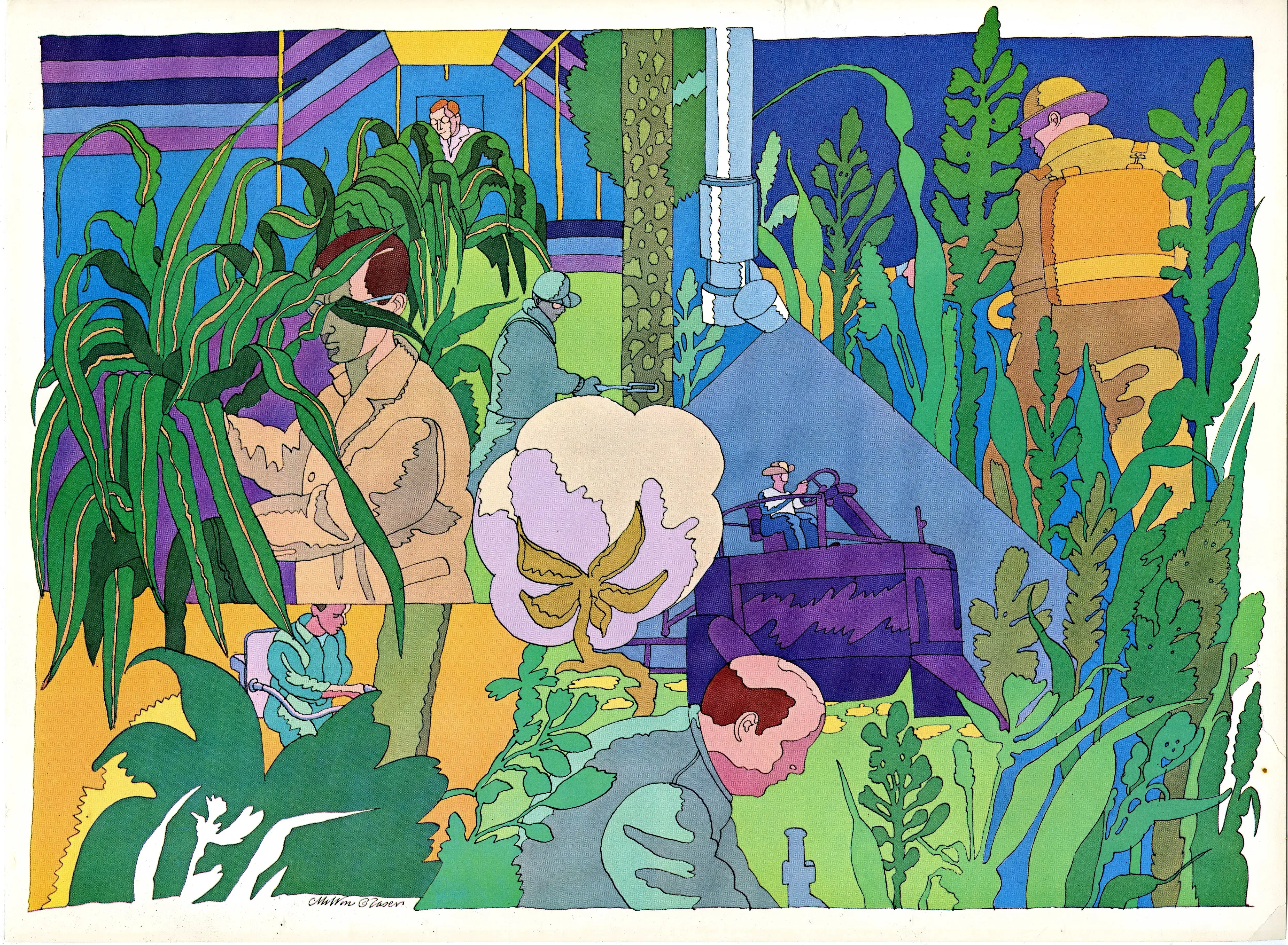
Milton Glaser, Ansul Corporation Annual Report illustration, 1966. Featured in Milton Glaser: Pop.
Heller, Kleber, and Ilić began work on POP in 2020, narrowing Glaser's wide-ranging body of work from his partnership with Seymour Chwast at Push Pin Studios. The hundreds of pieces featured in the book—including book and album covers, posters, magazine covers, brand identities, and advertisements—were largely drawn from Ilić’s own collection and the Glaser Archives, which are housed in the SVA Library. Many have not been seen since their original publication, and others have never been published before. Still, they are likely to feel familiar due to what the authors posit—and prove—is Glaser’s undeniable influence on design of this period and design yet to come.
Milton Glaser: POP is more than a closer look at some of the designer’s grooviest output, a time in his career toward which he often expressed ambivalence. It is a celebration of Glaser’s impactful experimentation with whimsical, bright color, drawing, and collage, and ultimately a demonstration of the cultural shift that would transform the look of pop culture forever.
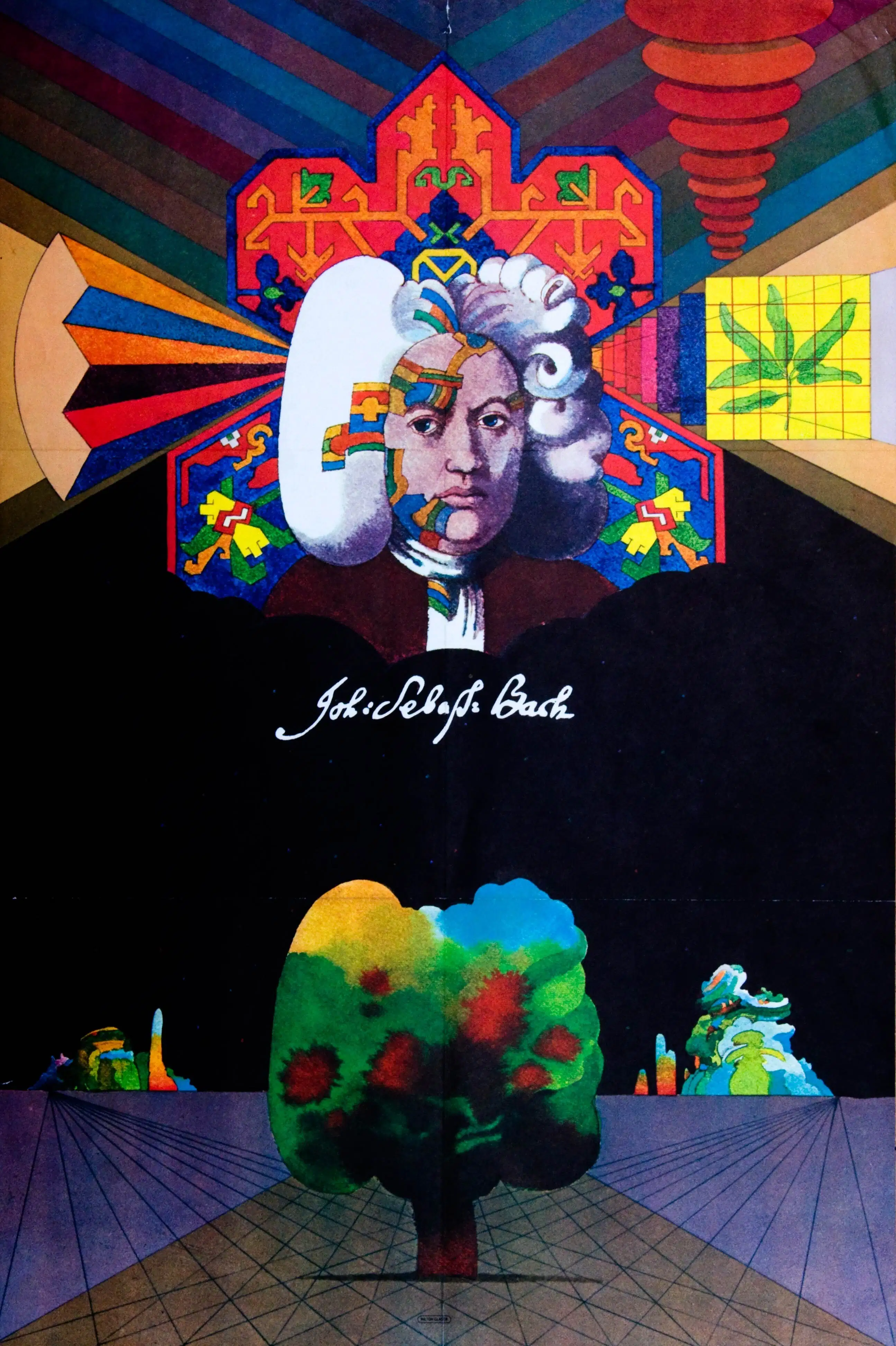
Milton Glaser, Johann Sebastian Bach poster, originally fromThe Biggs Bach Book, Columbia Records, circa 1971. Featured in Milton Glaser: Pop.
The “Milton Glaser: POP” exhibition, featuring select original art from the book, will be on view at the SVA Gramercy Gallery, 209 East 23rd Street, from Wednesday, May 17, through Monday, June 5.
A version of this article appears in the spring/summer 2023 Visual Arts Journal.

Milton Glaser, cover design for Knut Hamsun’s Hunger, 1970, Noonday Press, New York. From Milton Glaser: Pop.