

Saul Bellow, in his entertaining and sprawling novel Humboldt's Gift, wrote: "No school without spectacular eccentrics and crazy hearts is worth attending." Bellow, that street-smart Chicago sage, is not talking about members of a school's administration (who may very well be expert nighttime crooners glimpsed by neon flash in the KTV lounge for all I know), nor is he referring to the students, despite their thousand attributes (and kick-ass karaoke skills). What he's talking about are the teachers of the world, those passion-driven and intrepid educators often portrayed in films hammering gerunds and algebraic equations into the minds of tough inner-city youths; the mad ones who rip apart dry textbooks and inspire their students to dance atop their desks; the underpaid schoolmasters who trudge through acres of snow and fend off the horns of wildling buffaloes with their feathered pens in order to provide much-needed lessons to farmer's lads (okay, that last one's not in any film that I've ever seen, but if someone were to make a docudrama about Walt Whitman's early days that could very well be a captivating scene).
Teachers are the ones who stand lucidly behind the podium, or pace the floor as they shape their lectures, the smudge of dry erase markers on their sleeves, elbows powdered in chalk dust, their eyes radiating a fiery luster. They are the rare and precious resource that the students continuously mine–thus enriching their storehouse of knowledge and wisdom. Teaching is an essential, important profession, especially now, in a world surfeited with violence, the glut and blur of media, the uncertainty and chaos wreaked by artificial intelligence, not to mention the miasma of pure corruption seeping from the White House, compliments of our maladapted president and all of his servile goblins. Who else but teachers can help clarify for students all the obscurities that they must contend with? Who else can help students process what is difficult and complex not just in works of art and literature but in the world at large? Who else can help guide them to asking the right questions, and to teach that the major issues of the day cannot be boiled down to mere talking points, but require patience and nuance and the developing ability to parse the truth from mere equivocation?
Fortunately, SVA has no shortage of dedicated, brilliant, explosively creative teachers. Enter their classrooms and you will be melted down into your boots by the wattage of their brainpower. Confront their art and designs and you'd experience an astonishment equal to finding yourself standing on the sun and seeing the earth in solar parallax. I'm very lucky to journey the halls in a storied institution with so many colleagues whose work I admire and whose teaching I respect. Instructors are what make a school. They are the footings, the walls, the slabs, the piers, the beams, the posts, the joists, the rafters–remove these, and the school collapses, becoming just another hole in the ground.
I say all this by way of introducing the creative writing of SVA's marvelous students, many of whose pieces found their initial inspirations in the classroom. If "energy is eternal delight," as William Blake put it, then prepare yourself to experience top-down delight, because this an issue that is jam-packed with literature and art that exhibits so much energy that it could match the photons shed from a star as it orbits the galaxy.
If you don't believe me, then read Laura Cepeda's story of a young woman rendered solitary through a weird apocalypse, who reckons with her precious Caribbean Sea, which ignites memories of a once-teeming world. Maggie Huffman's imaginative piece of fiction describes a fascinating dystopia, where rogue chefs are transformed into underground revolutionaries. Scillian Raaf Panepinto's tale also invokes the idea of revolution, though with an entertaining bent toward fantasy. Tahis Fonseca-Miranda's "Pale Eyes" presents us with a Poe-esque narrator, haunted the by the killing of a young woman in a tale that unfolds like a murder ballad, and "Chocolate Hot" by Lindsay Campbell details a close friendship fractured by an act of betrayal, in a tale that presents a complex portrait of a young university student. Alesia Brovtcyna's fictional flight introduces two outcasts who, together, discover that no walls could ever divide them. Yanqing Jin's story dissolves altogether the boundaries between the material and the spiritual planes, while Beverly Cardaman's presents a scientist, a sterling emblem of the rational, encountering the irrational in the guise of a Ferrywoman.
If you have a yen for nonfiction, where insights are revealed through both the personal and impersonal essay, then it'd be wise to begin with Shreya Sridhar's work, which has a deep-sea diver pondering the spiritual via an exploration of "a world of crystal blue." Natalie Frank's take on Martin Scorsese's propulsive third feature, Mean Streets, casts today's eyes on a classic film made more than fifty years ago. In Nandini Shivaramakrishnan's emotional piece, memories are evoked through the metaphorical spin of the color wheel, while Juliana Sanchong's tribute to Doron Langberg's painting Lovers at Night helps her to honor the moments "we often let slip away." Tina Yu's lovely piece summons forth a remembrance of the author's beloved grandfather in China, while Violet Lu's intellectual analysis explores the comics medium through Anke Feuchtenberger's and Katrin de Vries's series W the Whore. Marin Kim's immersive exploration of the films of Hong Kong director Wong Kar-wai is a philosophical disquisition on time, while Liam Junod's humorous piece gives us a young student who learns to appreciate the free beauties of New York—after purchasing an extremely expensive cup of coffee.
But that is not the only terrific writing offered in this issue. There are also exquisite poems! Icelin Gonzales presents us with a startling sunburst inspired by a jazz woodcut, while Anna Coleman's ode invokes the sweet and bitter fruits of life in a style reminiscent of the poetry of Stephen Dobyns. Jenna Brown gives us a praise song inspired by Bernini's majestic sculpture of St. Teresa. Saki Okinaka delivers a beautiful, spare tribute to her mother, while xiaoou cao's poem honors the cherished memory of a departed grandfather. There are also additional odes: one to the brain-game of chess by Yu Liu, and one to the PATH train by Emma Suarez (which admittedly captured this Jersey boy's heart). Layla Mesa's foray into the subversive is thrilling, and so is Steven Iniguez's paean to jazz. Michelle Mullin's contemplative work ponders what becomes of us before we take "sick-leave among the worms (in Samuel Beckett's brilliant formulation), leading to a discovery of what there is to gain in life.
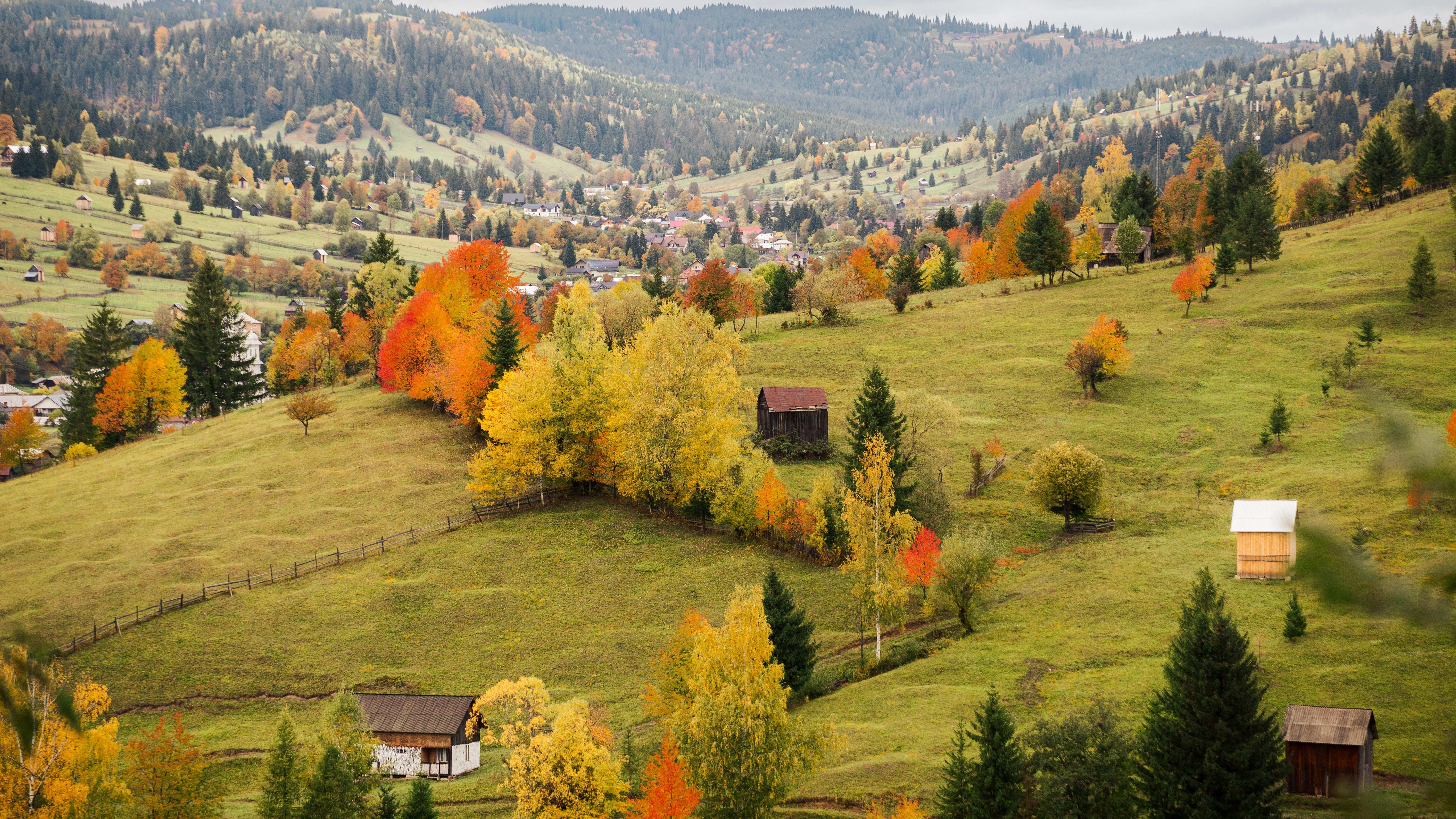
And to cap off this glorious feast, The Match Factory is proud to present this issue's feature artist, Nicholas Faestel, whose photographs of nature are magisterial and profound: chance upon them with one gleaming eye and these images will leave you bell-mouthed. Nicholas's photographs are an exemplary representative of what the French refer to as "le merveilleux."
I want to personally thank all the students for their impressive work this semester! And, as always, a million gracias, to Laurie Johenning, Director of Operations in the Humanities & Sciences Department, for her hard work in helping to put together this issue; to Dr. Kyoko Miyabe, Chair of the Humanities & Sciences Department; and to Susan Kim, Assistant to the Chair. Teaching at SVA is a supreme joy largely because I work with such wonderful people, who make every day at SVA feel as comfortable as home. Happy Holidays everyone!
Edwin Rivera is an adjunct instructor and editor of The Match Factory at the School of Visual Arts. He is a resident playwright at New Dramatists in New York City.