

MPS Art Therapy student, Kira Scala, shares their perspective on what it's like to participate in an art therapy internship in New York City.
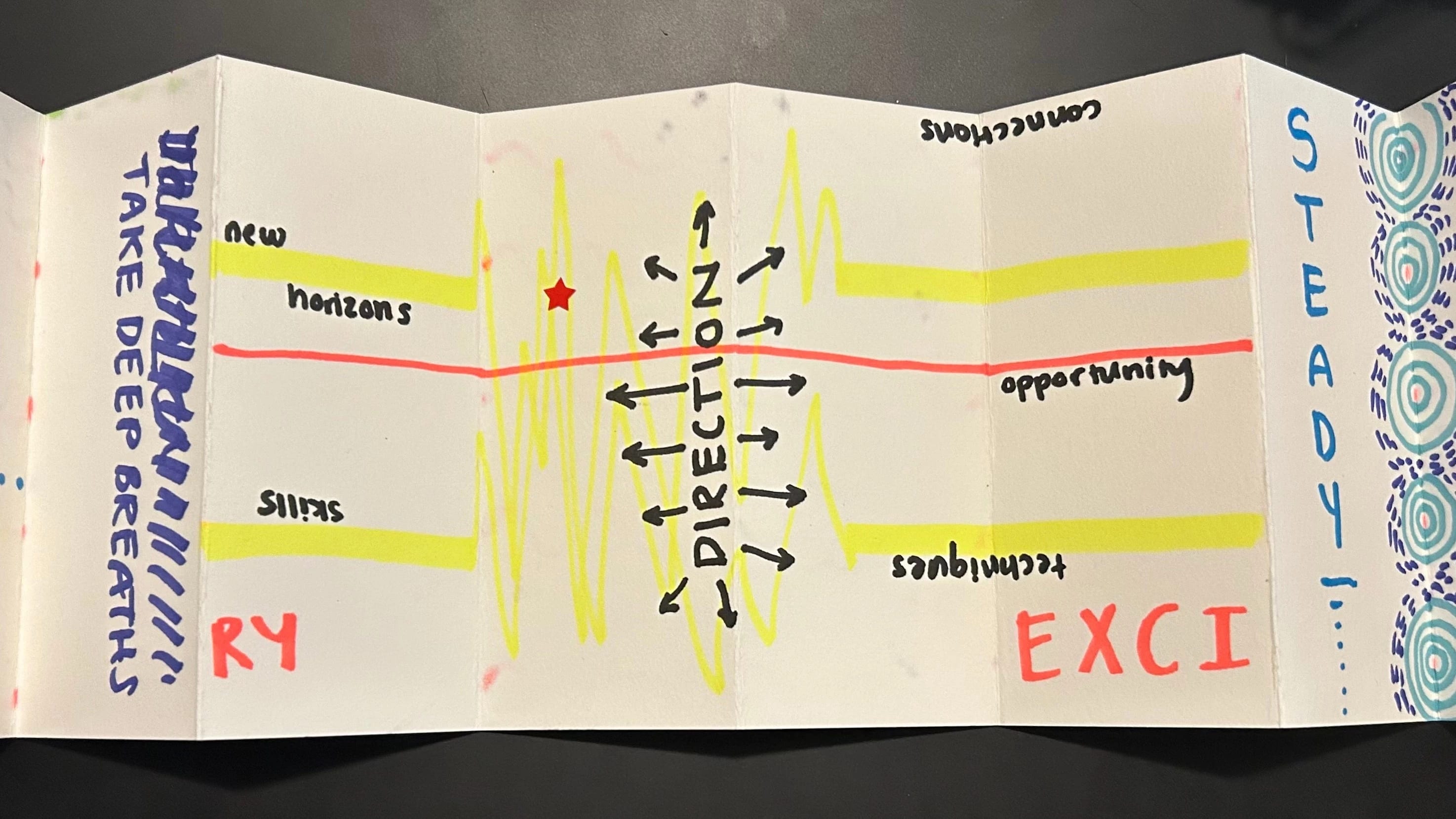
Kira Scala expresses their feelings about starting a second-year internship through the practice of drawing on paper.
Students in SVA’s MPS Art Therapy program work at two distinct clinical internships over the course of their study. They work at a range of organizations such as hospitals with pediatric cancer patients, inpatient facilities, private practices, LGBTQ+ community centers, domestic violence safe havens, and community centers for elderly adults. As second-year students, my classmates and I have now settled into our roles at new internships for the 2024-25 academic year; we have grown more confident in our clinical skills and theoretical knowledge, and collectively, we have grown alongside our clients and one another. We’ve faced challenges along the way, but those challenges ultimately push us to be strong art therapists.
In contrast to first-year internship responsibilities, second-year students are able to participate in and facilitate more parts of the therapeutic process such as intakes, assessments, and treatment team meetings. Through our independence, we learn to trust and hone our therapeutic instincts and take clinical risks advocating for the needs of our clients. Given more opportunities to collaborate with other non-art therapist professionals, we engage in an interdisciplinary education that is rooted in real-world experience. One classmate expressed that it has been challenging to switch from one site to another and learn the policies, procedures, and expectations of a new working environment. Some students have expressed that they discovered a population that they love working with that they had never considered before. With the twists and turns of the internship placements here at SVA’s MPS Art Therapy program, students are grateful for the diversity of their experiences as they acquire adaptable skills and build professional experience on the ground.
Second-year student, Kira Scala
Second-year student, Kira Scala
I have had positive experiences at both of my internships but my day-to-day routine has varied from my first to second year. As a current second year, I am working with the Art Therapy Project at a residential substance use treatment center in Manhattan. The site serves adult clients with substance use disorder. The clients live on-site and participate in various therapeutic groups until they complete the program which can take between 90 days to a year depending on the client’s needs. At this site, I collaborate with social workers, housing specialists, and vocational counselors to provide support to my clients. This stands in contrast to my first-year internship with the Coalition for Hispanic Family Services. At that site, services were provided by myself (the only intern) and another art therapist. I provided individual and group art therapy to elementary school children in Brooklyn.
With increased trust from our supervisors, second-year students take the reins and design treatment groups that align with our interests and our clients’ needs. As a second-year in SVA’s Art Therapy program, I have more opportunities to shape my work on-site according to my skills and talents. For example, I am an avid fiber artist; I knit, crochet, embroider, and make beaded artwork. With the independence of my second year in the program, I have translated these skills into assets in an art therapy setting by facilitating a fiber-art therapy group for my site. The group aims to help clients practice grounding strategies, learn frustration tolerance, and develop interpersonal connections while working with fabric and beading techniques.
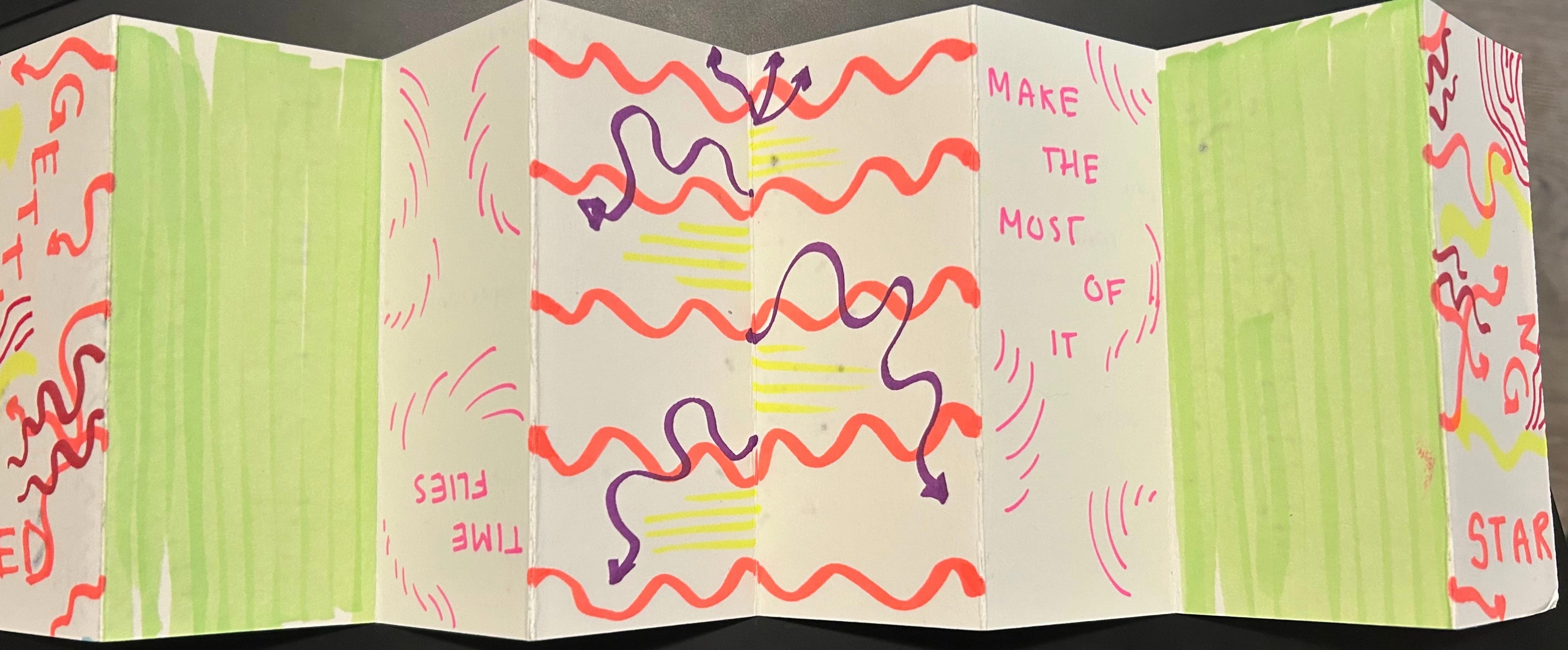
The reverse side of Kira Scala's drawing processing their internship experience.
In addition to finding an internship site that resonates with each student’s interests and experience, we are encouraged to pair with a supervisor who can support and guide us as we transition from interns to professionals after graduation. A good supervisor can help us refine our identity as therapists, guide us through difficult situations, and provide essential feedback on our work. Our second-year internship placement often serves as the site of our thesis project, as well. A supportive site supervisor can help us navigate the difficulties of institutional policies, refine our ideas, and determine what is most beneficial for our clients.
In short, second-year internship placements are a valuable opportunity that allows SVA MPS Art Therapy graduate students to work closely with their supervisor, refine their clinical skills, serve diverse client populations, and expand their knowledge. These invaluable internship experiences instill confidence in us as students and future practitioners, which makes the SVA program, and our respective cohorts, special.