

SVA Diversity, Equity and Inclusion is hosting the Columbia Journalism School Dean and ‘New Yorker’ writer for a talk to celebrate Juneteenth.
In the summer of 2021, Juneteenth, a day commemorating the end of slavery in the United States was established as a federal holiday, a major step in acknowledging the significance of African Americans’ ongoing struggle for equality.
Juneteenth marks the anniversary of the emancipation of more than 250,000 enslaved Texans on June 19, 1865—more than two years after the Emancipation Proclamation. African American communities in Texas and other states have long recognized this day by hosting ceremonies, parades, barbecues and preparing traditional meals associated with the holiday.
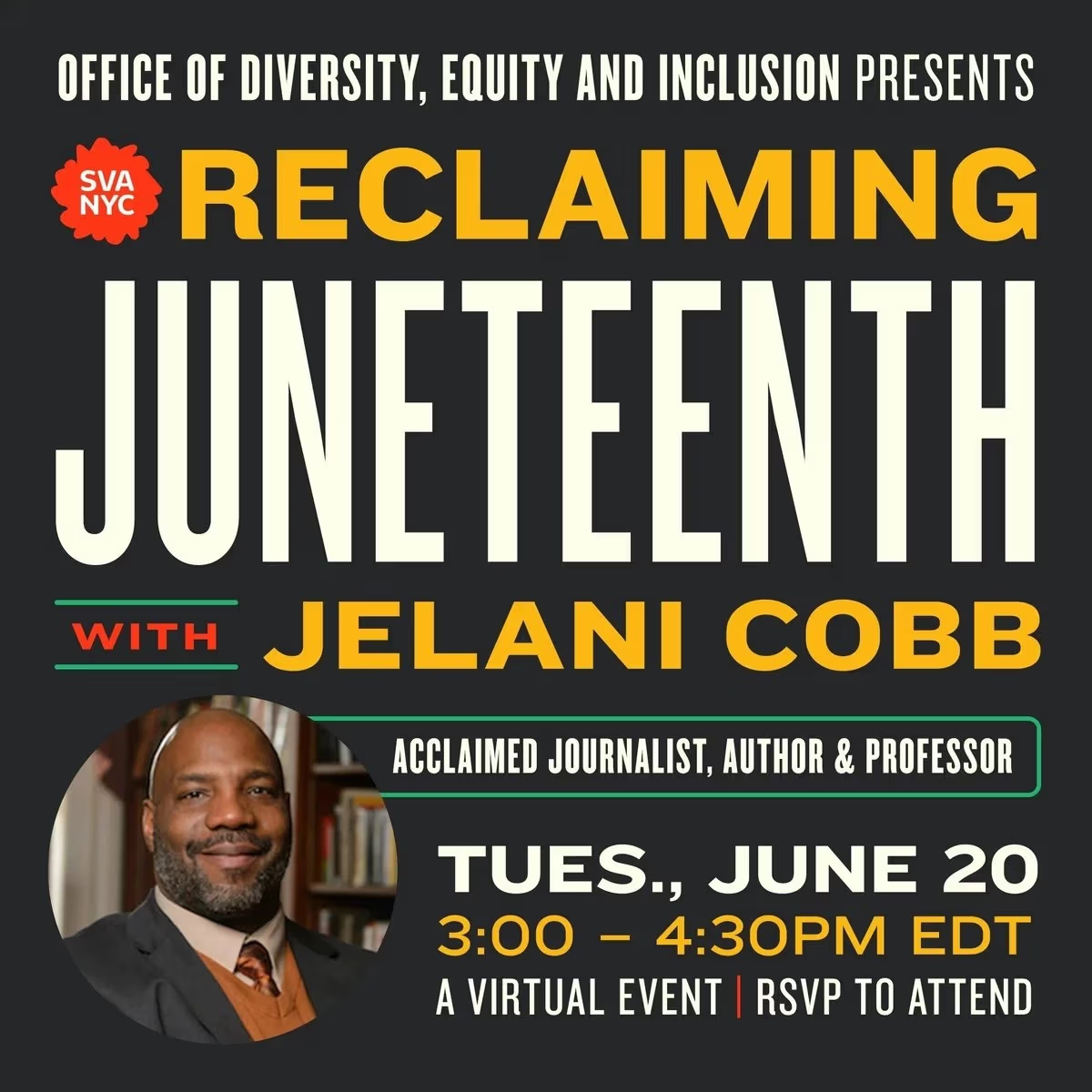
To honor this year’s Juneteenth holiday and place things in perspective, SVA Diversity, Equity and Inclusion has invited writer, educator and dean of the Columbia Journalism School Jelani Cobb to host a virtual discussion, Reclaiming Juneteenth, on Tuesday, June 20, 2023, at 3:00pm. This event is free and open to the public; all are welcome. Register to attend here.
In addition to his role as dean, Cobb is also Columbia University’s Henry Luce Professor of Journalism and a staff writer at The New Yorker, known for his writing on race, history, justice, politics and democracy. Cobb recently co-edited The Matter of Black Lives, a collection of The New Yorker’s most groundbreaking writing on Black history and culture in America, featuring the work of legendary writers like James Baldwin and Toni Morrison.
In the lead-up to his virtual talk next week, Dr. Jarvis M. Watson, director of SVA Diversity, Equity and Inclusion, corresponded with Cobb via email about the importance of Juneteenth as not only a national holiday and recognition of struggle, but as a crucial medium for education.
Why do you think employers should recognize Juneteenth?
Our national holidays generally serve as reminders of crucial lessons or ideas that we think of as foundational to our society. President’s Day, Memorial Day, Thanksgiving, Labor Day and Veterans Day all serve that function. Yet prior to Juneteenth, there was no holiday in any way connected to the Civil War, the central conflict in American history, or the end of slavery. As a holiday, Juneteenth is probably most closely related to the Fourth of July—one recognizes the founding of the nation, and the other acknowledges the tremendously difficult struggle that took place to make sure that nation would continue to exist and begin to live up to its founding ideals.
How do you discuss the issues of racial injustice and the importance of Juneteenth with those who self-identify as African-American/Black and/or non-U.S.-citizens, non-Black or non-Americans?
I think we should be able to discuss those issues in similar ways, irrespective of the audience. The end of slavery was not a triumph for African Americans. It was a triumph for a society that had belatedly embraced its founding values. One element that is particular to African Americans, however, is the shame associated with having been enslaved. It’s important to frame this as a history of survivors, not victims—people whose ingenuity and tenacity helped undermine the brutal system of bondage that might well have existed much longer than it did were it not for their determination to be free.
With the current ban on diversity programs, how is this congruent with the history legacy of social justice in states like Texas and Florida?
None of this is new. I can talk about this in more detail in person, but for as long as we’ve had this history, there have been people attempting to suppress the basic facts of our collective past. But doing so strips history of its primary virtue—the ability to inform people in the present of pitfalls that have preceded them. In that regard, it’s crucial that people of conscience continue making the facts of this history known and available.
How do you envision the visual arts—fine arts, screen/film, design, education—serving as a medium to highlight themes associated with Juneteenth?
I think the arts are one of our most crucial mediums for education and Juneteenth is no exception to that. There’s a virtually infinite number of themes and conversations for artists to mine as it relates to the demise of slavery and the history of Juneteenth, many of which are only just beginning to be explored.
What is your favorite memory or tradition affiliated with Juneteenth?
I first learned of Juneteenth from a Texan classmate during my first year at Howard University. It amazed me that there was a long, independent tradition of people honoring the legacy of people who survived slavery. It was not until years later that I attended an actual celebration, but my favorite memory is probably that early moment where I was introduced to it and the way that it deepened my curiosity about the threads of history so bound up with slavery, democracy, emancipation and the complicated road that we have traveled to our present moment.
Reclaiming Juneteenth with Jelani Cobb takes place Tuesday, June 20, 3:00 – 4:30pm, online. To register for the event, click here.